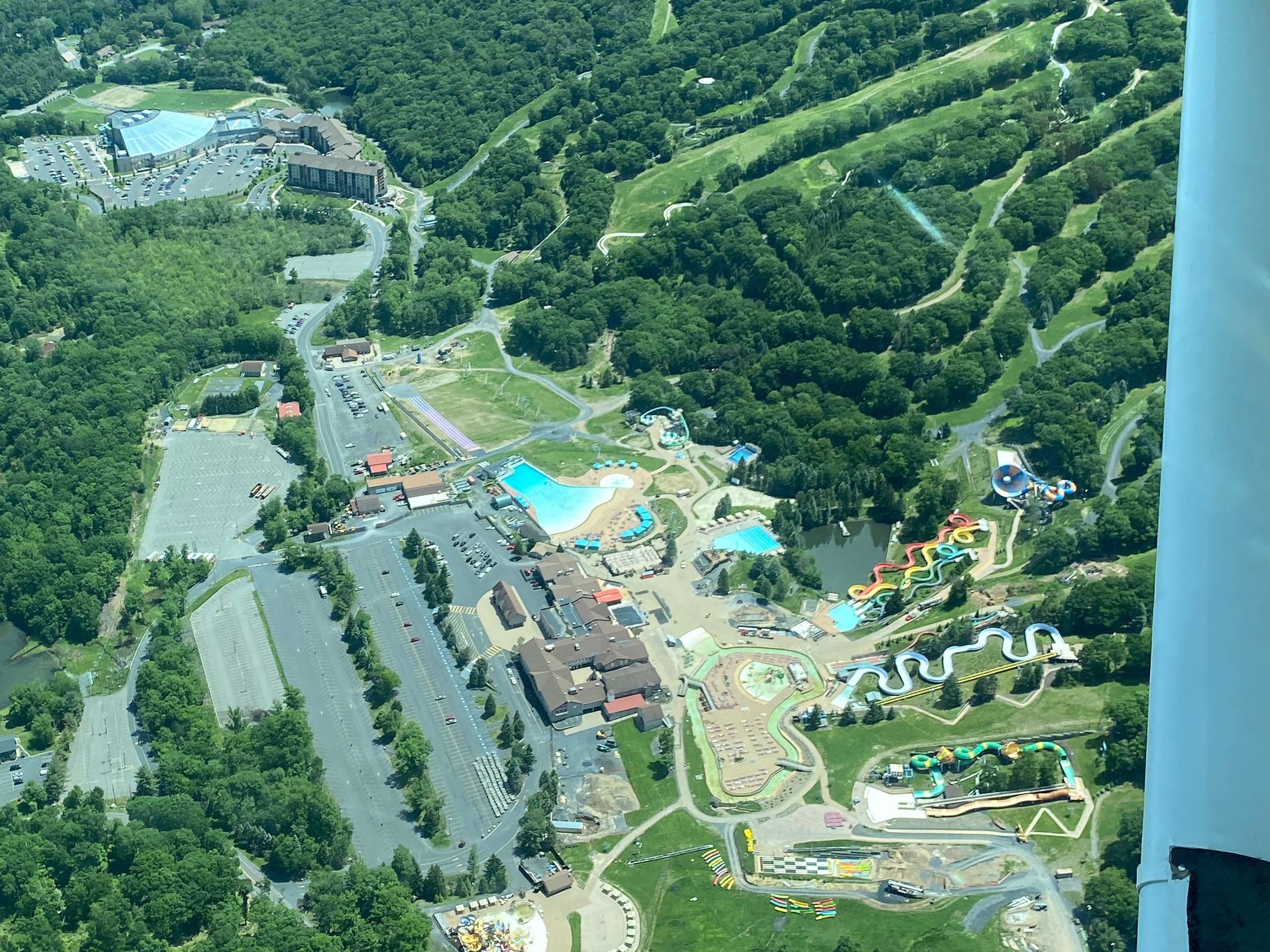
Why Hardwick Township Is a Standout for Air Tours
From a few hundred feet above, Hardwick Township reads like a stitched landscape—fields quilted by hedgerows, narrow rivers threading into the Delaware, and the steady spine of the Kittatinny Ridge marking the horizon. The township's rural scale and variable topography mean that short flights deliver immediate contrasts: open farmland and pastures give way to hemmed-in forest pockets and exposed ridgeline, while small lakes and wetlands reflect a mosaic of sky, weather, and season.
Air tours in this region are as much about timing as they are about route. Morning flights offer low light that models the contours of stone walls, fences, and farm buildings; autumn mornings amplify the color palette of early foliage and turn the ridge into a band of amber and russet. Spring brings a patchwork of newly plowed earth and bright green pastures that read like watercolor from the cockpit. In summer, thermal activity can lend the air a shimmer and invites operators and pilots to plan around calmer morning or evening windows. Winter flights—when visibility is crisp and snow highlights ridgelines and field boundaries—can be breathtaking, though shorter and more weather-dependent.
Beyond the visual payoff, air tours are a way to connect specific stories to place. From above you can trace old mill sites along tributaries, spot the linear corridors of former rail lines and early roadways, and appreciate how conservation parcels and state forest land stitch together large wildlife habitats. For photographers and naturalists the advantage is twofold: compositionally, the patterns are immediate; ecologically, the view helps explain connectivity between river corridors and forested ridgelines, especially for bird migration and seasonal movement. For families and first-time flyers, a short scenic circuit feels intimate—subjects like local geology and land-use history become accessible conversation points rather than abstract facts.
Practically, Hardwick's proximity to small airfields and to regional operators in northwest New Jersey and eastern Pennsylvania means flights can be tailored: short sightseeing loops, leaf-peeping sorties in fall, or targeted aerial photography runs. Because many operations use small aircraft, the experience is tactile—breeze at the windows, the low hum of engines, and the direct interaction with pilots who double as regional guides. That human element turns a simple view into an interpretive experience, one that pairs well with complementary activities on the ground: a post-flight hike along Stokes State Forest trails, a riverside picnic along the Delaware, or an afternoon at a nearby farmstand. For travelers seeking a fresh perspective on the Garden State, Hardwick's skies offer an elegantly concentrated way to see how geology, farming, and forest meet in quiet, revealing patterns.
The layout of parcels, hedgerows, and watercourses in Hardwick creates striking aerial geometry. Operators can use that geometry to craft short, vivid flights—ideal for photographers, families, and those curious about regional landscape history but short on time.
Because most tours operate in small aircraft or balloons, weather windows are crucial. Mornings and late afternoons typically offer the most stable flying conditions and the best light; pilots and operators will often reschedule or cancel for wind or low ceilings.
Choose by purpose
Whale watching, snorkeling, sunset sailing, cultural canoeing, harbor sightseeing, or private chartering.
Start near the city
Waikiki and Honolulu Harbor are primary hubs, with some trips launching near Hanauma Bay.
Confirm the vessel
Gangways, shaded seating, and boarding requirements vary according to vessel size and operator.