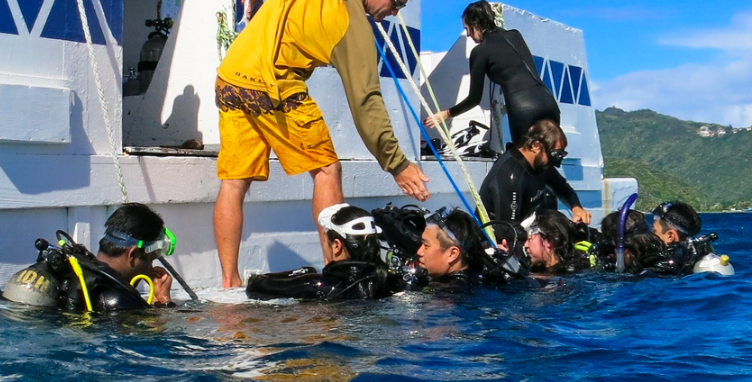
Why Hawaii Kai Is a Standout Scuba Destination
Hawaii Kai's coastline is a study in approachable ocean access. Maunalua Bay, hemmed by the broad arc of Koko Head and the shelter of offshore reefs, creates conditions that often favour gentle entries, predictable surge, and long sightlines through clear water. For a diver stepping from pool training into the Pacific, those conditions matter: shallow reef gardens give new certificants a chance to practice buoyancy over coral, orient themselves with a compass and current, and meet the region's signature residents—surgeonfish, butterflyfish, and the occasional moray—without the anxiety of strong surf or complicated logistics.
But approachable does not mean small. Move beyond the bay and the seafloor topology changes. Old lava flows, eroded pinnacles, and reef drop-offs host schools of jacks, graceful eagle rays, and sometimes larger pelagics as the season allows. Boat operators based in Hawaii Kai run short charters to dramatic underwater features where depth, structure, and cooler upwellings attract diverse life. Night dives are an understated specialty here—blackwater opportunities are a short run away, and shallow reef night-navigations reveal slumbering reef fish, hunting octopus, and the ghostly fluorescence of corals.
Culturally and practically, Hawaii Kai sits close to Honolulu's amenities without losing a neighborhood feel. That proximity is a practical advantage for international and mainland travelers: gear shops, quick shore access, and dive centers that offer a range of services from guided reefs for beginners to multi-tank trips for experienced divers. The area also underscores conservation-minded diving: many operators prioritize reef-safe practices, reef restoration projects are visible in community programs, and visitors are encouraged to carry reef-safe sunscreen and a respectful approach to marine life.
Seasonality is forgiving—diving is viable across the year—yet the experience changes. Summer months often bring calmer seas and excellent visibility, while winter swells can funnel bigger animals closer to shore but also bring stronger surface conditions. Weather patterns, local currents, and lunar cycles shape the best days to dive, so planning with a local shop or guide pays dividends. Beyond diving, Hawaii Kai invites a layered trip: pair a morning dive with an afternoon coastal hike on Koko Head Battery Trail, an evening at a beachfront café, or a half-day paddle to the protected reef for snorkeling and turtle watching. For travelers who want their ocean time diverse, Hawaii Kai compresses access to reef gardens, drop-offs, night dives, and cultural touchpoints into a single, easy-to-navigate corner of Oahu.
Dives range from sheltered shore entries for beginners to short boat runs to pinnacles and lava outcrops favored by more advanced divers.
Local operators emphasize small-group guided dives and conservation best-practices—book a guide for unfamiliar sites and to maximize safety and sightings.
Choose by purpose
Whale watching, snorkeling, sunset sailing, cultural canoeing, harbor sightseeing, or private chartering.
Start near the city
Waikiki and Honolulu Harbor are primary hubs, with some trips launching near Hanauma Bay.
Confirm the vessel
Gangways, shaded seating, and boarding requirements vary according to vessel size and operator.