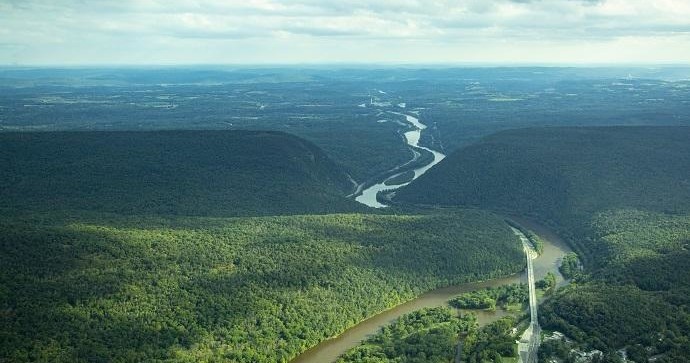
Why Hope, NJ Is a Notable Spot for Air Activities
Hope sits tucked along the eastern edge of the Kittatinny Ridge and the western edge of the wide Delaware River valley—an intersection of topography that, for pilots and flyers, creates readable wind, visible thermals, and photogenic corridors. The town’s gently rolling farmland, low population density, and proximity to forested ridgelines make it an approachable base for air activities that range from the contemplative (sunrise ballooning) to the athletic (paraglider launches and ridge soaring). What these experiences share is scale: you never feel lost in an expanse so much as instantly aware of the lay of the land beneath you. On clear days the view reads like a layered map—strip fields, hedgerows, the blue thread of the Delaware River, the angular spine of the ridge—all of which translate into route choices, landing options, and wind cues that local operators prize.
There’s a clear seasonal rhythm to flying here. Spring and autumn are the operational sweet spots—cool mornings with stable thermals, crisp visibility, and a palette of color changes that make every minute aloft more vivid. Summer builds more convective energy, producing stronger thermals and late-afternoon thunderstorms that can shorten flying windows. Winter is quieter for commercial air activities but can offer unique, clear-air scenic flights for cold-weather enthusiasts who understand the short daylight and operational constraints. Because many of the activity sites are private fields, small airports, or ridge-top launch zones, operators coordinate closely with landowners, and flights are often scheduled around specific weather windows rather than fixed departure times.
Beyond the pure thrill of air time, Hope’s location makes it a great complement hub for mixed itineraries. A morning balloon flight pairs naturally with an afternoon river paddle along the Delaware—a slow, grounded counterpoint to the airborne perspective. Ridge-based air activities are often coupled with a half-day hike on the Appalachian Trail or nearby forest roads, giving you the launch-site perspective on foot before you try the air. For photographers and birdwatchers, early flights can coincide with raptor migrations along the Kittatinny—a seasonal phenomenon that adds a wildlife note to the landscape. Finally, the scale of local operators and the small-community feel mean experiences tend to be personalized: tandem flights, small-group launches, and brief, practical briefings that favor hands-on explanation over long slideshows.
Hope’s proximity to Kittatinny Ridge gives gliders access to predictable ridge lift and scenic cross-country routes along the Appalachian spine.
The Delaware River valley creates visual corridors for scenic flights and provides accessible landing opportunities for certain air activities.
The harbor is the gateway, and the Pacific becomes the classroom.
Local farmland and small airstrips serve as practical takes-off and landing zones, but many require operator coordination and respect for private property.
Choose by purpose
Whale watching, snorkeling, sunset sailing, cultural canoeing, harbor sightseeing, or private chartering.
Start near the city
Waikiki and Honolulu Harbor are primary hubs, with some trips launching near Hanauma Bay.
Confirm the vessel
Gangways, shaded seating, and boarding requirements vary according to vessel size and operator.