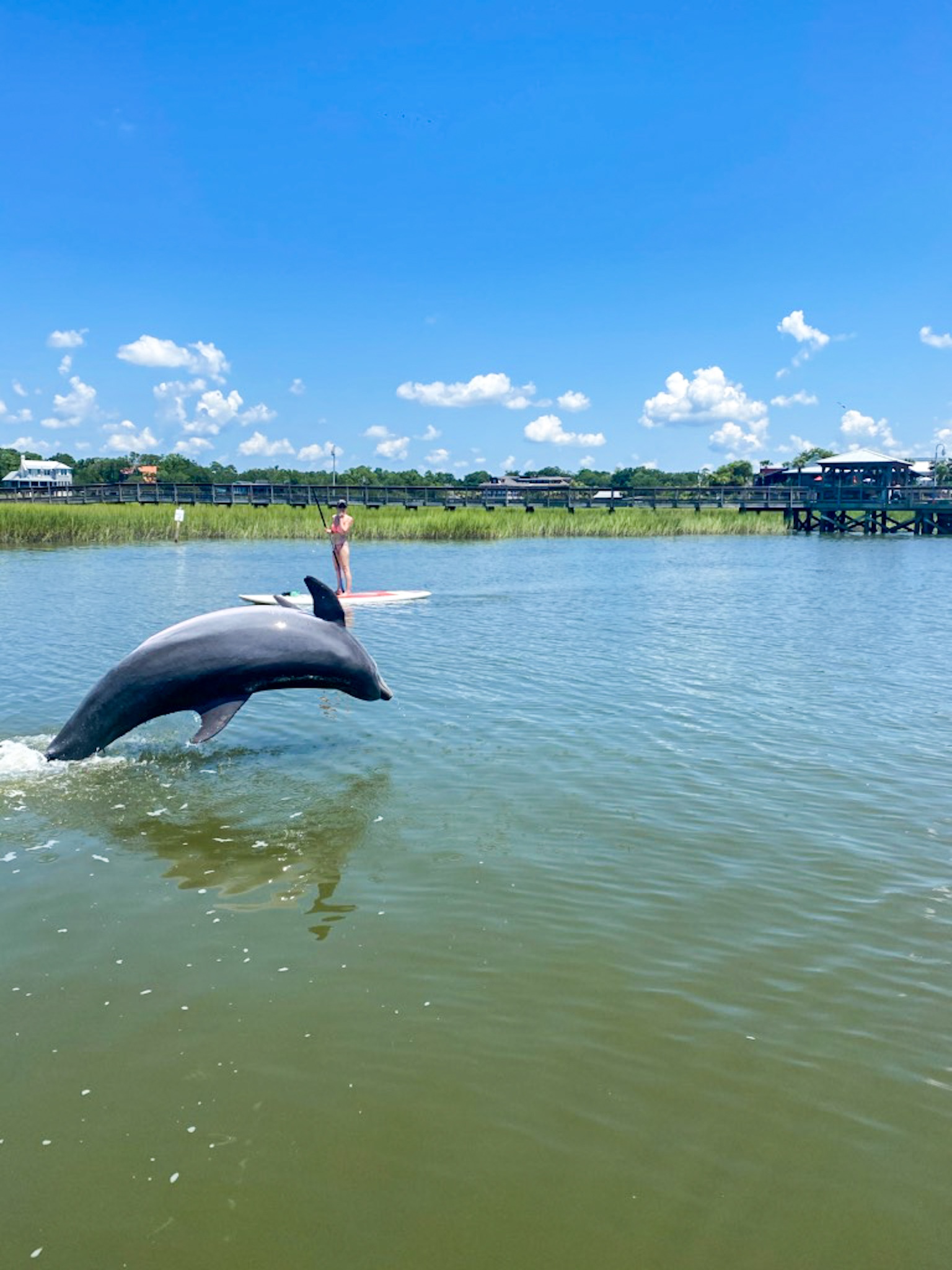
There’s a specific quiet to paddling in Huger that arrives long before you do: the hush of tidal reeds, the slow exhale of a marsh at low tide, the precise arc of a heron folding into flight. For standup paddleboarders, Huger’s appeal is its intimacy. Unlike wide, wind-whipped bays, the creeks and rivers here funnel wind and sound, creating micro-environments where visibility is close and wildlife encounters feel immediate. Stand on the nose of a board at dawn and you’re likely to watch an otter slip under a mat of floating vegetation, or find a rookery of wading birds perched on an unassuming stump. The water is often black with tannins—its dark color a map of the surrounding palmetto and cypress tannin tea—and that contrast makes for dramatic reflections and memorable photography.
Beyond the sensory, Huger’s waterways are steeped in human history. The geometry of some creeks and the faint levee lines still visible in marsh grass recall rice cultivation and the slave-built landscapes of the Lowcountry. Today, paddlers trace routes that blend natural and cultural history: old plantation edges, shell middens, and finger creeks that once served small working communities. A mindful SUP trip here becomes a study in layers—ecology, hydrology, and history overlapping in every low tide. That contextual richness pairs neatly with practical advantages. Most paddling routes are flatwater and sheltered, making Huger an excellent place for beginners to gain confidence while still offering technical challenges for experienced paddlers: navigating tidal currents, threading narrow creek mouths at changing tides, and choosing launch points that minimize hauling across marsh grass.
The environmental sensitivity of the Lowcountry matters. Paddle routes should avoid nesting colonies during breeding season, and paddlers must respect private property lines that run alongside many creeks. Tidal knowledge is essential: some put-ins are boat ramps at high tide and slog-through mud at low tide. Weather matters less because Huger is sheltered, but tides and occasional summer thunderstorms will define your day. Complementary activities—birdwatching, fly-fishing from the board, short hikes into Francis Marion National Forest, or guided kayak tours—turn a SUP outing into a layered Lowcountry weekend. Whether your trip is a morning reconnaissance to explore tidal creeks or a multi-hour loop timed to a rising tide, Huger rewards paddlers who come with patience, curiosity, and a small toolkit of local knowledge.
The sheltered nature of Huger’s creeks makes it a forgiving learning environment for new SUP paddlers, but tidal currents and narrow channels provide enough nuance for seasoned paddlers looking for technical finesse.
Wildlife visibility is high: wading birds, kingfishers, river otters, and occasional bald eagles are common sights. Photography and birding are natural companions to a SUP outing here.
The harbor is the gateway, and the Pacific becomes the classroom.
Be mindful of cultural and private landscapes. Many shorelines are adjacent to private property or sensitive habitats; stick to public launch points and follow Leave No Trace principles.
Choose by purpose
Whale watching, snorkeling, sunset sailing, cultural canoeing, harbor sightseeing, or private chartering.
Start near the city
Waikiki and Honolulu Harbor are primary hubs, with some trips launching near Hanauma Bay.
Confirm the vessel
Gangways, shaded seating, and boarding requirements vary according to vessel size and operator.