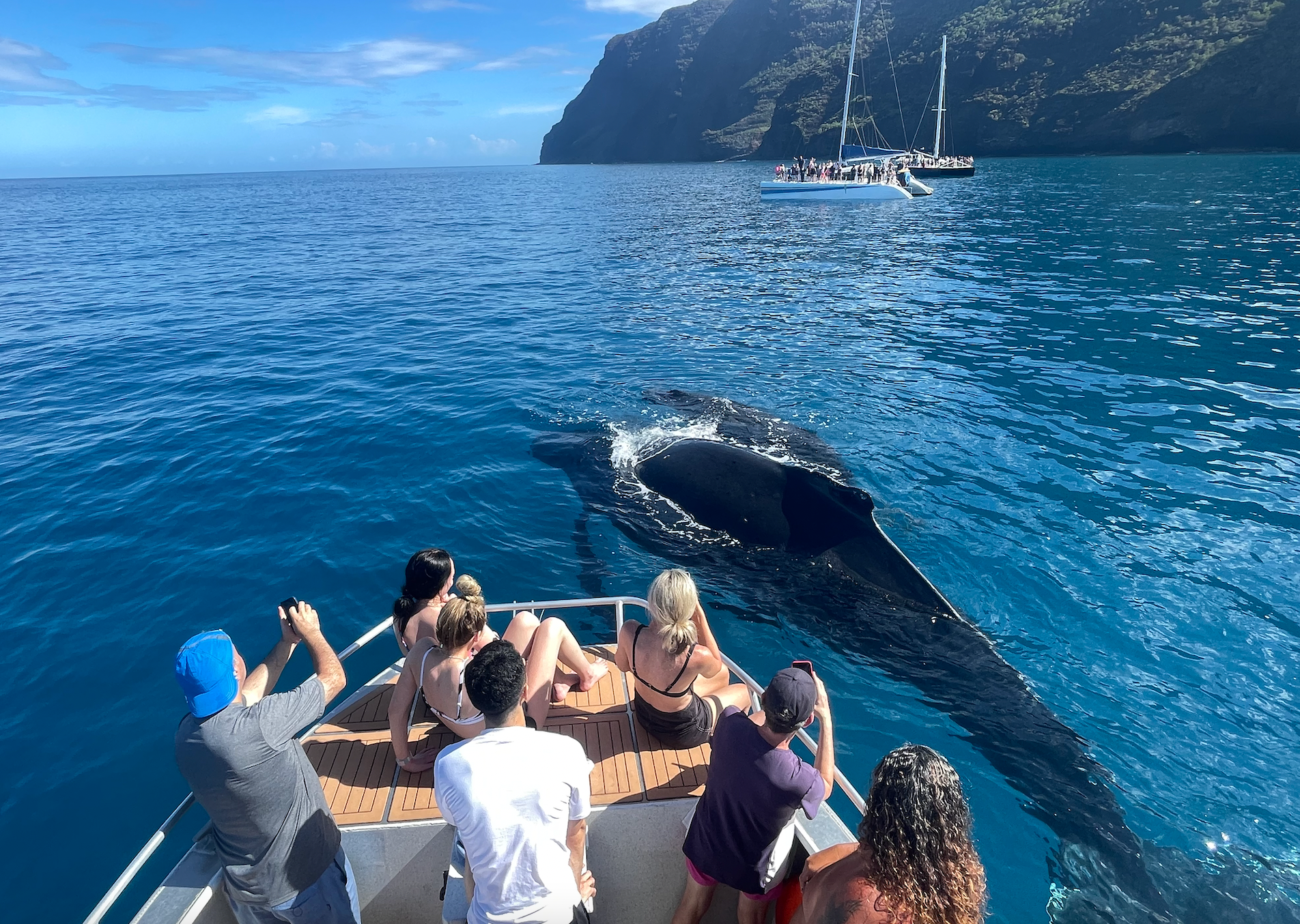
A catamaran off Kaʻena feels like a moving porch for the Pacific. The coastline there is unapologetically raw—lava-scarred cliffs, ancient seabird rookeries, and a ribbon of surf that marks where island geology finally yields to open ocean. From the water the contours of the land read differently: headlands drop away into deep blue, small coves that look inaccessible from shore reveal fringe reefs, and the ocean’s sudden swells throw light into textures you can’t perceive from the bluff. A catamaran’s twin hulls tame many of those movements, trading the single-hull roll for a broad, forgiving glide that invites sightlines across the water. That steadiness reshapes the day: it makes a long-lens camera usable from a moving platform, lets you linger over a pod of spinner dolphins, and turns a snorkeling stop into a relaxed exchange with the reef rather than a hurried scramble in and out of the surf.
Beyond sea comfort the area around Kaʻena carries ecological and cultural weight. Kaʻena Point is a sanctuary for native seabirds and a last stretch of wild coastline on Oʻahu—its relative remoteness means marine life has fewer human footprints compared with more developed harbors. Depending on season, catamaran trips can pass humpback whale migration lanes, cross trails of spinner dolphins, or drift above green sea turtles grazing on reef flats. Local captains often weave Hawaiian place names and island lore into the narration of a cruise: the geology that birthed the point, the traditional fishing practices of the leeward shore, and how currents and winds have always shaped island life. That context deepens the boat ride; it turns a leisure sail into a short lesson on ocean stewardship.
Practically, catamaraning here is versatile. Operators run half-day snorkeling runs that hop shallow reefs, full-day wind-swept sails that extend into open water, and sunset cruises timed for golden light and calm evening seas. Conditions swing with the trade winds and the winter swell: summer often brings the clearest water and gentler seas, while winter trades bigger waves—and, for those focused on natural spectacle, peak whale season. Choosing the right outing depends on what you value most: the clarity and calm of a snorkeling reef, the spectacle of a whale breach, or simply the social pleasure of a breezy sunset sail. In all cases, a catamaran's space and stability make it the best way to pair comfort with a true, up-close relationship to Kaʻena’s coastal edge.
Catamarans are especially good for wildlife viewing and photography because the stable platform reduces motion blur and gives photographers room to move.
Trips typically combine sailing, snorkeling (on protected reefs), and coastal narration from local guides—many operators emphasize low-impact practices and reef-safe protocols.
The harbor is the gateway, and the Pacific becomes the classroom.
Wind, swell, and tides will shape each itinerary. Summer months favor calmer water and clearer snorkel conditions; winter opens whale-watching opportunities but can mean a bumpier ride.
Choose by purpose
Whale watching, snorkeling, sunset sailing, cultural canoeing, harbor sightseeing, or private chartering.
Start near the city
Waikiki and Honolulu Harbor are primary hubs, with some trips launching near Hanauma Bay.
Confirm the vessel
Gangways, shaded seating, and boarding requirements vary according to vessel size and operator.