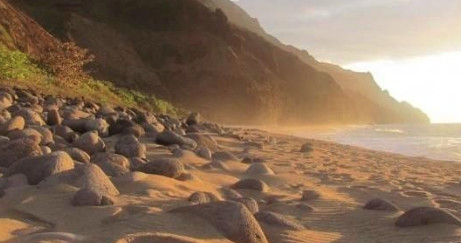
Kaʻena sits at Oʻahu’s blunt northwestern edge where the island meets the full force of the Pacific—an exposed, elemental place where sky, wind and water carve a different kind of trail experience. Hikes here are not about forested switchbacks or alpine summits; they are about coastal line-of-sight travel, where the route follows the rhythm of tides, the arc of seabird flight and the long memory of Hawaiian voyaging routes. The landscape is spare—low shrubs, salt-pruned kiawe and native plants tucked into pockets of sand and lava—yet every step feels deliberate because there is little margin for error. Underfoot you’ll trade the soft compost of a rainforest for gritty sand, broken lava, and packed dirt that can be hot and abrasive in midday sun. That exposure is Kaʻena’s appeal: vistas that stretch unbroken to the horizon, the sudden arrival of wildlife—albatross riding the wind, monk seals hauled up on remote shelves—and the sense that you’re following the coastline rather than climbing it.
What makes Kaʻena singular is the layering of natural and cultural history. This coastline has always been a threshold: a fishing ground, a kapu place, and a waypoint for generations of Hawaiians who navigated by stars and currents. Today the trails are informal in sections and intentionally protected in others—parts of the point serve as wildlife sanctuary, and seasonal closures or signage reflect nesting cycles and habitat restoration. The result is a hiking experience that feels more like respectful exploration than recreational conquest. Hikes range from short, reflective walks to full-day coastal treks that require endurance, sun management and tidal awareness. Many visitors combine hiking with birding, shoreline exploration, or surfing sessions where permitted, turning a trail day into a mosaic of active and contemplative moments.
For travelers, Kaʻena’s accessibility is part of its rhythm: there are trail access points on the island’s northwest road ends, each offering a different flavor—sandy beaches, sheer cliff overlooks, or rocky shorelines lined with tidepools. Facilities are minimal; water, shade and cell service are unreliable. That removes a layer of convenience and demands preparation, but it also clears the way for a purer kind of coast-hiking: one measured by wind gusts, the angle of the sun, and the patient progress of feet across the shoreline. Visit with respect, follow trail closures, give wildlife wide berth, and you’ll find a place where the island’s edge feels both ancient and immediate.
Low vegetation and wide ocean exposure define the trails—expect sun, steady trade winds, and little shade. Those conditions make timing, sun protection, and water the primary safety concerns.
Kaʻena is ecologically important: parts of the point are managed to protect nesting seabirds and native coastal plants. Seasonal restrictions and signage are common—observe closures and stay on designated paths.
The harbor is the gateway, and the Pacific becomes the classroom.
Hiking here pairs naturally with other activities: birdwatching (especially seabirds and shorebirds), tidepool exploration, and photography are obvious complements. On calmer days, west-facing beaches near the trailheads offer surf and bodyboarding for those who want to add waves to their itinerary.
Choose by purpose
Whale watching, snorkeling, sunset sailing, cultural canoeing, harbor sightseeing, or private chartering.
Start near the city
Waikiki and Honolulu Harbor are primary hubs, with some trips launching near Hanauma Bay.
Confirm the vessel
Gangways, shaded seating, and boarding requirements vary according to vessel size and operator.