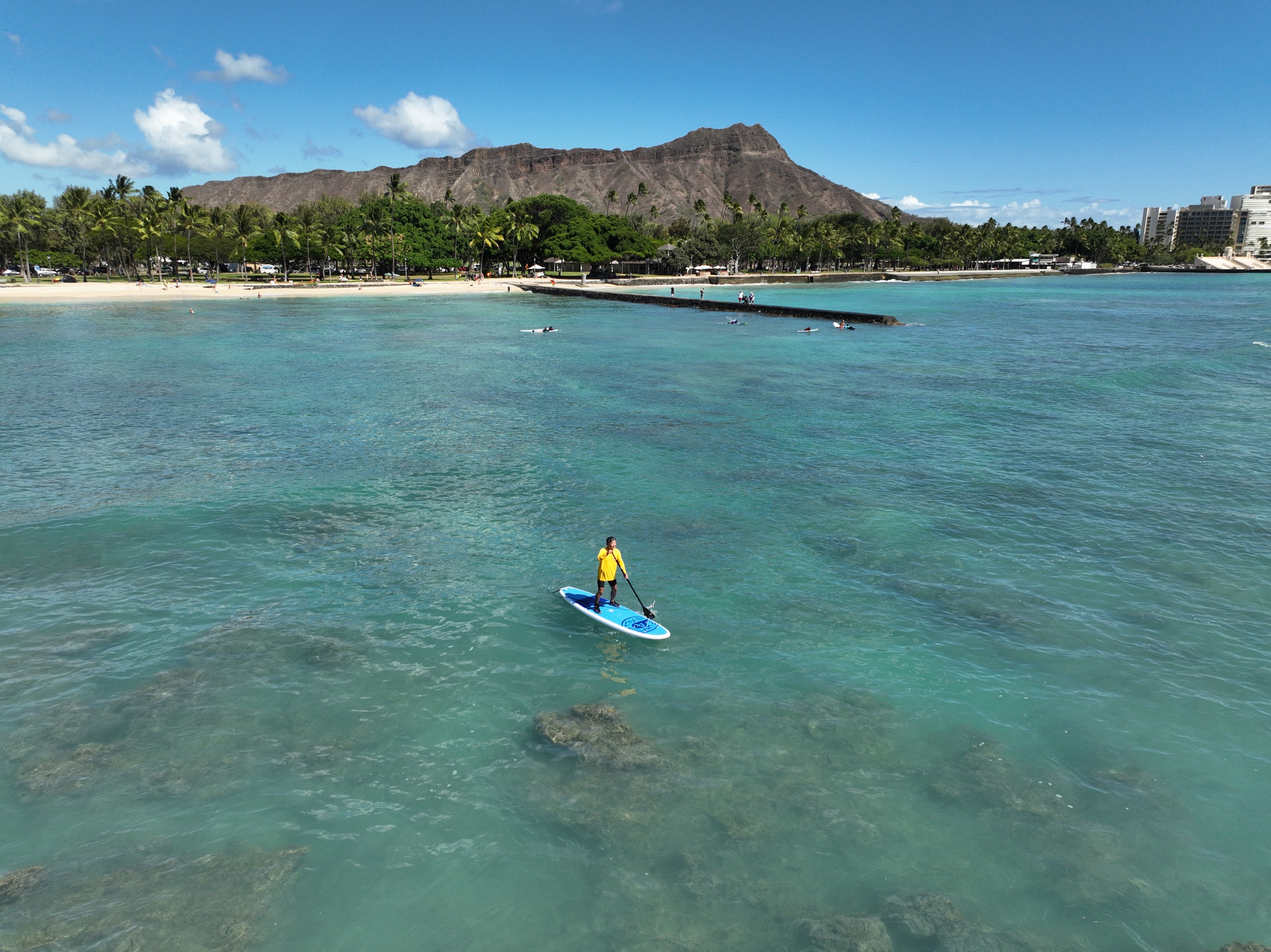
Why Kalalau Is a Standout SUP Destination
Paddling along the Kalalau front is an exercise in scale. The cliffs of the Nā Pali Coast rise straight from aquamarine water—sheer, ribbed walls streaked with waterfalls and draped in verdant fern. On a stand-up board you are small and deliberate against that backdrop: your movement is measured, every stroke exposed, every gust and ripple translating immediately into motion. The sensory contrast is what keeps returning paddlers coming back. Up close you feel the ocean’s moods—its glassy lull in morning light, the complicated cross-swell that arrives with offshore weather, and the sudden, bone-deep churn when currents meet shoreline topography. From a distance you see valleys carved like cathedral buttresses and every cove that appears between them.
This place is both primeval and intimate. Kalalau is remote; access is limited and often conditional. That remoteness is an asset for SUP: fewer motorboats in nearshore coves, clearer water over reefs, and dramatic private-feeling stretches of coast. But it also means thoughtful planning and humility. Currents can funnel along cliff faces, wind patterns shift with the sun, and the ocean can change from serene to trip-ending in an hour. For paddlers, reading tide tables and choosing launch windows is as important as choosing a board. The silky mornings—when sea glass conditions let you stand and glide in silence—are juxtaposed with late-afternoon trade winds that may push you back to shore faster than expected. Seasonal swell and north Pacific storms make winter seas treacherous; summer and early fall typically offer the green, paddle-friendly windows that attract most SUP trips.
Beyond conditions, Kalalau’s cultural and ecological context deepens the experience. The cliff faces, taro terraces, and valley mouths visible from the water are places layered with Hawaiian history. Approaching a beach or waterfall on a board feels like moving through a living landscape: monk seal haul-outs, spinner dolphins surfing the bow wake, and honu (green sea turtles) feeding in shallow reef gardens. That wildlife intimacy urges a careful ethic—keep distance, avoid disturbing resting animals, and respect reef habitat by launching from sand and not trampling coral. SUP here dovetails naturally with snorkeling and coastal hiking: tie a short swim into a paddle to inspect reef fish or use a guided boat as a shuttle to extend your range without committing to overnight backcountry logistics. The Kalalau Trail opens vistas and landing points that some paddlers combine with day-hike reconnaissance; conversely, experienced SUPers sometimes use the ocean approach to scout remote beaches before deciding to hike in.
Practically, Kalalau SUP trips come in a few flavors: guided sea-cave and cliff-skim tours that prioritize safety and interpretation; independent short paddles from Keʻe or Haʻena for sheltered exploration and snorkeling; and longer, expedition-style runs that pair paddling with camping logistics—often requiring permits for any overnight stays inside the valley. Each flavor asks different gear and skills. Beginners can find protected days and sheltered coves to build balance and confidence. Intermediate paddlers will test chop, cross-currents, and tide-driven channels. Advanced paddlers can plan multi-mile traverses along the coast, linking surfable points and backcountry beaches when conditions allow. The payoff—when the weather aligns—is a rare, vertiginous perspective on one of Hawaiʻi’s most iconic coastal landscapes, where water, wind, and cliff meet in cinematic relief.
Access shapes the SUP experience: many of the most scenic shoreline stretches are only reachable by boat, from Keʻe Beach, or by coordinating with the Kalalau Trail. Logistics drive route choice.
Wildlife is abundant—turtles, dolphins, and seabirds—so a low-impact ethic and good distance discipline are non-negotiable.
The harbor is the gateway, and the Pacific becomes the classroom.
Seasons matter: summer and early fall usually bring the calmest sea states and the clearest snorkeling; winter surf and swell put a premium on local knowledge and guided trips.
Choose by purpose
Whale watching, snorkeling, sunset sailing, cultural canoeing, harbor sightseeing, or private chartering.
Start near the city
Waikiki and Honolulu Harbor are primary hubs, with some trips launching near Hanauma Bay.
Confirm the vessel
Gangways, shaded seating, and boarding requirements vary according to vessel size and operator.