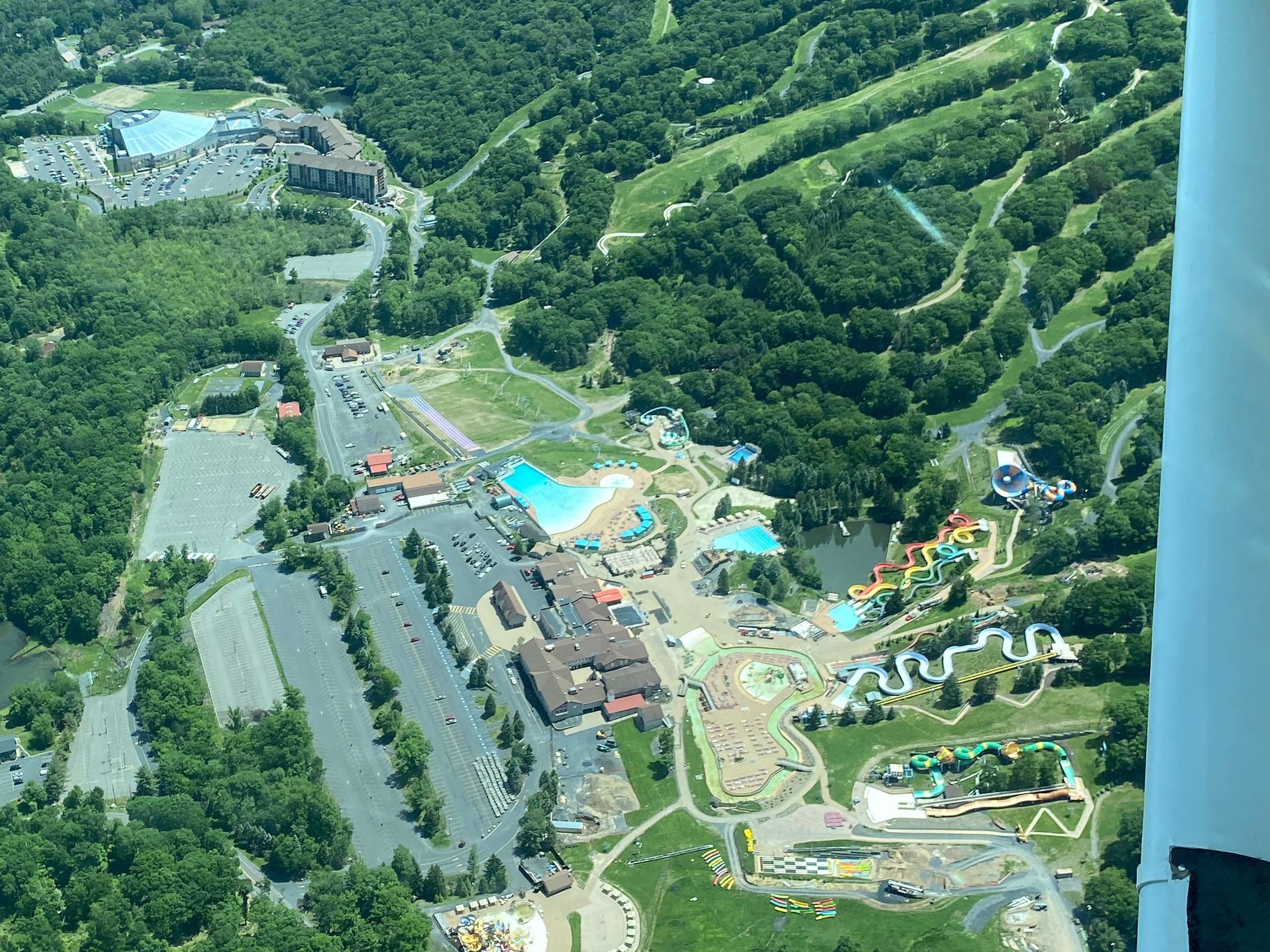
Long Pond is not a skyline of skyscrapers or a metropolis of runways—it’s the pleasant, human-scale kind of place where the sky feels close enough to touch. That intimacy is at the heart of the air-activity draw here. The landscape is a collage of low ridges, open water, marsh edges, and farm fields; from above those transitions read like topographic poetry. Hot-air balloons are at home in this setting: they climb in gentle thermals at dawn, drift over mirror-still ponds, and drift into color-washed sunrises that soften the horizon. Short scenic flights and discovery flights by light aircraft reveal the mosaic of the Poconos without high altitudes—stunning aerials of shoreline reeds, winding tributaries, and the subtle ridgelines that define the region.
Beyond spectacle, Long Pond’s practicalities make it appealing for air adventurers. Small airstrips and municipal airports in the broader Pocono area mean short transit times from launch to lift-off, and comfortable approaches for introductory flyers. The region’s modest elevation reduces extreme weather hazards common at higher mountain airports; yet microclimates around wetlands create fascinating flying conditions that change with the hours—smooth mornings often give way to afternoon breezes that favor shorter, more tethered experiences. For people learning to fly, these predictable windows are invaluable: instructors can schedule lessons around stable mornings and make the most of forgiving terrain for landings.
Culturally and historically, the skies over Long Pond have always felt like community airspace. Agricultural fields and broad lakes make sensible staging areas for balloons and ultralights, and local operators—often small, family-run outfits in nearby towns—bring a personable, safety-first approach. Air activities here naturally pair with land- and water-based pursuits: a morning balloon ride followed by shoreline hiking or a late-afternoon flight before an on-lake paddle extends the day without complicated logistics. The region’s modest visitation compared with high-profile balloon festivals also means you’re more likely to have a private or small-group experience: fewer crowds, clearer photo lines, and a sense of quiet ownership of the sky.
Practically, the best air days are early and late—dawn for balloons and calm-weather discovery flights, late afternoon for photogenic light and cooling breezes. Seasonal rhythms matter: spring and fall provide the most stable lift and clearest visibility, while summer afternoons can develop thermals that change flight dynamics. If you come for a tandem paragliding or ultralight experience, look for operators who emphasize pre-flight briefings and contingency plans; in these low-elevation landscapes, a good launch site and local wind knowledge make all the difference. In short, Long Pond’s strengths are accessibility, scenic variety, and a calm that lets airborne experiences feel personal and profound rather than festival-scale. It’s ideal for travelers seeking a skyward perspective paired with easy logistics and nearby outdoor activities.
The region’s mixed terrain—wetlands, lakes, and forested ridgelines—creates compelling aerial views that change rapidly with light and season.
Small airports and open fields nearby reduce transfer times and allow for flexible scheduling of short discovery flights, lessons, and tethered balloon experiences.
The harbor is the gateway, and the Pacific becomes the classroom.
Local operators tend to be small and community-focused, prioritizing safety, briefings, and small-group experiences over high-volume tourism.
Choose by purpose
Whale watching, snorkeling, sunset sailing, cultural canoeing, harbor sightseeing, or private chartering.
Start near the city
Waikiki and Honolulu Harbor are primary hubs, with some trips launching near Hanauma Bay.
Confirm the vessel
Gangways, shaded seating, and boarding requirements vary according to vessel size and operator.