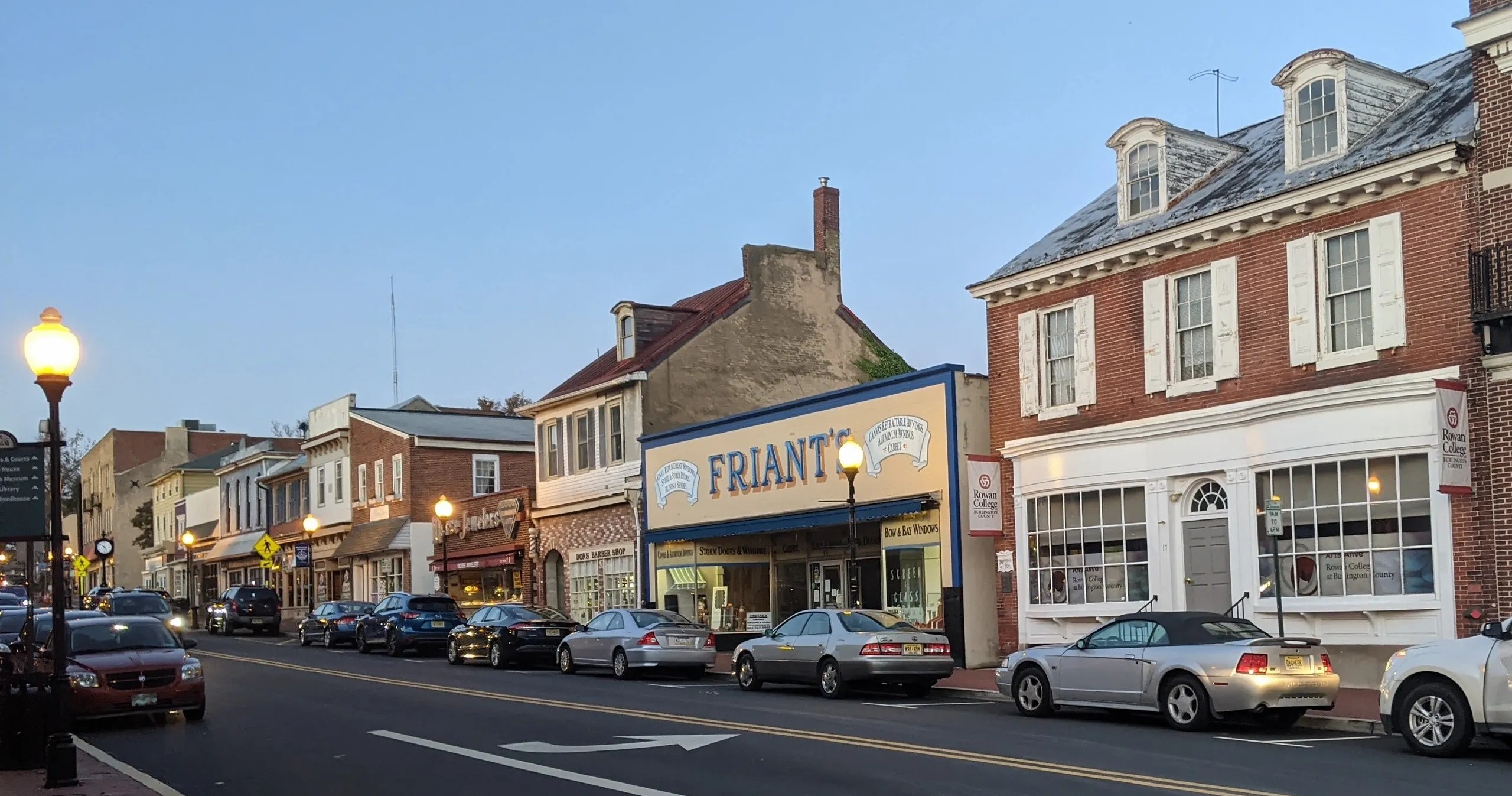
Why Lumberton Is a Distinctive Walking-tour Town
Lumberton is the sort of place that rewards a slow pace. The town's stories live at ankle level—wooden plank sidewalks that remember millhands, weathered farm fences framing soybean fields, and the long, low hum of the Rancocas Creek threading through wetlands that glow with cattails. Walking here is less about bagging a landmark and more about noticing the layered details: the way a church spire interrupts a cornfield horizon, the faded paint on a clapboard house that hints at generations, and the small clasp of businesses clustered as if to keep old routines alive.
A walking tour in Lumberton can be tailored to any mood. For history buffs, interpretive routes wind through the village core and point to 19th-century industry—grist mills, bridge crossings, and the transportation lines that once stitched rural New Jersey to larger markets. For nature-focused travelers, riverside promenades and short boardwalks offer quiet birding and seasonal floods that reshape the floodplain each year. And for food-minded visitors, farm lanes and local markets open into a patchwork of food-shed experiences: farm stands with pick-your-own options, seasonal markets, and restaurants that lean on locally sourced fare.
What sets Lumberton apart is the intimacy of scale. Unlike sprawling urban walking tours, these routes fit into half-day explorations: a morning heritage stroll followed by lunch at a family-run diner, or an afternoon wetland walk paired with sunset at a low bluff above the creek. That compactness makes logistic planning simple—parking is rarely far, public spaces are accessible, and you can combine a short guided walk with cycling, paddling, or a scenic drive to nearby preserves if you want to expand your day without sacrificing the pedestrian tempo.
Seasonality is central to the experience. Spring brings a flush of marsh wildflowers and migratory birds, summer offers dense canopy shade along shaded lanes, fall ignites farm hedgerows and the orchard harvest, and winter’s quiet exposes landscape contours that are otherwise softened by vegetation. Because many routes use municipal sidewalks and public greenways rather than remote trails, the activity is broadly accessible year-round, with planning considerations for heavy rains, muddy sections after snowmelt, and insect season in the warm months.
Ultimately, Lumberton’s walking tours are an exercise in close-looking: they teach you how to read a small town’s economy, ecology, and built environment by foot. For travelers seeking gentle adventure—where the payoff is in conversation, craft, and the small, local scenes that often go unnoticed—Lumberton offers routes that are both approachable and quietly revelatory.
Walking tours here bridge cultural history and active recreation: you can blend a heritage stroll with birding on the creek or finish a neighborhood tour with a farm-to-table meal.
Because many routes use low-traffic roads, greenways, and municipal sidewalks, walking in Lumberton is family-friendly and accessible for a range of fitness levels.
The harbor is the gateway, and the Pacific becomes the classroom.
Weather-driven changes matter: check creek levels after heavy rain, and expect mosquitoes in summer; fall and spring are the most comfortable windows for longer walking days.
Choose by purpose
Whale watching, snorkeling, sunset sailing, cultural canoeing, harbor sightseeing, or private chartering.
Start near the city
Waikiki and Honolulu Harbor are primary hubs, with some trips launching near Hanauma Bay.
Confirm the vessel
Gangways, shaded seating, and boarding requirements vary according to vessel size and operator.