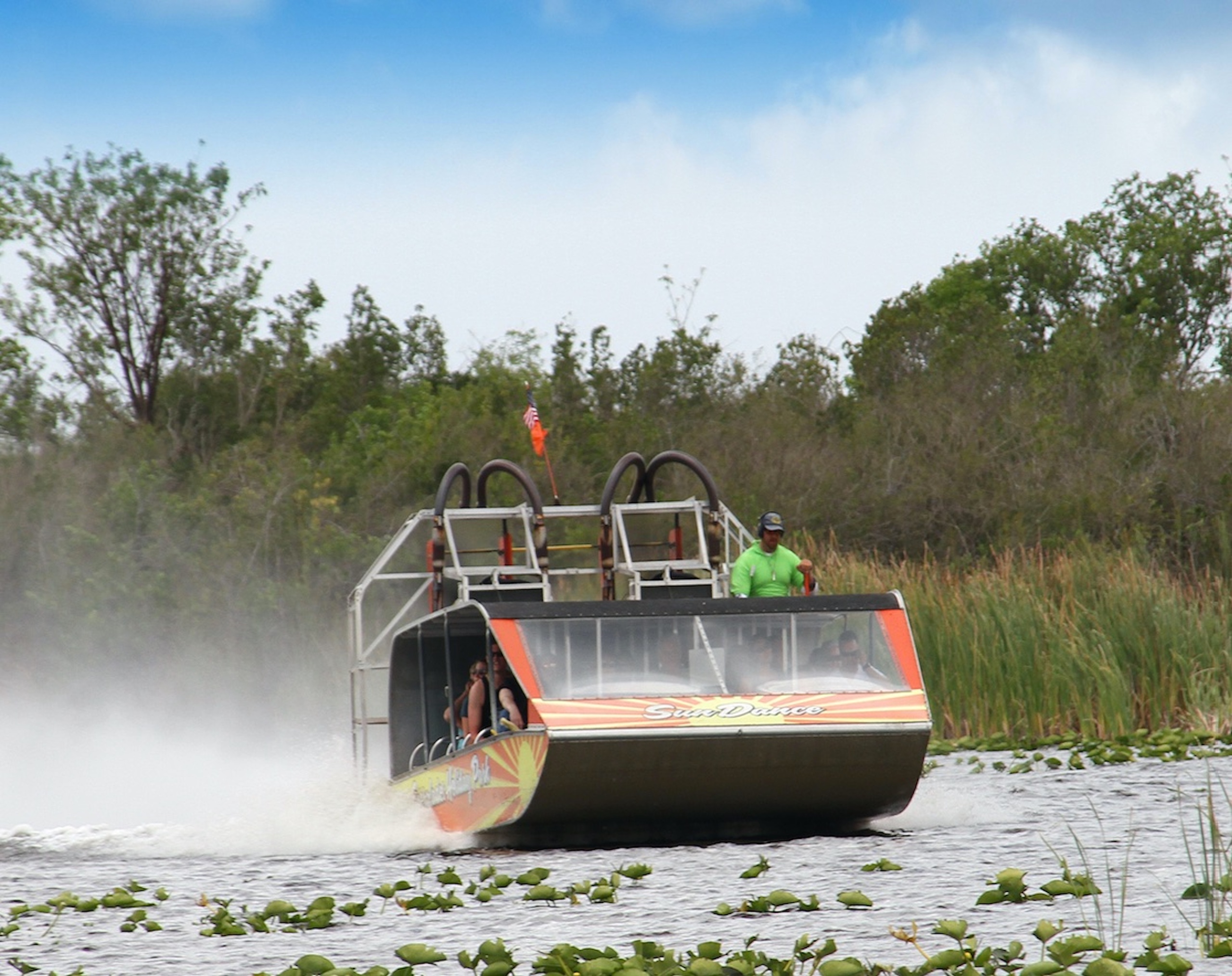
Why Miami Springs Is a Standout Airboat Destination
There is an immediate grammar to traveling by airboat: the engine's shriek, the flat planing hull, the sudden lurch into open tidal marsh — and then the landscape rearranges itself. Miami Springs sits at the urban edge of a vast network of freshwater sloughs, mangrove pockets, and sawgrass prairies that feed into the greater Everglades. From the boat, the region reads like a living map: long green ribbons of grass, shallow basins that reflect cloud and sun, and islands of mangrove that act as fortress towns for wading birds and crustaceans. Riding an airboat here is not only about thrills; it's one of the clearest ways to understand why South Florida's water systems are both fragile and ferociously productive.
On a practical level, airboats unlock terrain that conventional craft cannot—shallow flats, oyster bars, and the ribbon-like channels hacked by currents and tides. That access matters. It makes short, sensory-rich experiences possible for day-trippers from Miami and beyond, and it lets naturalists get close enough to point out behavior and habitat without heavy canoeing logistics. For photographers and wildlife fans, the flat silhouette of the boat and the elevated seating provide sightlines that feel almost designed for spotting. But the experience is ecological as much as it is visual. The rhythms of the airboat season mirror rainfall and water flow: in the dry months, wildlife concentrates in deeper channels and prairies dry into honeycombed flats that hold schools of fish and the alligators that follow them. In the wet season, water spreads, birds disperse more widely, and the Everglades reasserts its identity as a slow-moving river of grass.
Culturally, an airboat ride out of Miami Springs is where the city's modern pulse meets a landscape shaped by centuries of Indigenous stewardship, early settlers, and the rise of conservation. Guides often weave in local history — from Seminole presence and the translation of seasonal cycles into subsistence patterns, to more recent battles over water management and land use. That context turns an airboat ride into a narrative: you are not just watching wildlife; you are witnessing an ecosystem that has been negotiated and contested, cared for and compromised. For travelers seeking a balance of excitement and context, airboat outings provide both: a kinetic, sensory trip across living wetlands and an entry point into the conversations that determine the area's future.
Practical considerations follow the poetry: safety is straightforward but non-negotiable (eye and ear protection, clear briefings, and experienced captains matter), and weather governs the feel of every trip. The best outings fold in other low-impact activities — guided marsh walks, birding stops, or short kayak sections — so plan with purpose. For anyone visiting Miami Springs who wants a deep, immediate introduction to South Florida's watery backbone, airboats remain an efficient, memorable, and surprisingly intimate way to see the Everglades' edge.
Access and variety: Tours out of Miami Springs range from 30-minute thrill rides to multi-hour eco-tours that include on-foot marsh edges and photography stops. That range makes airboats appropriate for families, photographers, and serious naturalists alike.
Seasonal rhythm: The dry season concentrates wildlife and yields easier viewing; the wet season expands habitat and brings lush growth but more dispersed wildlife and higher insects. Plan timing around your priorities—close encounters in dry months, vibrant growth and fewer crowds in wet months.
Choose by purpose
Whale watching, snorkeling, sunset sailing, cultural canoeing, harbor sightseeing, or private chartering.
Start near the city
Waikiki and Honolulu Harbor are primary hubs, with some trips launching near Hanauma Bay.
Confirm the vessel
Gangways, shaded seating, and boarding requirements vary according to vessel size and operator.