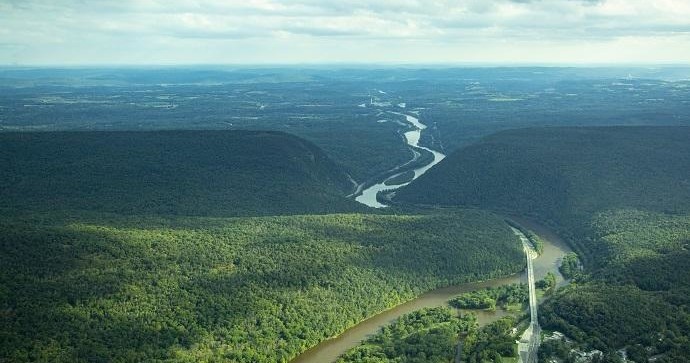
There is a particular kind of hush that comes when you lift away from the ground in northwest New Jersey. Montague sits at the northern shoulder of the Kittatinny Ridge and the western edge of a landscape that falls away toward the Delaware River—terrain that, in the right conditions, turns air into a playground for everything from gentle balloon rides to dynamic ridge soaring. The geography matters: long linear ridgelines, broad agricultural valleys, and the river corridor create predictable thermal patterns and wind funnels that pilots and instructors learn to read. For a visitor, that means more reliable mornings for balloonists, defined launch options for paragliders, and scenic flight paths that emphasize the contrast between forested ridges and the river’s braided bottomlands.
This region’s human scale is part of the appeal. Montague’s small-town roads and open fields provide accessible launch and landing areas without the congestion of bigger tourist hubs. At sunrise you can watch farm fields stripmist into the valleys as a balloon rises; later in the day, if conditions allow, experienced paragliders will run a ridge and ride the lift line. Flying here often feels intimate rather than spectacle-driven—an experience shaped by light, weather and the slow reveal of the landscape. That intimacy also brings responsibility: the same agricultural fields, wildlife refuges, and private parcels that make for beautiful approaches are working landscapes and sensitive habitats. Local pilots emphasize careful landing choices, noise discipline, and coordination with landowners.
Seasonality frames the experience. Late spring through early fall typically offers the best windows: stable mornings for ballooning and reliable thermal activity for paragliding and gliding. Autumn introduces another dimension—fired leaves and extended visibility create some of the most memorable flights of the year. Winter flights are possible but rarer and require advanced planning due to shorter days and more volatile weather. Whether you’re booking a tandem flight, enrolling in an introductory paragliding lesson, or chartering a scenic airplane tour, plan around wind forecasts and local launch schedules. The area’s proximity to regional airports and a handful of small airfields makes arranging lessons and scenic flights straightforward, but each discipline carries its own checklist of safety, training, and regulatory considerations.
Montague’s mix of ridgeline lift and river-valley thermals supports a range of air activities: quiet sunrise balloons, tandem paragliding experiences, scenic fixed-wing flights, and occasional glider operations where conditions permit.
Because much of the airspace overlaps with wildlife corridors and private land, successful outings depend on good local stewardship—advance communication with providers and landholders keeps access healthy for both pilots and the landscape.
The harbor is the gateway, and the Pacific becomes the classroom.
Complementary land-based activities—hiking at High Point State Park, paddling on calmer stretches of the Delaware, or photographing fall color—pair well with air outings and can fill weather-dependent downtime.
Choose by purpose
Whale watching, snorkeling, sunset sailing, cultural canoeing, harbor sightseeing, or private chartering.
Start near the city
Waikiki and Honolulu Harbor are primary hubs, with some trips launching near Hanauma Bay.
Confirm the vessel
Gangways, shaded seating, and boarding requirements vary according to vessel size and operator.