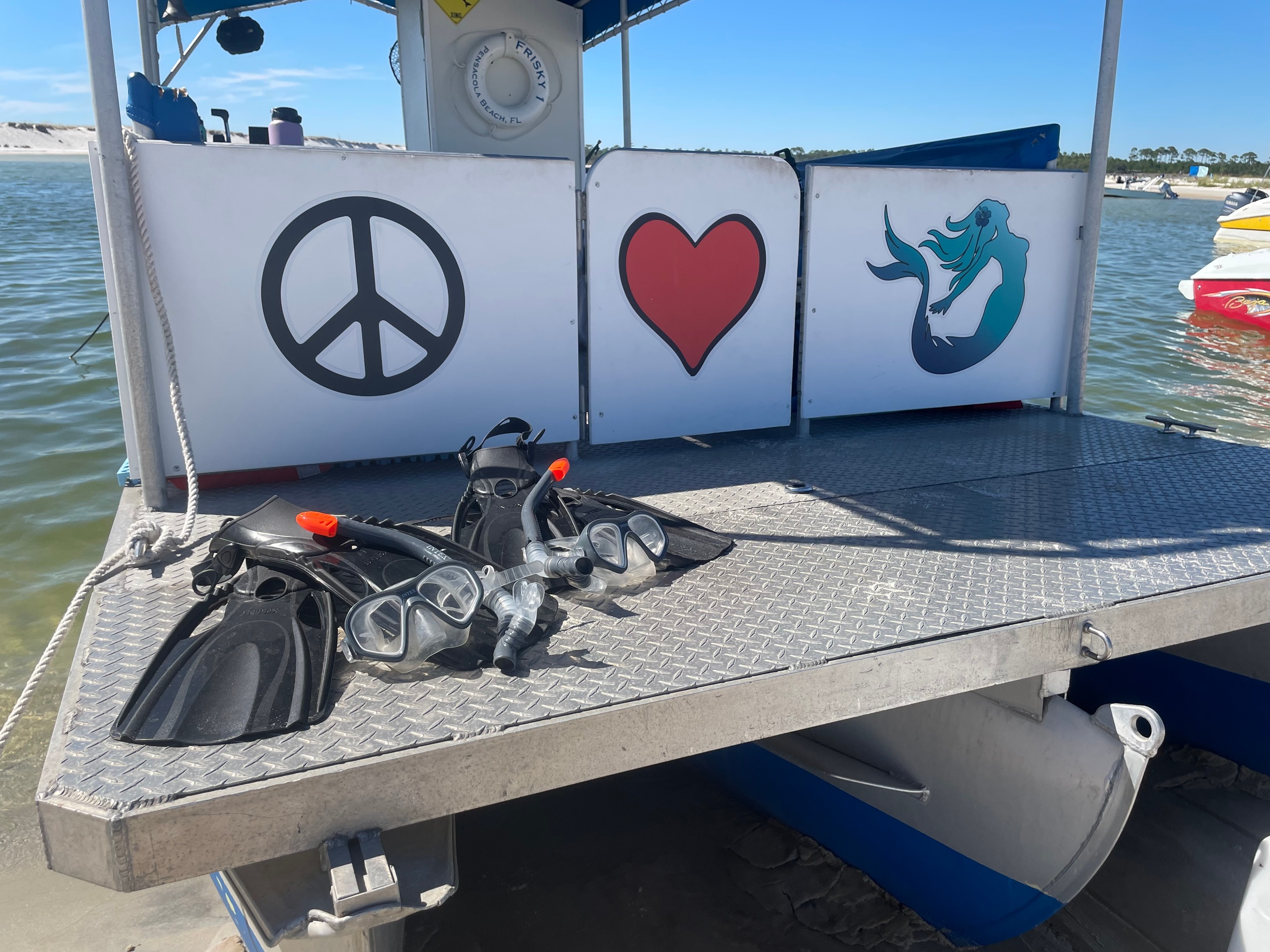
Navarre Beach surprises first-time visitors with how approachable its underwater world is. Unlike dramatic tropical coral reefs, the Gulf here is a mosaic of seagrass meadows, shell-strewn sand flats, and purpose-sunk artificial reefs that gather life. From the water’s edge the scene is intimate: juvenile fish dart through blades of turtle grass, stingrays glide like living shadows over pale sand, and during warm months schools of silvery baitfish flicker near pilings and rock piles. The shallow profiles and calm, protected stretches of Santa Rosa Sound make the area unusually friendly to people who are new to snorkeling, families with older children, and travelers looking for a short boat trip rather than a full-day expedition.
Seasonality and weather shape the character of every snorkeling day. Late spring and summer bring the warmest water, longest daylight, and the best window for calm seas. Visibility tends to be clearest on days with light wind and following several days without storms—then the water can read as bright, translucent green to blue, and marine life is active near the surface. Fall can offer quieter beaches and still-warm water, while winter reduces water temperature and softens surface activity; a thin wetsuit extends the season for dedicated snorkelers. Tides matter more than many visitors expect: low to mid tide near reefs and pilings concentrates creatures and exposes sandbars for easy wading, while strong tidal flows can create surgy conditions that are better left to experienced swimmers.
Practical accessibility is another reason Navarre shines. The Navarre Beach Pier provides a convenient platform to scout conditions before committing to the water and serves as a launch point for shore snorkeling that rarely requires a long swim. Local outfitters and dive shops run short boat trips to artificial reefs and natural outcrops 1–4 miles offshore, turning what could be a difficult navigation problem into a relaxed guided experience. And because the coast here is less trafficked than many Florida tourist hubs, it's common to find small, vibrant scenes of marine life with few other snorkelers nearby. Responsible visitation is essential: the ecosystems—especially seagrass beds—are fragile. Observant, respectful snorkeling yields rich rewards: close looks at pipefish, juvenile grouper, southern stingrays, and, on lucky days, loggerhead turtles and transient dolphins.
Shallow seagrass meadows and sand flats make for easy, low-risk entries and excellent sightlines for spotting juvenile fish, rays, and crustaceans.
Artificial reefs (reef balls and purpose-sunk materials) within a short boat ride host denser, larger species and are the best spots for guided snorkel trips.
The harbor is the gateway, and the Pacific becomes the classroom.
Pier and shoreline access points reduce logistic friction—no long boat ride or technical entry required for solid snorkeling.
Wind, tide, and recent storms have an outsized effect on visibility; plan around calm mornings and lower wind forecasts.
Choose by purpose
Whale watching, snorkeling, sunset sailing, cultural canoeing, harbor sightseeing, or private chartering.
Start near the city
Waikiki and Honolulu Harbor are primary hubs, with some trips launching near Hanauma Bay.
Confirm the vessel
Gangways, shaded seating, and boarding requirements vary according to vessel size and operator.