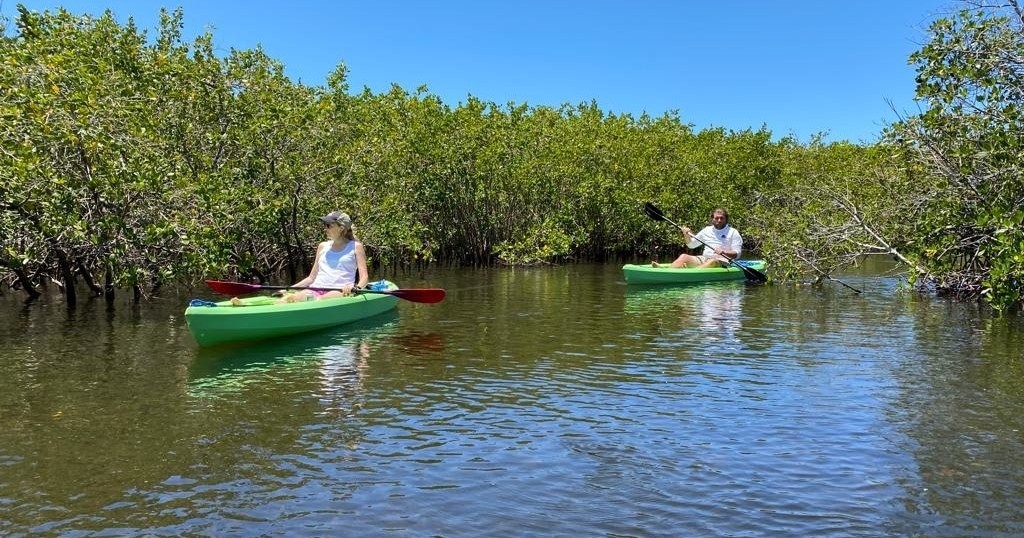
New Port Richey’s eco-tour appeal lives in transitions: where freshwater from the Pithlachascotee (Cotee) River meets the Gulf’s tannic tides, where mangrove roots weave living fences for juvenile fish, and where tiny barrier islands like Anclote Key host seabird colonies just offshore. On a single half-day outing you can move from shaded river paddles through sculpted mangrove tunnels to open-water vistas that reveal dolphins feeding on the tide, manatees gliding in slow wakes, and flocks of migratory shorebirds tracing the shoreline.
The city itself is compact and unassuming, but the surrounding geography is a microcosm of coastal Florida ecology. Salt marshes and seagrass beds act as nurseries for gamefish and as carbon sinks; sand flats expose beds of bivalves and green algae at low tide; and offshore keys preserve beaches and dunes that are critical for nesting sea turtles and terns. Guided eco tours here are often led by local naturalists—people who can move from species identification to explaining historical uses of the river, the role of indigenous peoples in shaping the landscape, and modern conservation challenges like water quality and coastal development.
Because New Port Richey sits at the northern edge of Florida’s subtropical zone, seasonality shapes the experience in distinct, useful ways. Spring and fall bring migratory birds and mild weather, summer delivers lush growth and abundant life beneath the surface (plus energetic mosquitoes at dusk), and winter offers quieter waters and easy visibility for shore-based spotting. The character of an eco tour depends on tide and time of day: early morning paddles favor bird activity and glassy water; afternoon trips near the barrier islands often reveal dolphin pods and the shifting beaches that make Anclote Key special.
Eco tours in New Port Richey pair naturally with complementary activities—shelling and snorkeling trips to Anclote Key, catch-and-release fishing charters that double as biology lessons, and bike rides along coastal parks for a land-based view of the same ecosystems. Above all, tours here emphasize story as much as species: you’ll leave with binoculars and a checklist, but also with context—the histories, the restoration efforts, and the practical ways visitors can support the resilience of these coastal systems.
Local guides focus on small-group experiences—kayak and paddleboard tours through mangroves, flat-bottom boat rides into shallow estuaries, and guided walks that decode salt-marsh ecology and shell middens.
Water quality and tide windows are central planning considerations. Many of the best viewing opportunities depend on low tides or outgoing flows that concentrate prey and attract birds and marine mammals.
The harbor is the gateway, and the Pacific becomes the classroom.
Conservation is part of the narrative: expect conversations about seagrass restoration, shorebird protection during nesting season, and how homeowners and visitors can reduce runoff and light pollution that affect sea turtle nesting.
Choose by purpose
Whale watching, snorkeling, sunset sailing, cultural canoeing, harbor sightseeing, or private chartering.
Start near the city
Waikiki and Honolulu Harbor are primary hubs, with some trips launching near Hanauma Bay.
Confirm the vessel
Gangways, shaded seating, and boarding requirements vary according to vessel size and operator.