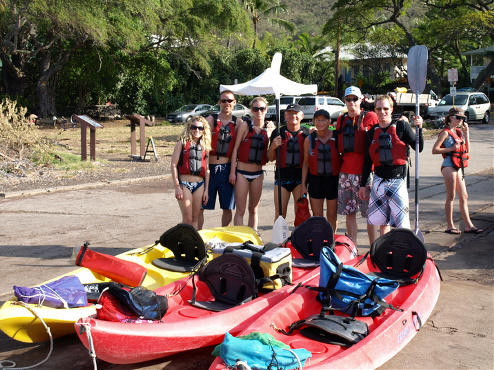
Pāhala sits inland from one of the Big Island’s most elemental shorelines: a stretch of coast where lava meets surf, black sand accumulates in quiet coves, and reefs roll outward into blue open water. For kayakers the appeal is elemental—few crowds, a sense of remoteness, and a coastline that rewards patient exploration. Paddling here is less about flashy infrastructure and more about reading the sea and the land. You cross a threshold from plantation-era town into an exposed coastal world shaped by volcanic geology and Pacific swells.
The routes that start from launch points near Pāhala are varied in tone but consistent in character. Short, sheltered paddles off a black-sand beach can be paired with reef snorkeling and easy wildlife viewing. Longer excursions hug lava cliffs and pass offshore pinnacles where seabirds wheel and where spinner dolphins and green sea turtles are commonly encountered. In winter months the same offshore corridor attracts migrating humpback whales—spectacle and swell arrive hand-in-hand, and that interplay defines how and when paddlers plan trips.
There’s a cultural layer to the coast, too. Kaʻū is shaped by Hawaiian place names, by the histories of land use that include fishing, farming, and sugar plantations, and by a living stewardship that asks visitors to tread lightly. Kayaks, by virtue of their small footprint, are an ideal way to experience both the ecological richness and the cultural backdrop—when paddlers arrive with respect for reefs, protected species, and shore access rules, the coastline tends to respond with quiet generosity.
Practically speaking, Pāhala’s appeal is tempered by logistics. The town is inland; put-ins and coastal access points require a short drive. Facilities are minimal in many spots, so self-sufficiency matters: extra water, fuel, spare paddle, and a solid plan are all part of safe enjoyment. For open-ocean traverses and cliff-hugging routes, local guides provide knowledge of currents, tide lines, and hidden entries into sea caves or sheltered coves—critical information in a place where conditions can shift quickly. For paddlers who want both solitude and safety, combining local guidance with personal skill builds the best trips.
Ultimately, Pāhala’s kayakscape is a study in contrasts: calm reef-lined bays that invite slow exploration, alongside exposed headlands where ocean energy sculpts the shoreline. Those contrasts create a rich palette of experiences—short coastal loops for beginners and multi-mile coastal runs for experienced paddlers—each offering a strong sense of place that lingers long after you’ve hauled your boat from the sand.
Coastal variety: small black-sand coves, lava cliffs, and offshore reefs create diverse paddle routes within a short distance.
Wildlife highlights include spinner dolphins close to shore, frequent green sea turtle sightings, and seasonal humpback whales offshore.
The harbor is the gateway, and the Pacific becomes the classroom.
Cultural context: Kaʻū’s landscape holds Hawaiian place names and land-use history; respect for access and marine stewardship is essential.
Choose by purpose
Whale watching, snorkeling, sunset sailing, cultural canoeing, harbor sightseeing, or private chartering.
Start near the city
Waikiki and Honolulu Harbor are primary hubs, with some trips launching near Hanauma Bay.
Confirm the vessel
Gangways, shaded seating, and boarding requirements vary according to vessel size and operator.