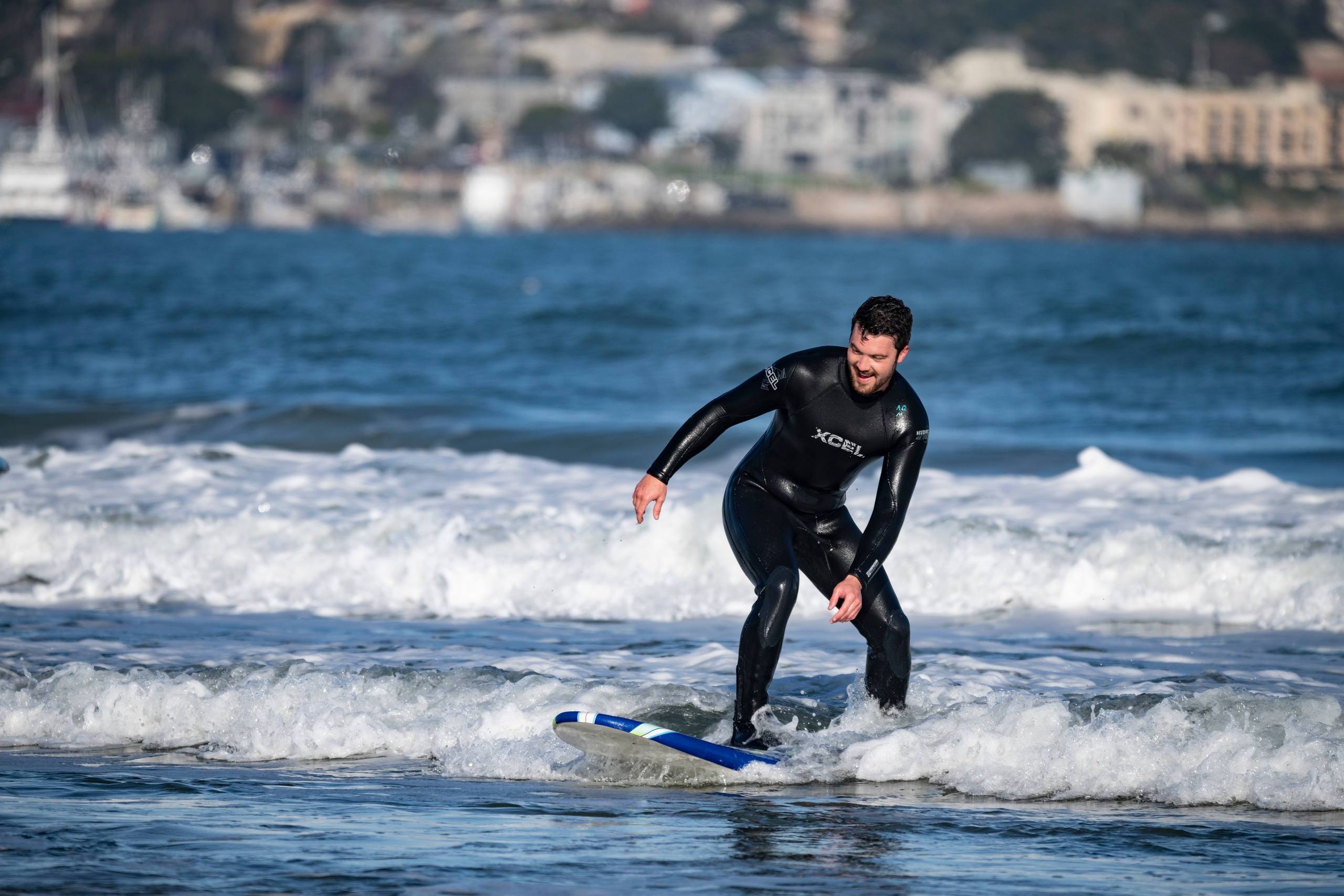
The surf around Sand City reads like a study in contrasts. On a calm summer morning the bay can feel like a wide, glassy playground — forgiving sandbars delivering gentle, long rides ideal for learners and longboarders. Come fall and winter, the same coastline becomes a more serious stage as northwest and west swells funnel into Monterey Bay. The water here is famously cold and clear, shaped by the upwelling of the Pacific and the dramatic drop-off of the bay floor, so paddling out always carries an awareness of the sea’s power and its thriving life: kelp forests, harbor seals, and migrating whales sometimes visible offshore. That marine abundance gives Sand City a unique surf rhythm; conditions change quickly with tide and wind, and reading the water—knowing where the sandbars open and where the current will pull—is part of the local craft.
Sand City itself is compact and practical. Unlike crowded touristy breaks elsewhere, it functions as a local access point to a larger Monterey Bay surf system. From here you can hop to nearby beach breaks or make a short drive to more defined points and reef breaks along the peninsula. The compact nature of the town makes logistics simple: park, suit up, and be on the sand within minutes. But don’t mistake convenience for simplicity—local etiquette is real, and waves that look mellow from the parking lot can be shaped by rip currents, kelp paddies, and shifting sandbars. Respect for the lineup and an emphasis on safety—good wetsuits, reliable leashes, and knowledge of tidal timing—keeps sessions enjoyable for all.
There’s also an environmental and cultural layer to surfing here. Monterey Bay’s marine protections, scientific institutions, and active conservation groups mean surfers share waves with a community invested in the ocean’s health. Local surf culture leans pragmatic and observant: people watch swell models, mind marine wildlife, and often pair surf trips with tidepooling, wildlife tours, or stand-up paddle sessions in calmer conditions. For travelers, Sand City is a gateway that combines manageable logistics with access to a diverse coastal playground—one where planning trumps bravado and where the reward is often quiet, high-quality sessions punctuated by encounters with the natural world.
Seasonal variety is the draw: small, clean summer surf for learners and longboarders; steeper, more powerful northwesterlies and swells in fall and winter for experienced riders.
The water is cold year-round compared to Southern California; a proper wetsuit and knowledge of tides and currents are essential.
The harbor is the gateway, and the Pacific becomes the classroom.
Marine life and kelp influence local conditions—expect wildlife encounters and variable paddling conditions near kelp beds.
Choose by purpose
Whale watching, snorkeling, sunset sailing, cultural canoeing, harbor sightseeing, or private chartering.
Start near the city
Waikiki and Honolulu Harbor are primary hubs, with some trips launching near Hanauma Bay.
Confirm the vessel
Gangways, shaded seating, and boarding requirements vary according to vessel size and operator.