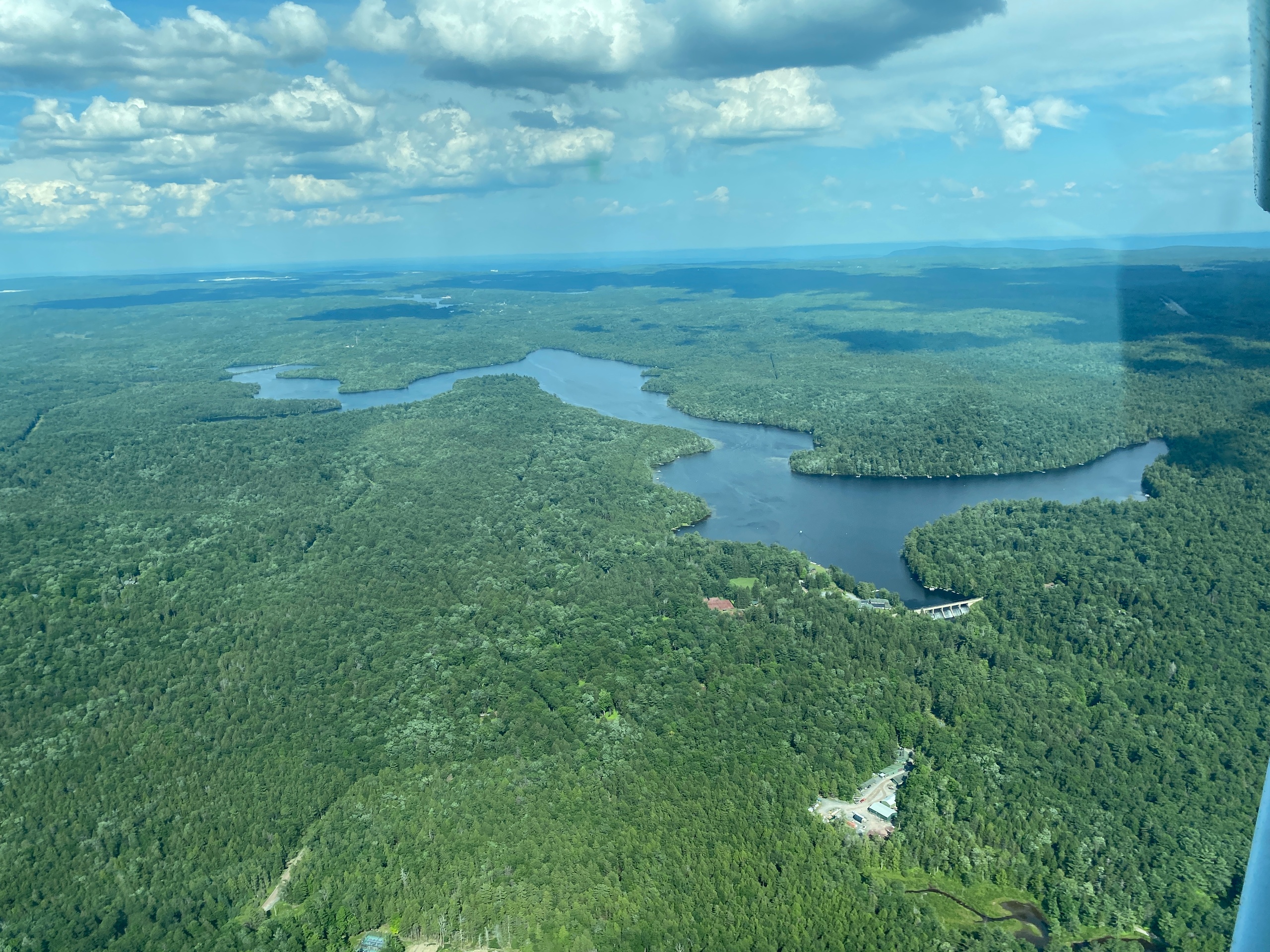
Throop sits at a crossroads of valley calm and upland edge—an unusual combination for airborne recreation. The borough itself is low-lying along the Lackawanna River, with neighborhoods and former industrial parcels that open into fields and floodplain meadows; those flat, accessible launch and landing zones are part of why balloon operations and small-scale scenic flights find this pocket of northeastern Pennsylvania convenient. Just uphill, the Moosic Mountains—part of the larger Appalachian foothills that preside over much of the region—offer ridge lines and sheltered faces that generate predictable lift for paragliding and powered paragliding pilots. Those successive layers of terrain create a compact learning ground: novices can sample gentle, guided balloon flights over open farmland and river meanders, while more experienced fliers head for ridgeline launches and thermally active afternoons.
The area's history folds into the experience. Once shaped by anthracite mining and rail commerce, the landscape carries scars and reclamation efforts that have produced broad fields, rail-trail corridors, and open sky corridors that are ideal for accessible landings and recovery. On clear mornings you can see glimpses of both old industry and green recovery from the air—the patchwork of reclaimed lots, suburban roofs, and the linear flash of the river—offering a uniquely human-angle for aerial photography and slow-flight scenic tours. Weather patterns here are practical: cool, stable mornings in spring and summer deliver the calm air balloonists prefer; afternoons, particularly on warm days, generate thermals that attract gliders and paragliders but can make flights bumpier. For aviators, understanding local microclimates—how the valley traps cool air at dawn and how ridge exposures heat quickly—is part of the planning process.
Access and logistics are straightforward by regional standards. Throop is a short drive from Scranton and Wilkes-Barre, and within reach of the Wilkes-Barre/Scranton International Airport for those arriving by commercial air. Private pilots and operators typically stage from nearby small airfields and landing strips; tandem paragliding and ultralight experiences frequently run from high-clearance points a short drive from town. Because much flight activity operates over private property or reclaimed industrial parcels, good pilots and providers maintain clear landing agreements and landowner relationships—travellers should favour established operators who emphasize safe, legal landings and respect for local property. Complementary activities are plentiful: post-flight hikes in the Moosics, riverside paddling on the Lackawanna, and rail-trail cycling offer grounded ways to extend a day in the air into a longer adventure package.
Morning calm is king: many air activities in and around Throop run at first light when winds are light and thermals minimal—book accordingly and expect early pickup or meeting times.
Throop's mix of open land and nearby ridgelines creates an accessible progression for visitors: tethered or short scenic flights, then tandem paragliding or ultralight hops for those seeking more exposure.
The harbor is the gateway, and the Pacific becomes the classroom.
Respect for land access and local weather patterns is essential. Operators who coordinate with landowners and communicate clear cancellation policies will give you the safest and most reliable experience.
Choose by purpose
Whale watching, snorkeling, sunset sailing, cultural canoeing, harbor sightseeing, or private chartering.
Start near the city
Waikiki and Honolulu Harbor are primary hubs, with some trips launching near Hanauma Bay.
Confirm the vessel
Gangways, shaded seating, and boarding requirements vary according to vessel size and operator.