Why Volcano Village Is a Distinct Climbing Destination
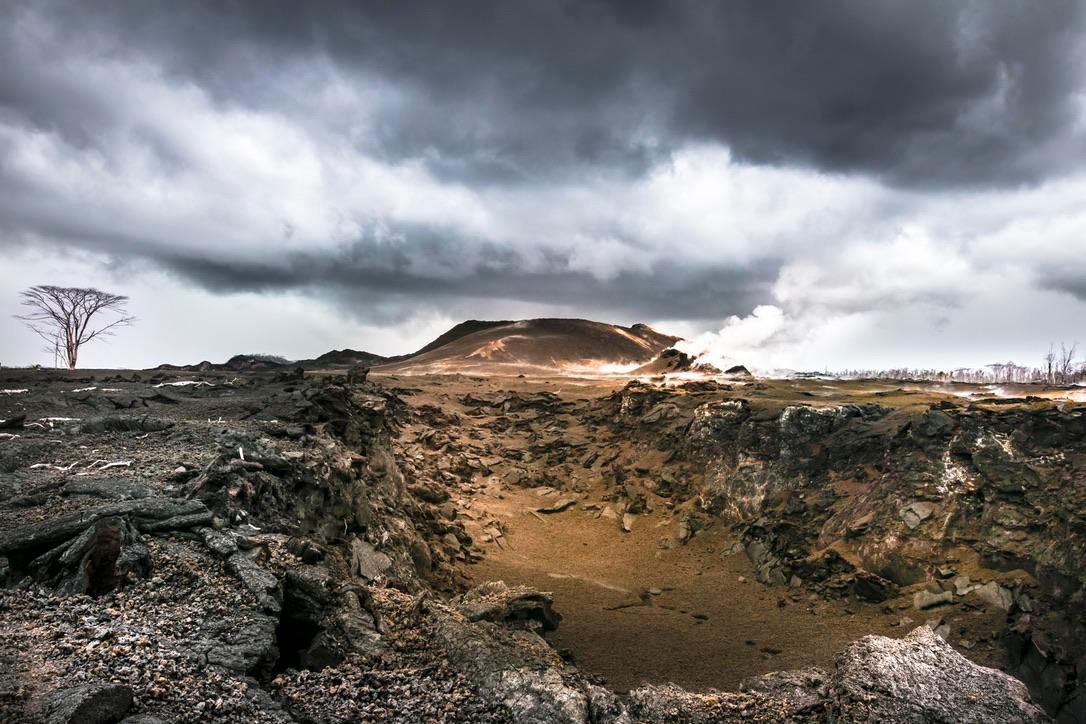
Volcano Village sits at a geological crossroads where fire-made landscapes still feel new. The island’s most recent eruptions sculpted surfaces that range from glassy pahoehoe to the broken, knife-edged textures of aa. For climbers who are drawn to unusual movement and terrain that tests more than finger strength — an eye for hold quality, careful footwork, and the humility to step back when ground is unstable — this is a compelling place.
Climbing around Volcano Village rarely looks like a traditional route in a bolted sport area. Instead, it’s a mosaic: low-angle boulder problems perched on cooled lava shelves, exposed scrambles across cinder cones that reward route-finding more than straight-line force, and technical approaches over old flow fields where the rock can be flaky, glassy, or unexpectedly brittle. That variability is the point. Climbers here learn to read volcanic rock: identifying stable holds in a landscape that often appears untrustworthy, improvising gear solutions when anchors are limited, and prioritizing safety in a place where the earth’s history is visible with every step.
Beyond the physical challenges, the area is steeped in cultural and ecological significance. Many of the lava fields and ridgelines sit within sight of sacred places and protected habitats. Climbing here is not just an athletic pursuit but an exercise in stewardship — moving lightly, avoiding fragile native plants that colonize cooled flows, and following guidance from park authorities and local communities. Weather and air quality are active variables: vog (volcanic haze), sudden showers, and closures related to volcanic activity can change plans on short notice. Because access frequently depends on current volcanic conditions, local knowledge and pre-trip planning are essential: check National Park Service alerts, community advisories, and, when available, hire a local guide who understands both the rock and the regulations.
The reward is singular. When conditions align, the remoteness and geological drama create moments of pure, elemental climbing — a sharp hold on a basalt edge, a skyline of crater rims silhouetted against a Pacific sunset, or the sound of wind across an ancient flow. Complementary experiences — guided volcano tours, lava-tube explorations, native-plant walks, and night-sky viewing — round out a trip that’s part climbing expedition, part natural history lesson. For adventurous climbers who value technical adaptability and cultural awareness, Volcano Village offers an experience that is rare and uncompromising.
The climbing is intimate and technical: short, precise problems and scrambles rather than long multi-pitch lines. Expect to combine rock skills with route-finding and careful movement on variable volcanic surfaces.
Access and safety are governed by geology and local policy. Park closures, toxic gases, and fragile ecosystems mean climbers should plan for alternate objectives and prioritize guided outings when attempting unfamiliar terrain.
Choose by purpose
Whale watching, snorkeling, sunset sailing, cultural canoeing, harbor sightseeing, or private chartering.
Start near the city
Waikiki and Honolulu Harbor are primary hubs, with some trips launching near Hanauma Bay.
Confirm the vessel
Gangways, shaded seating, and boarding requirements vary according to vessel size and operator.