Why Bus Tours in Wainaku Are Uniquely Rewarding
Wainaku’s soft coastal geography and compact cultural pockets make it an ideal place to let someone else do the driving—and the storytelling. The experience of a bus tour here is less about distant vistas viewed from a car and more about paced, intimate introductions: the guide pointing out a taro lo‘i tucked beneath a ferned gulch, a century-old plantation building converted into a community hub, or a sudden opening in the palms where Hilo Bay glints. The roads that fan out from Wainaku are themselves part of the attraction. Narrow, lush, often bordered by stone walls or braided with banyan roots, they reveal the island’s layered history—ancient ahupuaʻa land divisions, missionary-era churches, the rise and fall of sugar and pineapple, and the enduring presence of Hawaiian cultural practices. A well-designed bus tour curates those threads into a single narrative arc, so you come away with both the images and the context that make them memorable.
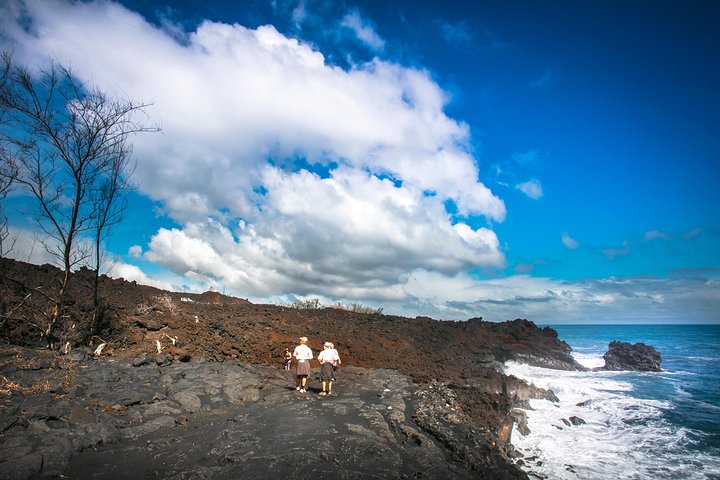
Beyond history, bus tours unlock natural highlights that would take time and local knowledge to stitch together independently. Short, guided stops at Rainbow Falls or the Onomea Bay overlook turn a quick photo-op into a learning moment about watershed ecology and endemic plants. Along the Hamakua Coast, drivers slow for cliff-edge viewpoints where you can feel the trade winds and peer at sea caves and lava-formed shoreline. Many operators time half-day and full-day routes to include optional short walks—staircase descents to tidepools, raised boardwalks through fern groves, or 10–20 minute loops to small waterfalls—so the trip is tactile and active without requiring full hiking gear or map skills.
For travelers who prioritize accessibility and ease, bus tours remove the friction of parking, navigating narrow roads, and local driving etiquette, while still offering the flexibility to explore on foot at select stops. For photographers and naturalists, a narrated tour clarifies what you’re seeing: how endemic species respond to Hilo’s high rainfall, where seabirds like red-footed boobies are most likely to roost, and how recent lava flows continue to shape the coastline. And for anyone interested in cultural travel, local guides—often born and raised in the Hilo area—bring forward stories about canoe landings, fishing practices, and the multi-ethnic labor histories of plantations, transforming a scenic drive into a compact cultural immersion. In short, Wainaku bus tours are designed to be low-effort, high-context experiences that let the landscape, the sea, and the island’s people do the teaching.
Time-efficient and interpretive: Bus tours compress a lot of local knowledge into a single, navigable itinerary—useful if you have limited days but want depth.
Good for mixed-ability groups: Because stops are short and staged, bus tours are easier to share between travelers of different fitness levels, families, and older visitors.
The harbor is the gateway, and the Pacific becomes the classroom.
Complementary experiences: Combine a Wainaku bus tour with a guided rainforest walk, a boat-based whale or dolphin excursion (seasonal), or a curated food tour in Hilo for a fuller sense of place.
Choose by purpose
Whale watching, snorkeling, sunset sailing, cultural canoeing, harbor sightseeing, or private chartering.
Start near the city
Waikiki and Honolulu Harbor are primary hubs, with some trips launching near Hanauma Bay.
Confirm the vessel
Gangways, shaded seating, and boarding requirements vary according to vessel size and operator.