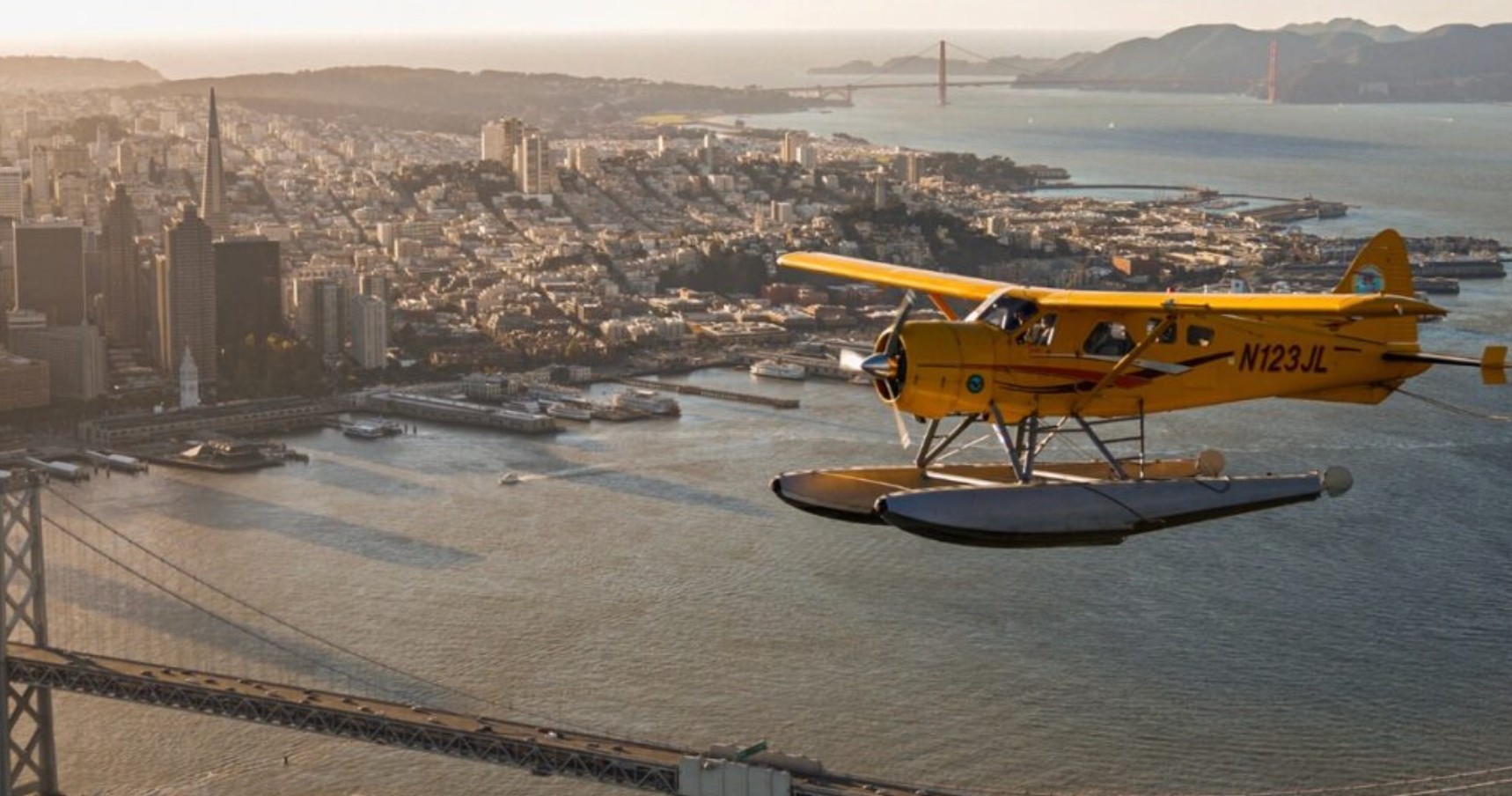
There’s a specific kind of hush that settles when a small propeller plane lifts you above Woodside’s tree-lined canyons. Driving the winding roads into the Santa Cruz Mountains gives you a tactile sense of place—the gravel under tires, the smell of bay laurel and madrone—but being airborne rearranges scale. Redwood crowns become a textured green quilt, ridge lines that feel long on foot compress into elegant curves, and the Bay reveals the geometry of shorelines, estuaries, and bridges in a single glance.
The appeal of airplane experiences here is both practical and poetic. Practically, short scenic flights are an efficient way to sample the region: in under an hour you can cross the Peninsula, skim the Pacific edge, and loop over San Francisco’s skyline. For photographers and landscape enthusiasts the vantage point is unmatched; the interplay of light, the patchwork of farms and estates, and the sudden reveal of the ocean after dense forest can turn an afternoon into a portfolio’s worth of material. Culturally, the Bay Area’s aviation story—early flight schools, private aerodromes, and a long tradition of commuter and recreational flying—still echoes in the small-aircraft community that services the region.
But airplane travel here is not simply about panoramas. It opens doors to complementary adventures: a morning flight can lead into a day hike on a ridge you just observed from above, or set the tone for a coastal bike ride after landing. Environmental awareness is also part of the experience; pilots and operators are often mindful of noise abatement procedures and sensitive habitats, and flight paths favor corridors that reduce disturbance to wildlife and residential areas. Weather plays a decisive role—fog can turn a planned ocean circuit into a low-level bay loop—so flexibility is essential. The emotional lift of flying low over the redwoods is amplified by that unpredictability: the same route can feel dramatically different from one season to the next.
For travelers considering an airplane experience in Woodside, the practical calculus matters as much as the romance. Expect concise safety briefings, relatively small aircraft (single- or light twin-engine), and a need to coordinate logistics with nearby small airports. Accessibility is straightforward by car from town, and many pilots will point out landing options, weather considerations, and photography windows. Ultimately, these flights are best approached as curated slices of the region—brief, vivid, and easily woven into a broader day of outdoor exploration.
Scenic flights condense a day’s worth of landscape perspective into minutes—ideal for travelers short on time but hungry for visual context.
Weather and visibility drive the experience: mornings and late afternoons often offer the most dramatic light, while low clouds and fog reshape routes.
The harbor is the gateway, and the Pacific becomes the classroom.
Airplane experiences work best when paired with ground adventures—hiking, coastal drives, and vineyard visits are natural complements.
Choose by purpose
Whale watching, snorkeling, sunset sailing, cultural canoeing, harbor sightseeing, or private chartering.
Start near the city
Waikiki and Honolulu Harbor are primary hubs, with some trips launching near Hanauma Bay.
Confirm the vessel
Gangways, shaded seating, and boarding requirements vary according to vessel size and operator.