About This Adventure Destination
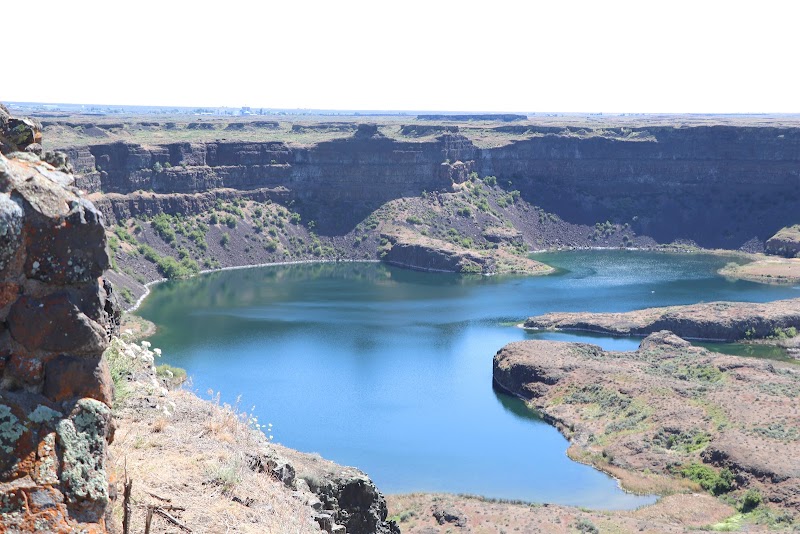
Dry Falls is a striking natural landmark located near Coulee City in eastern Washington, within a landscape shaped by cataclysmic Ice Age floods. This ancient waterfall, once far larger than Niagara Falls, stretches nearly three and a half miles across and plunges more than 400 feet deep into a vast basalt canyon. Though water no longer rushes here, the dramatic cliffs remain, forming one of the world’s largest known prehistoric waterfalls.
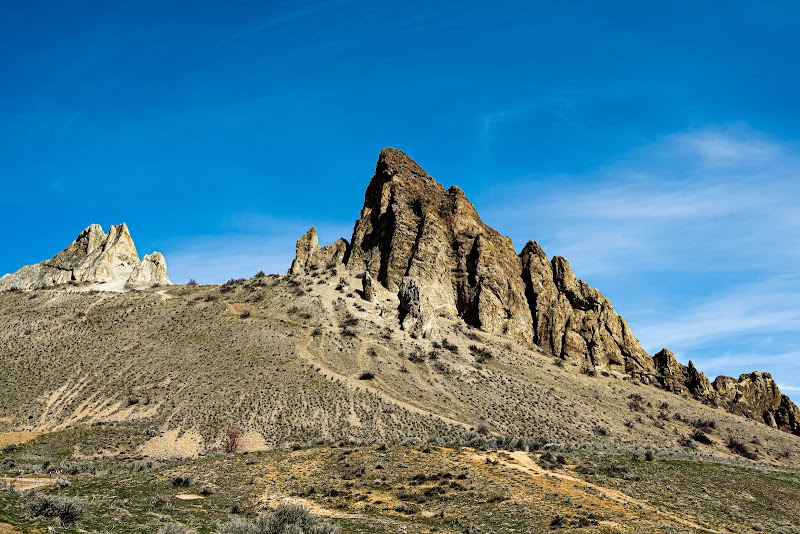
Visitors encounter panoramic views of the eroded volcanic plateau, where layers of basalt are carved by immense floodwaters from thousands of years ago. The surrounding terrain, part of Sun Lakes-Dry Falls State Park, features quiet lakes, rugged cliffs, and open spaces offering insight into the powerful natural forces that created this vast chasm. The visible basalt columns and sheer cliff faces are reminders of volcanic activity followed by immense floods that sculpted the unique landscape.
The nearby visitor center provides detailed exhibits on the geological history and the Ice Age Missoula Floods that shaped the region. Knowledgeable park rangers offer engaging information, making this site an educational stop as well as a visual standout. In addition to its geological importance, Dry Falls is a favored spot for those interested in nature photography, hiking short trails, and learning about Earth’s dynamic past.
Few locations combine dramatic scenery with geological significance so accessibly, making Dry Falls a must-see destination for anyone traveling through Washington’s eastern plateau.
Dry Falls is a highly regarded geological site with historical significance and stunning natural beauty, offering a range of outdoor activities. Its impressive landscape, rich in geological heritage, ranks it as a prized outdoor destination, though slightly less known than the very top natural sites worldwide.