About This Adventure Destination
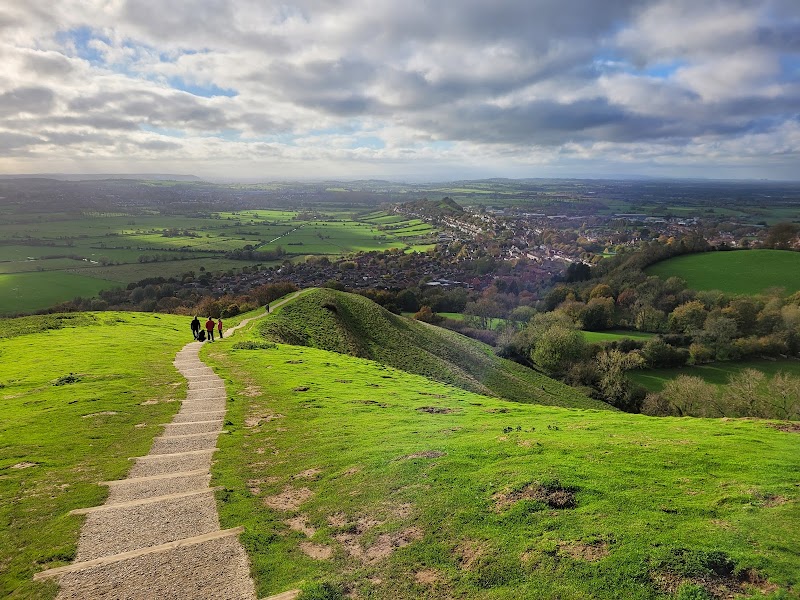
Glastonbury Tor rises prominently above the flat plains of Somerset, England, near the town of Glastonbury. This distinctive natural hill draws visitors for its striking conical shape and the historic St. Michael's Tower ruins perched at its summit. The Tor is an ancient hill formed of layers of sandstone and clay, shaped by natural erosion over thousands of years, creating a unique geological feature with gentle slopes leading up to the peak. The vibrant green grass covers the hill, contrasting with the often dramatic skies, making it a captivating sight year-round. The area around the Tor includes peaceful pastoral landscapes, scattered woodlands, and farmland, offering a classic English countryside experience with wide panoramic views extending for miles in all directions. The hill's summit has long attracted human interest; from medieval Christian significance marked by the tower remains to associations with Celtic and Arthurian legends, the site carries a rich cultural heritage. Glastonbury Tor is particularly renowned for its labyrinth at the hill base and its mystical atmosphere, drawing walkers and history enthusiasts alike. This hill is completely natural in origin, with the stepped pathway facilitating easier access without disturbing the environment, making it ideal for outdoor recreation. Visitors can appreciate both the geological uniqueness of this elevated feature and the deep history that surrounds it. Whether for a peaceful walk, photography, or soaking in a centuries-old setting, Glastonbury Tor stands out as a distinctive natural landmark within Somerset’s rolling countryside.
Glastonbury Tor is a well-known natural hill with a fascinating historical context and outstanding views, making it a valued destination for walkers and history fans. However, it lacks the extreme geological uniqueness or vast wilderness scale seen in top-tier natural landmarks. Its moderate elevation, combined with cultural importance and accessible trails, positions it as a highly attractive but more regionally significant natural landmark rather than one of the world’s most uniquely iconic natural formations.