About This Adventure Destination
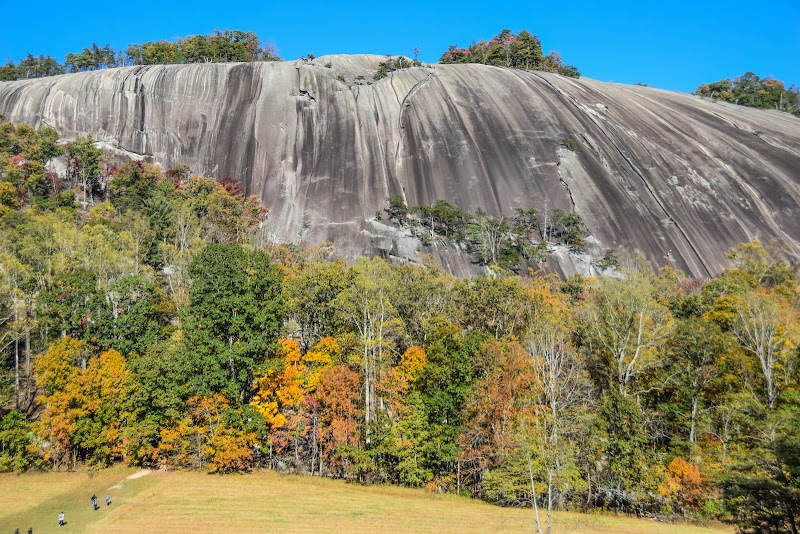
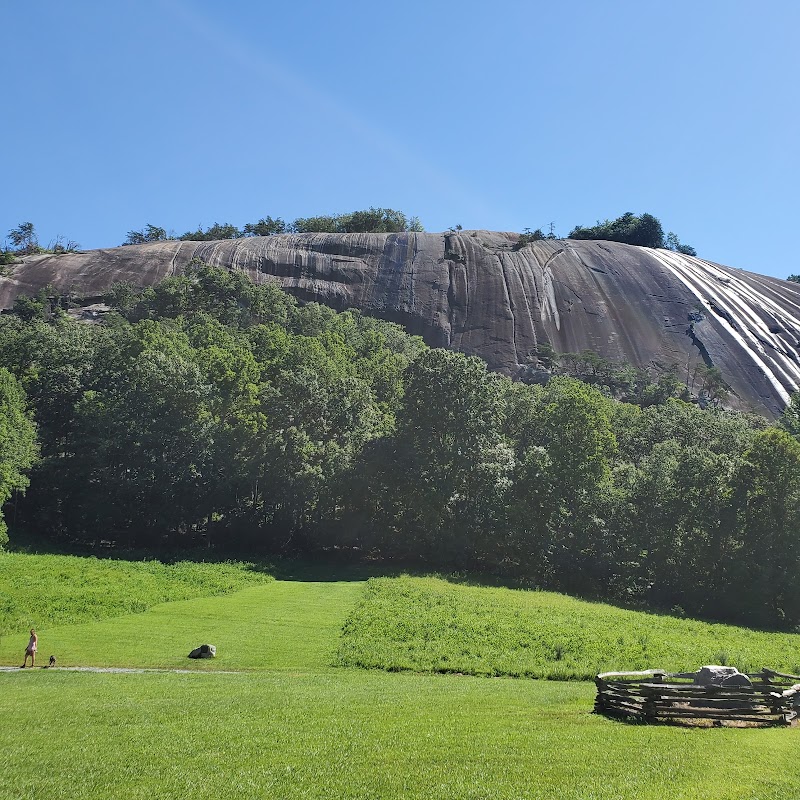
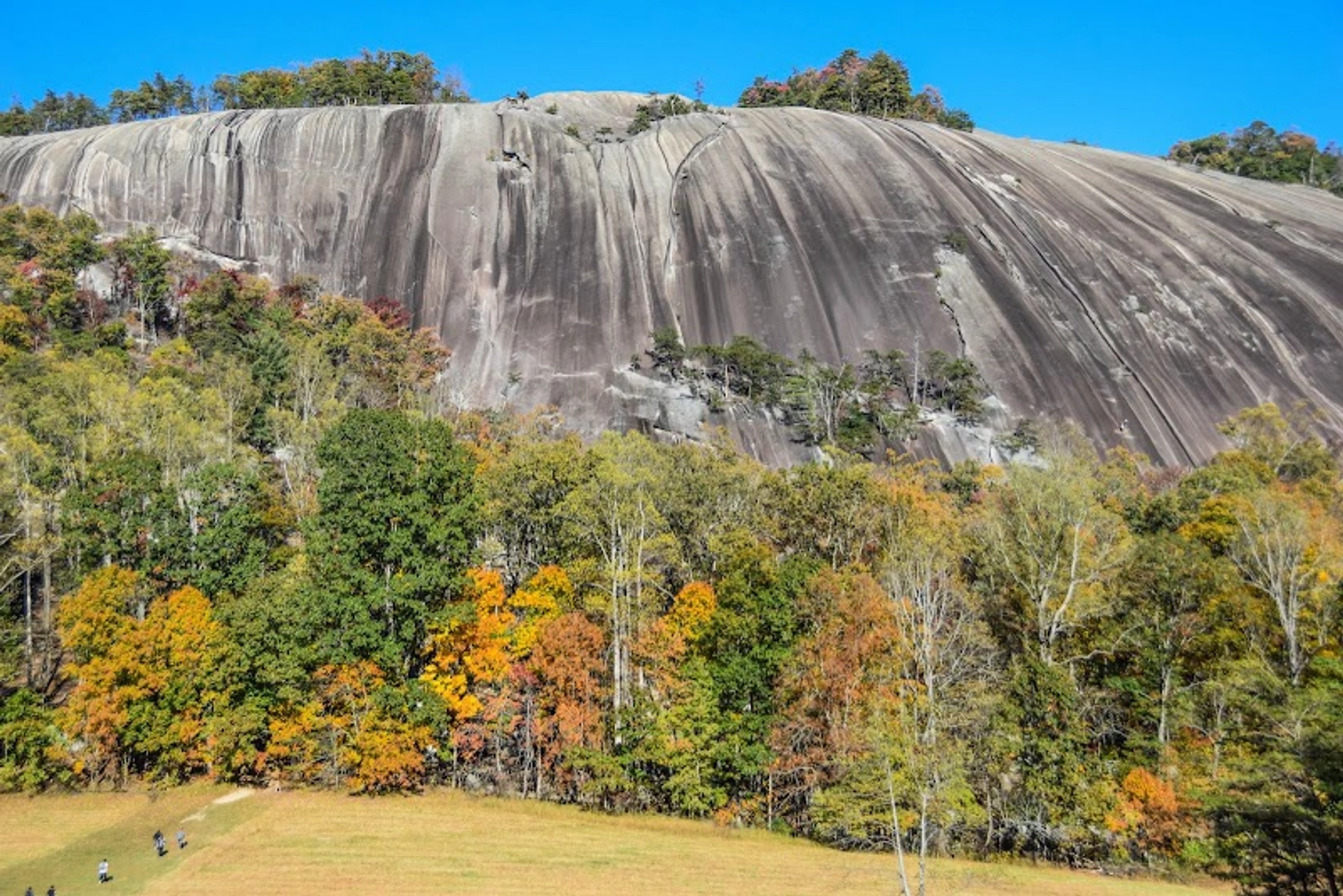
Stone Mountain State Park sits in northwest North Carolina near the small mountain community of Roaring Gap, where the Blue Ridge folds into a landscape of meadows, streams, and exposed granite. Spread across roughly 14,100 acres, this is a place defined by one dramatic feature: Stone Mountain itself — a vast, exposed granite dome that rises from a broad meadow and rewards visitors with wide, uncrowded panoramas, friction-climbing slabs, and a sense of genuine wilderness that feels rarer on the eastern side of the United States.
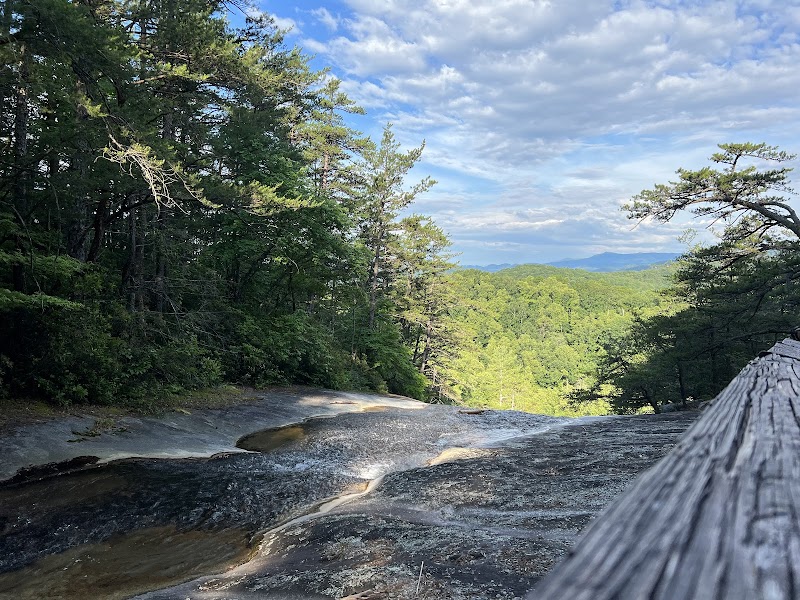
The park is compact in services but rich in experience. There are about 16 miles of official trails, ranging from short interpretive walks to multi-mile loops that pull hikers into forested ridgelines and out to high, open rock. The most celebrated route is the 4.5-mile Stone Mountain Loop Trail: hikers cross a meadow that hosts the restored Hutchinson Homestead, climb a wooden staircase next to a 200-foot waterfall, and step onto the broad upper slopes of the granite dome. The summit plateau is surprisingly gentle at first — a perfect spot for a picnic or sunning — but it becomes noticeably steeper toward the western face, so even casual rambles need a modicum of caution.
For those seeking longer outings, the 5-mile Widow Rock / Cedar Rock / Black Jack Ridge circuit stitches together some of the park’s best overlooks, and a six-mile stretch of the Mountains-to-Sea Trail runs through the park, offering quieter miles away from busier trails.
Stone Mountain’s geology is central to its character. The exposed granite dome creates rounded faces and slabby friction routes that attract climbers who relish smearing and balance over vertical protection. The meadow below and the mixed hardwood forests host seasonal wildflowers, blackberry thickets, and songbirds — reviewers often mention finding ripe blackberries right along the trail in summer and hearing blue-gray gnatcatchers flitting in the trees.
The park balances outdoor offerings with a modest set of visitor amenities: a visitor center with local history exhibits (including a moonshine display), a small general store selling ice cream and essentials, potable water at campsites, and clean bathhouses with showers. Campers report well-maintained campsites (A Loop is a favorite), convenient access to trailheads, and the kind of dark skies and cellular dead zones that many come to seek.
Practical notes matter here: cell and data coverage are unreliable across much of the park and immediate surroundings, so download maps and directions beforehand. The rock top can be deceptively steep beyond the first rise, and wet granite is very slippery — treat stairways near the falls and the western descent with care.
Why visit? Stone Mountain State Park offers a distilled mountain experience: big granite, accessible summits, family-friendly loops, quality backcountry solitude on the Mountains-to-Sea stretches, and comfortable camping facilities. It’s a regional standout — a place where a half-day walk can feel like a true mountain outing and an overnight will leave you wanting to come back for the full circuit.
Regionally outstanding: the park’s exposed granite dome, accessible summit, 200-foot waterfall, and stitched loop trails make for a concentrated, high-quality mountain experience. Excellent camping, clean facilities, and family-friendly loops increase its appeal. It loses points relative to global "iconic" sites because it’s more of an Eastern U.S. regional gem than a worldwide marquee destination, and its limited services and cell-signal gaps keep it feeling rugged and seasonal rather than universally convenient.