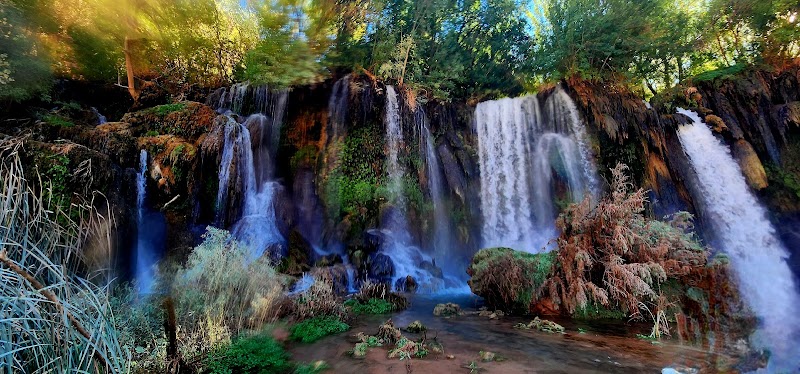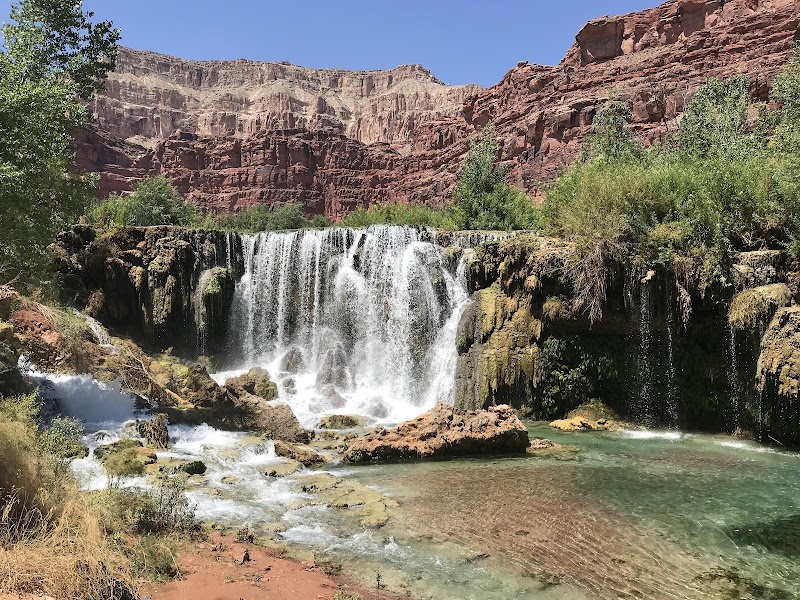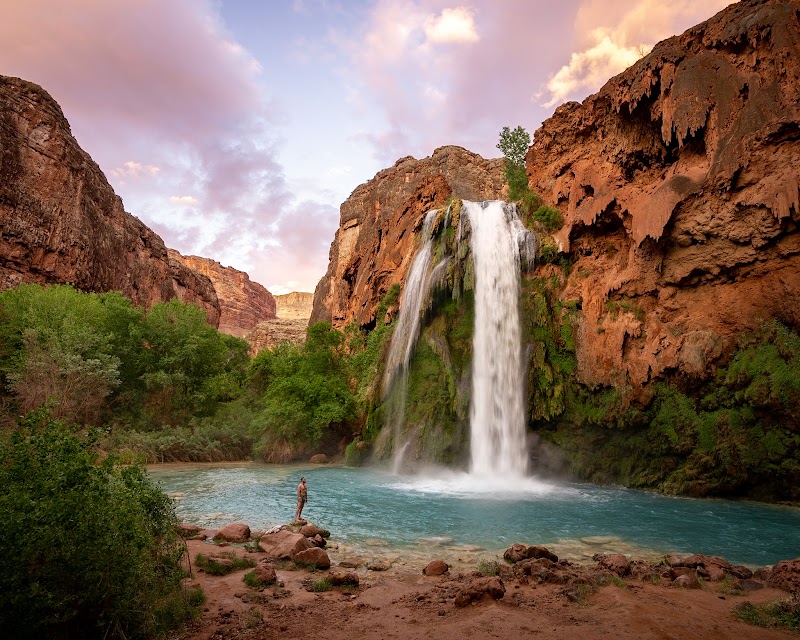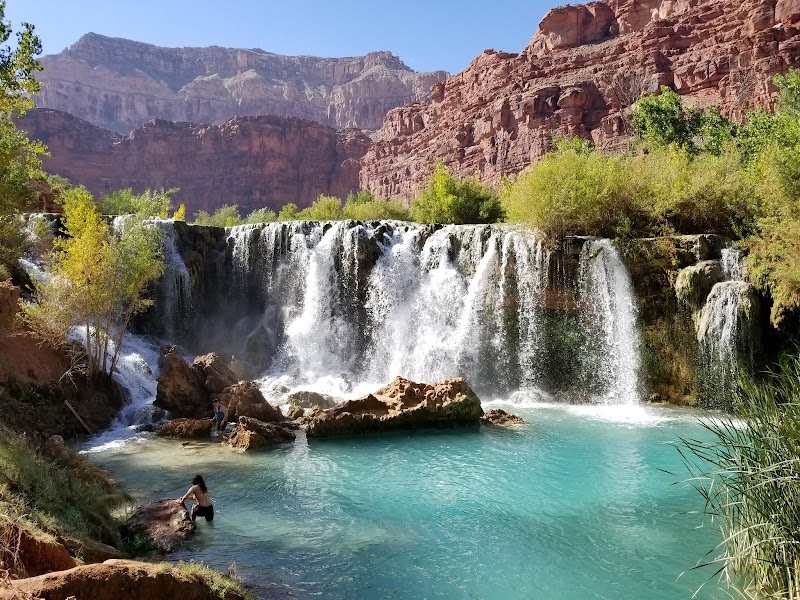
Supai, located at the bottom of Havasu Canyon deep within the Grand Canyon in Arizona, is the most remote and only Native American village in the contiguous United States that is inaccessible by road. It is the political and cultural center of the Havasupai Tribe (meaning "people of turquoise-green rivers"). I. Geological History: Millions of Years of Red Rock and Travertine Wonders. The geological structures of Supai and its surrounding areas are an important part of the Grand Canyon's geological epic. Its core features consist of the following two parts:
│ Kaibab Limestone Layer (Kaibab)
└────────────────────────────────┬──────────────────────────────┘
│ (Rainwater infiltration dissolves the limestone)
▼
┌───────────────────────────────────────────────────────┐
│ Redwall Aquifer
└──────────────────────────────┬────────────────────────────┘
│ (Spring water gushing forth, carrying a high concentration of calcium carbonate)
▼ ┌───────────────────────────────────────────────────────┐
│ Havasu Creek & Travertine Terraces │
└─────────────────────────────────────────────────────┘ Supai Group: Red sandstone and siltstone layers, visible throughout the Grand Canyon, are named after the village of Supai. This group of strata formed approximately 315 to 285 million years ago during the Late Paleozoic Era. At that time, shallow seas, vast river deltas, and arid desert dunes alternated here. Natural weathering and iron oxidation have given the canyon's stunning orange-red cliffs. Blue-green springs and travertine: Havasu Creek, Supai's most famous feature, displays a stunning blue-green hue. The scientific explanation is that rainwater and snowmelt seep into the Redwall Aquifer above the Grand Canyon, dissolving large amounts of calcium carbonate and minerals underground. As the springs gush forth not far above Supai village, pressure release and temperature changes cause calcium carbonate to precipitate, forming unique travertine terraces and natural dams in the riverbed. The minerals in the water, refracted by sunlight, create a dreamlike blue-green/natural turquoise color. II. History and Culture: The Havasu people, the "Blue-Green People" who have protected the canyon for millennia, are a Native American tribe with a rich history and resilient vitality. A Thousand Years of Habitat: Archaeological and oral histories indicate that the Havasu people have lived in this area for over 1000 years.
Before the 19th century, they led a seasonally migrating lifestyle: in spring and summer, they irrigated the valley floor with spring water to cultivate corn, beans, and squash; in autumn and winter, they migrated to the plains and plateaus on the South Rim of the Grand Canyon to hunt, gather, and seek shelter from the cold.
Land Ownership Struggle: In 1880, the U.S. government expelled them and imposed a tiny 518-acre canyon preserve, severing their seasonal migration tradition.
The establishment of Grand Canyon National Park in 1919 further restricted their activities. After decades of legal struggle and lobbying, in 1975, President Ford signed legislation returning approximately 188,000 acres of traditional land to the Havasu tribe, one of the most successful land reclamation cases in Native American history.
Language and Tradition Preservation: The Havasu language belongs to the Yuman language family. Remarkably, more than 95% of the tribe's population still uses their mother tongue as their first language in daily life. Every August, the tribe holds a traditional "Peach Dance" to celebrate the harvest and pray for rain.
III. Modern Life: An Isolated, "Atypical" American Village Today, Supai Village has approximately 200 to 450 permanent residents, whose lifestyle achieves a unique balance between modern technology and extreme geographical limitations. 1. Extreme Transportation and the "Mule Train Post Office": No road connection: The village is 8 miles (approximately 13 kilometers) from the nearest ordinary road (the terminus of Route 66 and Indian Highway 18, Hualapai Hilltop). 2. The Only Mule Train for Mail: Supai is the only place in the United States that still relies entirely on mule trains for mail and express delivery. Goods, food, and even ice cream from outside the island must be transported by mule or airlifted by helicopter into the valley. Sending a postcard with a unique "mule train postmark" from here is a globally popular tourist tradition.
2. While isolated from the outside world, Supai village boasts basic modern public facilities, including a primary school, a clinic, a small chapel, a general store, and a tribal café. The village was introduced to electricity (from generators and solar power) and satellite phones decades ago, but has virtually no modern cellular mobile signal or public Wi-Fi.
3. Economic Lifeline and Tourism Restrictions: Tourism is the mainstay of modern Supai's economy. Modern Supai's economy is heavily reliant on waterfall tourism (world-class attractions such as Havasu Falls and Mooney Falls). The tribe operates hiking permits, campsites, and the village's only lodge (Havasupai Lodge).
Strict Community Sovereignty: To protect the natural environment and the privacy of the indigenous people, Supai strictly prohibits any form of day hiking. All those entering the protected area must purchase a limited number of 3-night/4-day camping or lodge permits months in advance through the Havasupai Reservations official website. Zero-tolerance law: Strictly prohibit alcohol, drugs, guns, and drones within the protected area, and absolutely prohibit filming local residents or their private homes without permission.