Firehole Canyon: A drive-to river canyon in Yellowstone country
Firehole Canyon sits along the Firehole River on the edge of Yellowstone National Park near West Yellowstone. The outing is experienced as a short, drive-in progression: a narrow scenic road, pullouts that are limited, a concentration of waterfalls and river pools, and a handful of short walking options that let visitors pair a roadside stop with a swim or a brief riverside stroll.
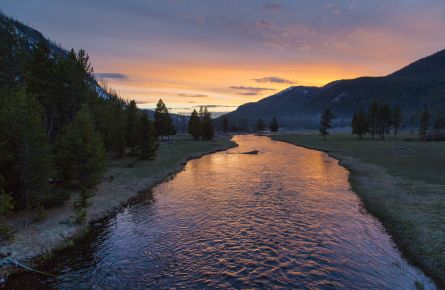
The canyon is cut through volcanic rock and framed by conifer forest; the most frequent on-site activity reported in the supplied materials is photography, followed by swimming in natural pools and short hikes close to the river. Visitors in the supplied reviews describe the route as a compact, photographic side road rather than a long trailhead—an interruption to a larger Yellowstone itinerary.
Read on to understand how the drive, waterfall, swim holes, and narrow roadside character fit together, who benefits from a quick stop versus a longer visit, and which safety and seasonal details to weigh before you go.
Approach and first impressions
The approach is typically a drive-in experience that several supplied reviewers described as a brief scenic byway; viewpoints are concentrated and turnouts are limited. The road threads close to the Firehole River, producing an experience that alternates between framed canyon views and stretches of trees that compress sightlines; that narrowness affects both photography and how visitors move through the site.
Those arriving from nearby West Yellowstone encounter the canyon as an accessible roadside destination rather than a remote hike. The primary practical advantages in the source material are drive-in access and a short distance from established Yellowstone approaches; the primary operational limitations are the narrow road and busy summer season.
Anatomy of the canyon and the waterfall
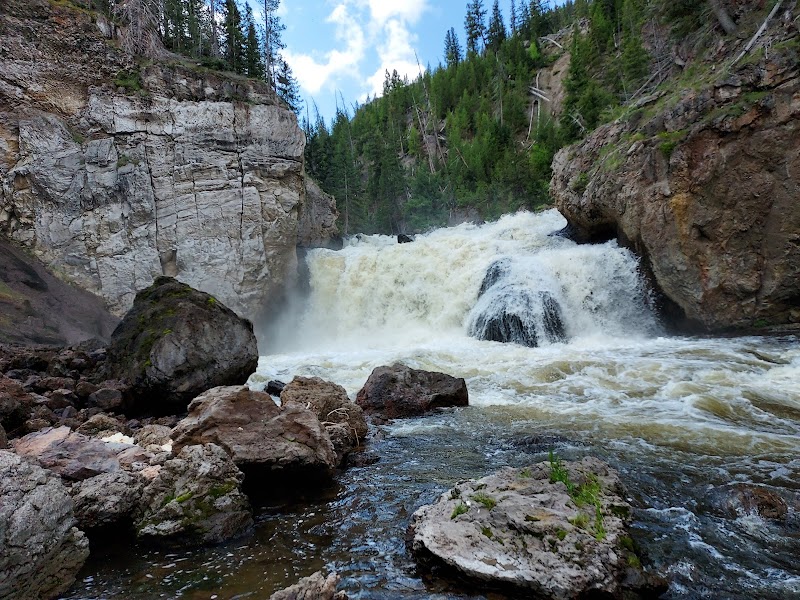
Firehole Canyon’s defining feature in the supplied article is a waterfall that pours into the Firehole River and a set of natural pools formed in volcanic rock. The canyon’s geology—steep, rock-cut banks and river-carved channels—frames both photographic compositions and places where people gather to swim.
The supplied text emphasizes the contrast between the flowing river and the surrounding pines; the same source lists the canyon as part of Yellowstone National Park’s landscape while noting hazards such as slippery rocks near the falls. Treat the waterfall and adjacent pools as the focal points for both views and water-based activity, with the caveat that movement on wet rock can be treacherous.
Swimming, pools, and riverside access
Swimming appears in the supplied article as a prominent visitor activity: natural pools along the Firehole River are described as swim spots and local guidance in the source suggests summer as the best season for that use. The source also notes that the swimming area is a distinct, commonly used feature of the canyon.
Visitor reviews support the characterization of the canyon as a place where people stop for a dip or for riverside time, but they also call attention to the short, roadside nature of the experience and to crowding during peak season. Use those accounts to plan timing—one review specifically advises avoiding peak times to enjoy a calmer visit.
Photography, timing, and the constraints of a narrow road
Photography is a leading reason visitors come, and the supplied materials give practical texture to that claim: limited turnouts, a narrow road, and trees that sometimes block sightlines make composition and stopping more complicated than a broad overlook. Several supplied reviewers remarked that the route can feel constricted for photographers working from vehicles or trying to find multiple vantage points.
This constraint shapes how a photographer—or any visitor—plans a visit: arrive early or late in the day to reduce congestion, accept that many compelling compositions are found at short strolls from the road rather than long hikes, and prioritize safety when moving across wet rocks or parking near narrow shoulders.
Traveler fit: who should plan a stop and who should pass
Firehole Canyon suits travelers who want a high-return, low-time-cost stop: people passing through Yellowstone country who want a concentrated waterfall and river experience without committing to a long backcountry hike. The supplied article highlights photographers, swimmers, and day-trip planners as typical visitors.
The canyon is less well suited to those seeking long, accessible trail systems or extensive backcountry solitude—facilities and turnouts are limited and the area gets busy in summer. Families with small children, people with mobility constraints (the source lists the site as not accessible), and travelers seeking lengthy hikes should plan accordingly.
Firehole Canyon: concentrated water-and-rock drama
Firehole Canyon matters because it concentrates waterfall views, swim-ready pools, and photographic prospects into a short, drive-in sequence at the edge of Yellowstone country. The site rewards modest time investments with clear visual impact, but narrow roads, limited turnouts, and summer crowds shape the visit and narrow the audience to day-trippers, warm-season swimmers, and photographers willing to plan their timing.
If you want a compact waterfall stop that can be slotted into a larger Yellowstone itinerary, Firehole Canyon deserves consideration; if you need long, accessible trails or solitude, another type of outing will better match those aims.