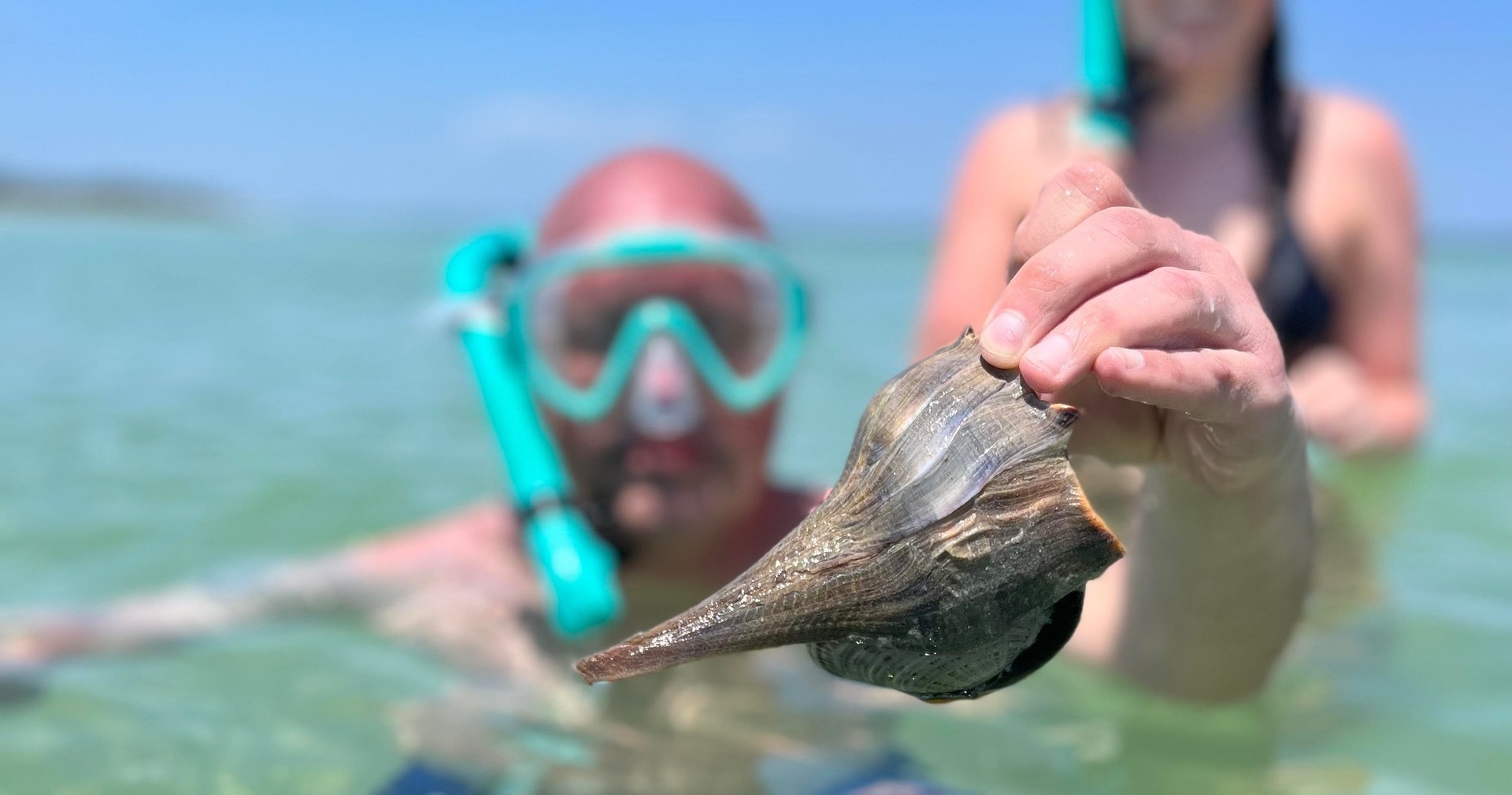
Anna Maria Island’s snorkel appeal is subtle rather than headline-grabbing: there aren’t sprawling coral gardens like the Florida Keys, but what the island lacks in coral architecture it makes up for in accessible water, abundant shallow life, and an intimacy that suits first-time snorkelers and families. The island fronts broad, gently sloping sand flats and seagrass beds that punctuate the nearshore Gulf with pockets of marine life—small schools of snapper and grunt, patient rays buried in the sand, and the occasional passage of a sea turtle grazing between blades of eelgrass. Where boaters have created or visited wrecks and rock piles offshore, artificial reefs attract larger congregations of reef fish and offer the most reliable visibility and variety.
The experience here is as much about the light and pace as it is about species lists. On a calm, clear day the surface becomes a lens: sunlight scatters across sand ripples, shadows outline the slow crawl of a conch, and the hush of the water makes small interactions vivid. Because much of the best snorkeling can be reached by shallow swim or short paddle from public beaches—Coquina Beach, Holmes Beach access, and the northern reaches at Bean Point—Anna Maria makes the barrier to entry low. Kayak- or SUP-based snorkel outings are common and recommended; they extend range without the logistics of a motorboat and keep you close to sensitive seagrass and manatee zones.
Seasonally, Anna Maria’s snorkeling character shifts. Late spring through early fall brings warmer water and occasional tropical species pushed north on warm currents; summer offers the warmest, often clearest water but coincides with afternoon thunderstorms and peak visitation. Visibility is best on calm wind days after a few dry days; conversely, cold fronts and windy conditions can churn the flats, dropping clarity. Environmental context matters here—seagrass beds are essential nursery habitat, and the island’s shallow offshore topography makes it vulnerable to red tide and storm-driven turbidity. Local operators emphasize no-touch, no-take practices and steering clear of seagrass beds to protect juvenile fish and the animals that rely on them. Snorkeling in Anna Maria rewards a slower, more observant approach: patience reveals small wonders rather than spectacular coral walls.
Snorkel types: shore-entry flat-water snorkeling, kayaked snorkels, and guided boat trips to nearby reefs or wrecks.
Wildlife highlights: juvenile reef fish, rays, conchs, sea stars, seasonal tropical visitors, occasional sea turtles and manatees in protected bay areas.
The harbor is the gateway, and the Pacific becomes the classroom.
Visibility and conditions vary with wind, tides, and recent storms—calm mornings are usually best.
Choose by purpose
Whale watching, snorkeling, sunset sailing, cultural canoeing, harbor sightseeing, or private chartering.
Start near the city
Waikiki and Honolulu Harbor are primary hubs, with some trips launching near Hanauma Bay.
Confirm the vessel
Gangways, shaded seating, and boarding requirements vary according to vessel size and operator.