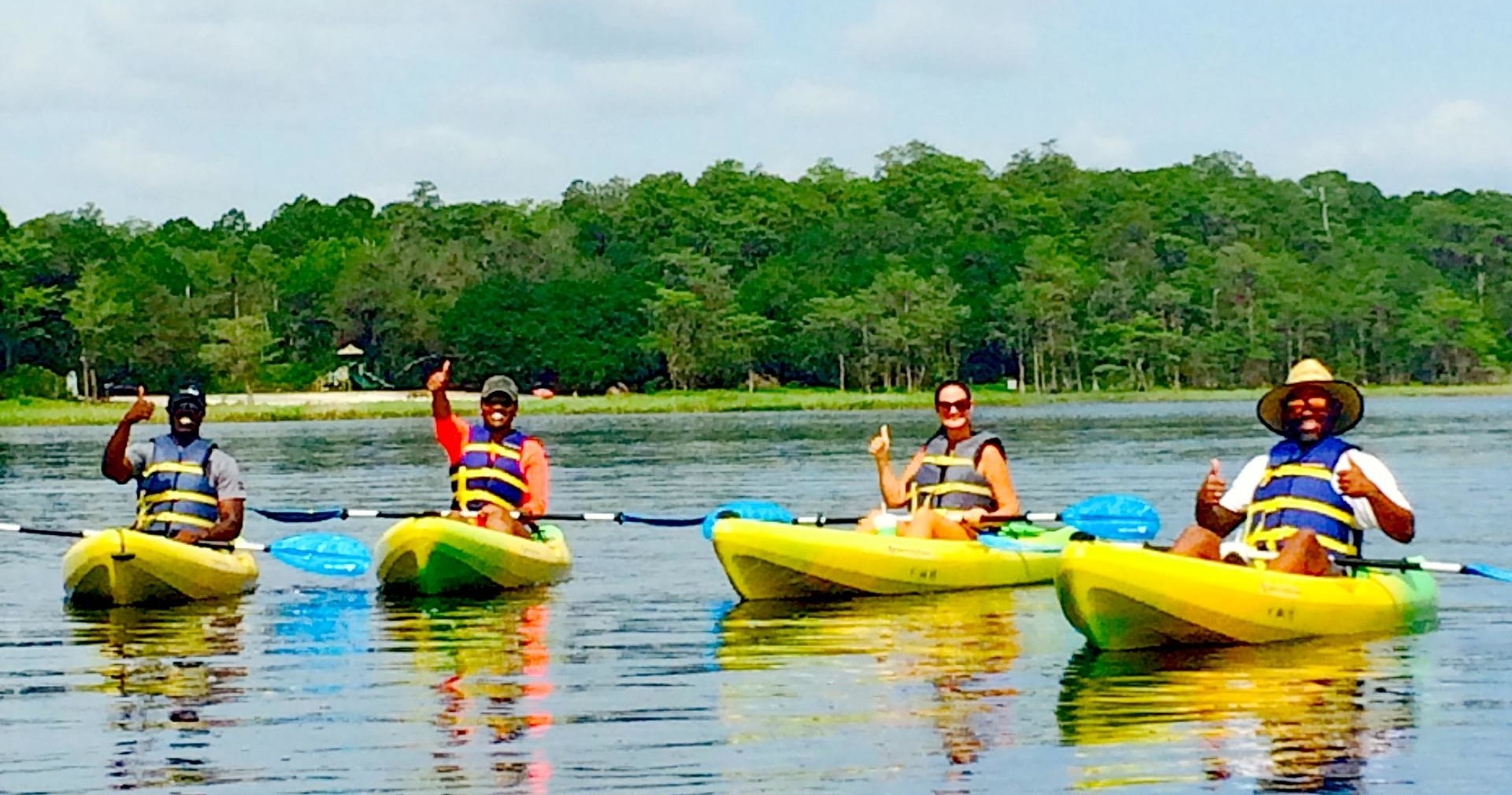
Why Auburndale Works So Well for Kayaking
There’s a particular hush to paddling in Auburndale: roads recede, the hum of the city thins, and the lake surface reads like a page that remembers other weather. The region’s shallow, interconnected lakes—part of Polk County’s extensive freshwater network—offer a paddling experience that’s intimate and forgiving. Rather than tidal drama or fast-moving currents, kayakers here contend with brightness and stillness: flatwater that rewards subtle navigation, an ever-present palette of wading birds, and the delicate architecture of cypress knees and reed beds.
A low skyline and wide horizons make light an important part of the local rhythm. Sunrise paddles are a ritual in Auburndale: early-morning glass becomes a mirror for the marsh grasses and egrets, while the town’s small public launches let you slip in before the day crowds gather. Midday brings heat and the possibility of thunder; Central Florida’s convective storms arrive fast in summer and can cut a paddle short. For that reason, the seasonality feels practical as well as aesthetic—autumn through spring delivers the most comfortable temperatures, clearer skies, and better conditions for long crossings and wildlife viewing.
The cultural context matters, too. Auburndale was shaped by citrus and rail, and that history remains visible in low-lying groves and the scale of town infrastructure that frames many launch sites. Paddlers pass remnants of past land uses: small docks, the occasional old boathouse, motels on the lakefront, and residential shores where private piers punctuate stretches of public water. Environmental issues are part of the story—vegetation, water clarity, and lake levels fluctuate with weather and land management, and invasive species like hydrilla can alter paddling lines. But these dynamics also create varied habitats: shallow flats for foraging birds, deeper basins for bass and bluegill, and sheltered coves where turtles and alligators sun.
For practical-minded travelers, Auburndale’s attractions extend beyond a single paddle. Routes can be mixed with fishing, stand-up paddleboarding, or short urban walks to Lake Ariana’s downtown park. Guided eco-tours provide local naturalist insight—valuable if you’re curious about wading birds, amphibians, or the subtle differences between lake basins. For independent paddlers, day trips between adjacent lakes reward careful route planning and respect for private property: many shorelines are residential, and launches are best chosen from public parks or commercial outfitters.
Ultimately, kayaking in Auburndale is an exercise in gentle exploration. It’s not about big whitewater or remote portages; it’s about reading light and wind, following bird lines, and learning the small topography of Florida’s inland water. For families, anglers, photographers, and city-dwelling paddlers craving easy access to water, Auburndale provides manageable routes, reliable launches, and a quiet, reflective paddling character that rewards slow movement and close observation.
Accessibility is a core strength: multiple public boat ramps and quiet neighborhood launches make it simple to get on the water quickly, even if you’re traveling without a trailer. Several small outfitters in the region cover rental needs, from single kayaks to tandems and SUPs, and they often offer guided tours that point out local flora, fauna, and safe lines through dense vegetation.
The variety is subtle but useful: beginner-friendly flatwater loops around city lakes, intermediate crossings that connect multiple basins, and angler-focused outings that target bass-rich pockets and eelgrass beds. Because the water is generally calm, kayaks provide a stable platform for photography and fishing—two of the most popular complementary activities.
The harbor is the gateway, and the Pacific becomes the classroom.
Seasonal weather governs trip planning. Winter and spring offer the most predictable conditions with lower afternoon storm risk and cooler temperatures; summer’s heat and thunderstorms require early starts and flexible timing. Water clarity and shoreline vegetation can change quickly after heavy rains, so local knowledge (from outfitters or recent trip reports) is valuable when choosing a route.
Choose by purpose
Whale watching, snorkeling, sunset sailing, cultural canoeing, harbor sightseeing, or private chartering.
Start near the city
Waikiki and Honolulu Harbor are primary hubs, with some trips launching near Hanauma Bay.
Confirm the vessel
Gangways, shaded seating, and boarding requirements vary according to vessel size and operator.