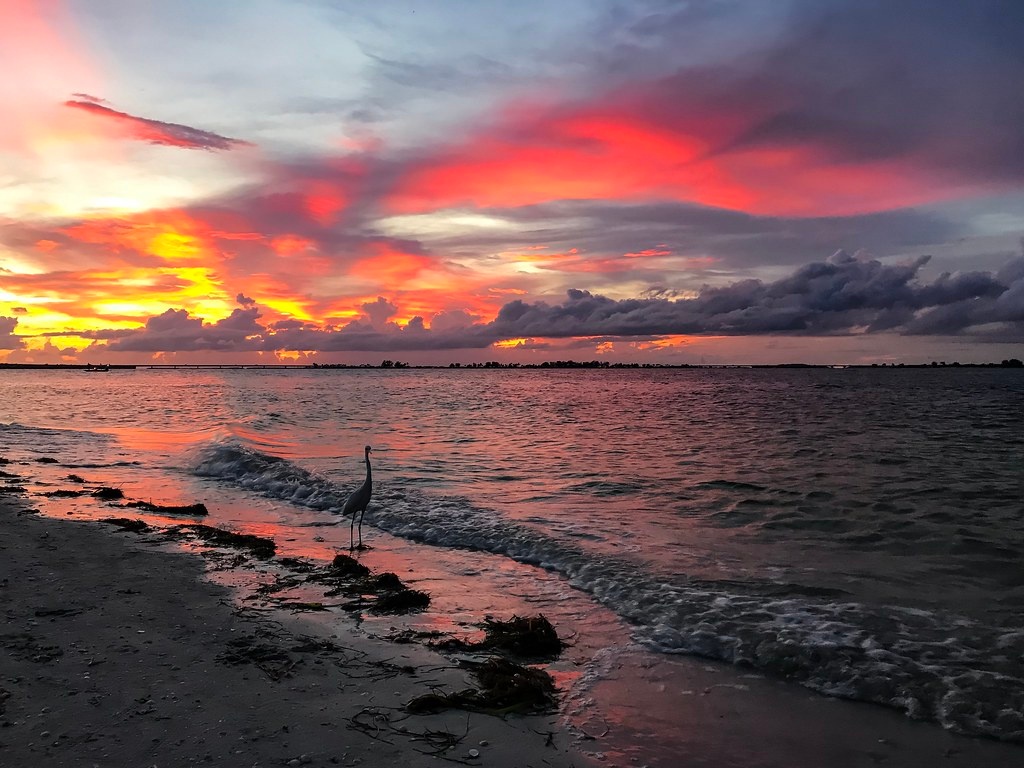
Why Estero Is a Standout Sailing Destination
Estero is where low, scrubby mangrove shorelines and shallow oyster flats give way to wide-open Gulf water within a handful of nautical miles — a geography that makes the town an ideal base for sailors who want variety without long runs. The estuary around Estero Bay and Matanzas Pass provides protected, wind-friendly channels and quiet anchorages that are excellent for learning the feel of wind, tide, and current. At the same time, just beyond the shoals, the Gulf of Mexico opens into long reaches for coastal sailing, day trips to sandbars, and blue-water excursions for anglers and experienced crews.
Sailing here is as much about wildlife and shoreline intimacy as it is about point-to-point passage. Manatees, roseate spoonbills, mangrove-dwelling ospreys, and migrating waders make every glide through the estuary a living natural-history lesson. The nearby barrier islands — Lovers Key, Black Island, and the undeveloped stretches of Estero Island — create a ribbon of sheltered waters and tidal inlets that are perfect for afternoon sails, beaching on shell-covered sandbars, or dropping anchor in shallow flats for a swim. The town’s marina cluster and charter operators make it easy to access a spectrum of boats: daysailers and center consoles for quick jaunts, cruising catamarans and keelboats for overnighting, and skippered charters for those who want local knowledge without the responsibility of command.
Historically, the waterways here were used by Calusa peoples and later by fishermen and traders who took advantage of the protective bay and nearby deep water. Today the same geography supports a small but active boating community, with launch ramps, transient moorings, and a handful of well-serviced marinas that balance comfort with access to wild places. Seasonality is important: the prevailing northwest winter breezes create steady, predictable sail days from late fall through early spring, while summer brings lighter winds, afternoon sea breezes, and the hurricane season’s risk of rapid changes. Tidal currents and shifting sandbars are constant considerations; charts, local guidance, and attention to markers matter more here than on an open-lake sail.
For travelers, Estero’s sailing blends easily with other pursuits: anglers can tack between reef marks and flats, kayakers can explore mangrove tunnels alongside anchored yachts, and beachcombers can combine a morning sail with a midday walk on pristine barrier-island sand. Culinary and cultural stops ashore — seafood shacks, waterfront bars, and small marinaside markets — give every trip a social finish, turning a day on the water into a local story to tell.
Protected estuary routes make Estero friendly for beginner sailors while quick access to the Gulf provides routes for intermediate and advanced outings.
Wildlife viewing is exceptional: look for manatees in winter, migratory birds in spring and fall, and dolphins near passes year-round.
The harbor is the gateway, and the Pacific becomes the classroom.
Short distances between marinas, anchorages, and islands mean flexible itineraries — half-day sails, sunset cruises, and multi-day coastal hops are all practical.
Tidal flats and shifting sandbars require localized knowledge; even experienced sailors often hire a local captain for first trips in the area.
Choose by purpose
Whale watching, snorkeling, sunset sailing, cultural canoeing, harbor sightseeing, or private chartering.
Start near the city
Waikiki and Honolulu Harbor are primary hubs, with some trips launching near Hanauma Bay.
Confirm the vessel
Gangways, shaded seating, and boarding requirements vary according to vessel size and operator.