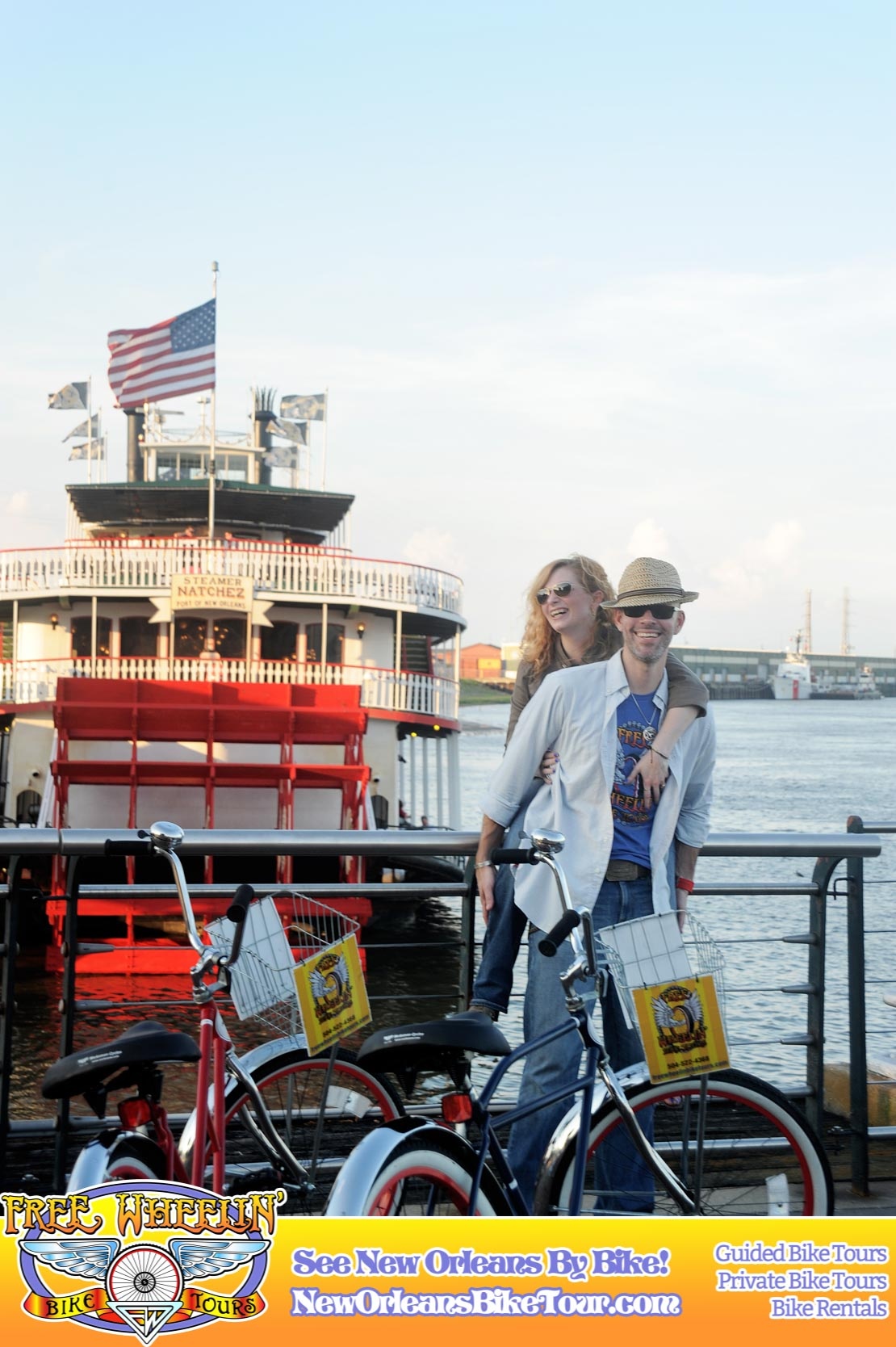
Gretna is the kind of place where the Mississippi River writes the itinerary. From the river levee you can watch towboats and barges slide past while spokes hum beneath you; turn inland and narrow brick streets, shotgun houses, and century-old oaks cue a different pace—less tourist spectacle than lived-in neighborhoods that reward a slow, observant ride.
The region’s charm is its contrasts. Many bike tours here stitch together three worlds: the urban riverfront that faces New Orleans across the water, the compact historic core with sidewalk cafés and murals, and the fringe wetlands where weeping willows and marsh grass meet tidal creeks. That variety makes Gretna ideal for short, layered itineraries—half-day rides that begin with coffee and a riverside loop, then ferry across to Algiers Point for creole architecture and a different skyline view, or longer outings that push toward Jean Lafitte National Historical Park and the Barataria Preserve for birdwatching and swamp-edge scenery.
Seasonally, the riding is ruled by heat and water. Fall through spring delivers the most comfortable temperatures and lower humidity, while summer brings intense heat, daily thunderstorms, and high mosquito activity—conditions that shape route choices, clothing, and timing. Terrain is forgiving: largely flat with well-paved streets, bike lanes in spots, and a handful of levee-top segments that feel expansive even though distances are modest. That accessibility opens Gretna to wide audiences. Families and casual riders can enjoy slow riverside loops; committed cyclists can use the West Bank as a gateway for longer coastal or lunch-run rides that include ferry transfers and New Orleans crossings.
Culturally, bike tours in Gretna are as much about rhythm as they are about landmarks. A ride can thread past corner stores where locals gather, past Catholic churches with ironwork gates, and alongside seafood restaurants where Gulf flavors anchor the menu. Tours often weave in local narratives—discussions about river dynamics, rebuilding after storms, and the Creole and African American histories that shape the neighborhood. Combine a guided bike tour with a swamp paddle, a brewery stop, or a guided history walk and you get a multi-sensory sense of the place: it’s not only a route on a map, it’s a sequence of tastes, sounds, and ecological notes staged along a low-lying but fiercely storied landscape.
Gretna’s compact scale makes it easy to sample many atmospheres in a single ride—from riverside industrial hum to quiet residential streets and marsh-edge lanes.
Levee-top rides provide big-sky views and a direct line to New Orleans via the Algiers Ferry, which is a practical and scenic way to link two-city itineraries.
The harbor is the gateway, and the Pacific becomes the classroom.
Local operators emphasize cultural context: expect guides to point out Creole cottages, historic cemeteries across the river, and to explain how tides and shipping shape daily life.
Choose by purpose
Whale watching, snorkeling, sunset sailing, cultural canoeing, harbor sightseeing, or private chartering.
Start near the city
Waikiki and Honolulu Harbor are primary hubs, with some trips launching near Hanauma Bay.
Confirm the vessel
Gangways, shaded seating, and boarding requirements vary according to vessel size and operator.