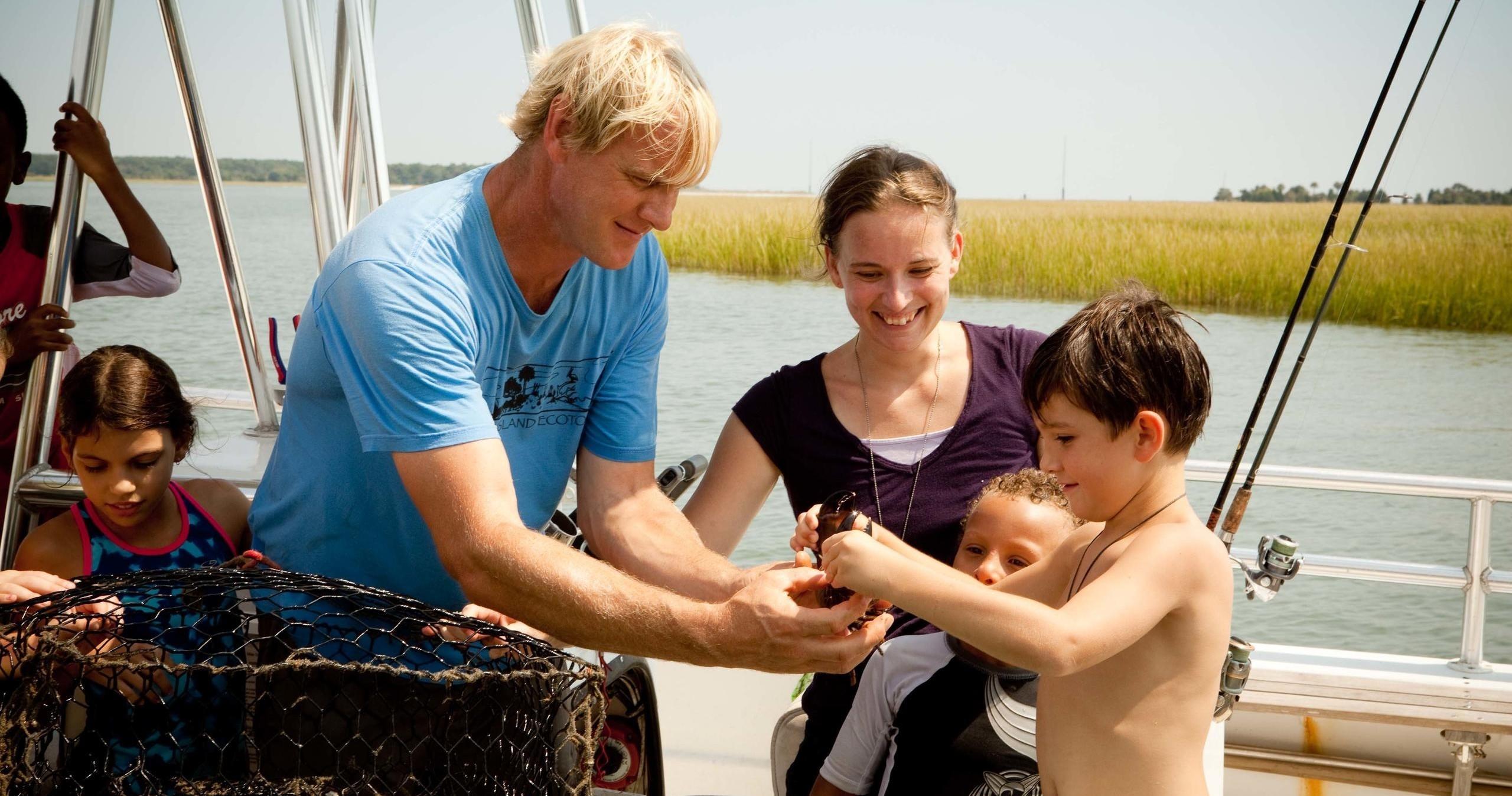
On Isle of Palms the landscape reads like an ecological primer written in sand and salt. In a handful of hours you can move from wide, wrinkled surf line to shoals and then into a lattice of tidal creeks that feed the salt marshes—each zone with its own cast of birds, fish, and invertebrates. Eco tours here take advantage of that close proximity: a morning paddle follows a winding creek and drops you into a salt-marsh meadow flushed with herons and egrets; an afternoon boat trip threads Charleston Harbor to watch dolphins forage by the channel; a sunset walk along the dune crest explains the life of foreshores and the fragile grasses that hold the island together.
This compactness makes the island ideal for learning. Guides are often naturalists or biologists who layer the trip with stories: how oyster reefs buffer storms, why marsh grasses are carbon sinks, how the sea turtle nest monitoring program tracks hatching success, and the cultural history of Lowcountry maritime communities. You can hear about the Gullah-Geechee influence on local fishing traditions, and then see the physical evidence of centuries of human interaction in the form of wooden piers and old shell middens. The tours balance wonder with context—how rising seas, shifting tourism patterns, and urban runoff change the living coastline and what local groups are doing to help.
Seasonally the island is a classroom in motion. Spring and fall migrations intensify shorebird and songbird presence; summer brings sea turtle nesting on quieter beaches and the highest in-water productivity as shrimp and baitfish pulse through the estuary; winter pares things back, offering clear light and an opportunity to spot overwintering ducks and raptors. Weather is an environmental teacher too: tides rearrange the same beach from hour to hour, and a sudden coastal squall can change the tenor of a tour in fifteen minutes. For travelers who want an accessible introduction to coastal ecology—or a deeper framing that connects recreation to conservation—Isle of Palms’ eco tours deliver both immediate beauty and a clear sense of the ecological processes at work.
Compact access: Because dune, marsh, and harbor habitats are close together, a single afternoon can include kayaking, birding, and a short beach ecology walk—perfect for travelers who want maximum education in minimal time.
Conservation-focused: Many operators partner with local nonprofits and research programs, offering chances to participate in citizen science, sea turtle monitoring, or invasive species removal alongside interpretive storytelling.
Choose by purpose
Whale watching, snorkeling, sunset sailing, cultural canoeing, harbor sightseeing, or private chartering.
Start near the city
Waikiki and Honolulu Harbor are primary hubs, with some trips launching near Hanauma Bay.
Confirm the vessel
Gangways, shaded seating, and boarding requirements vary according to vessel size and operator.