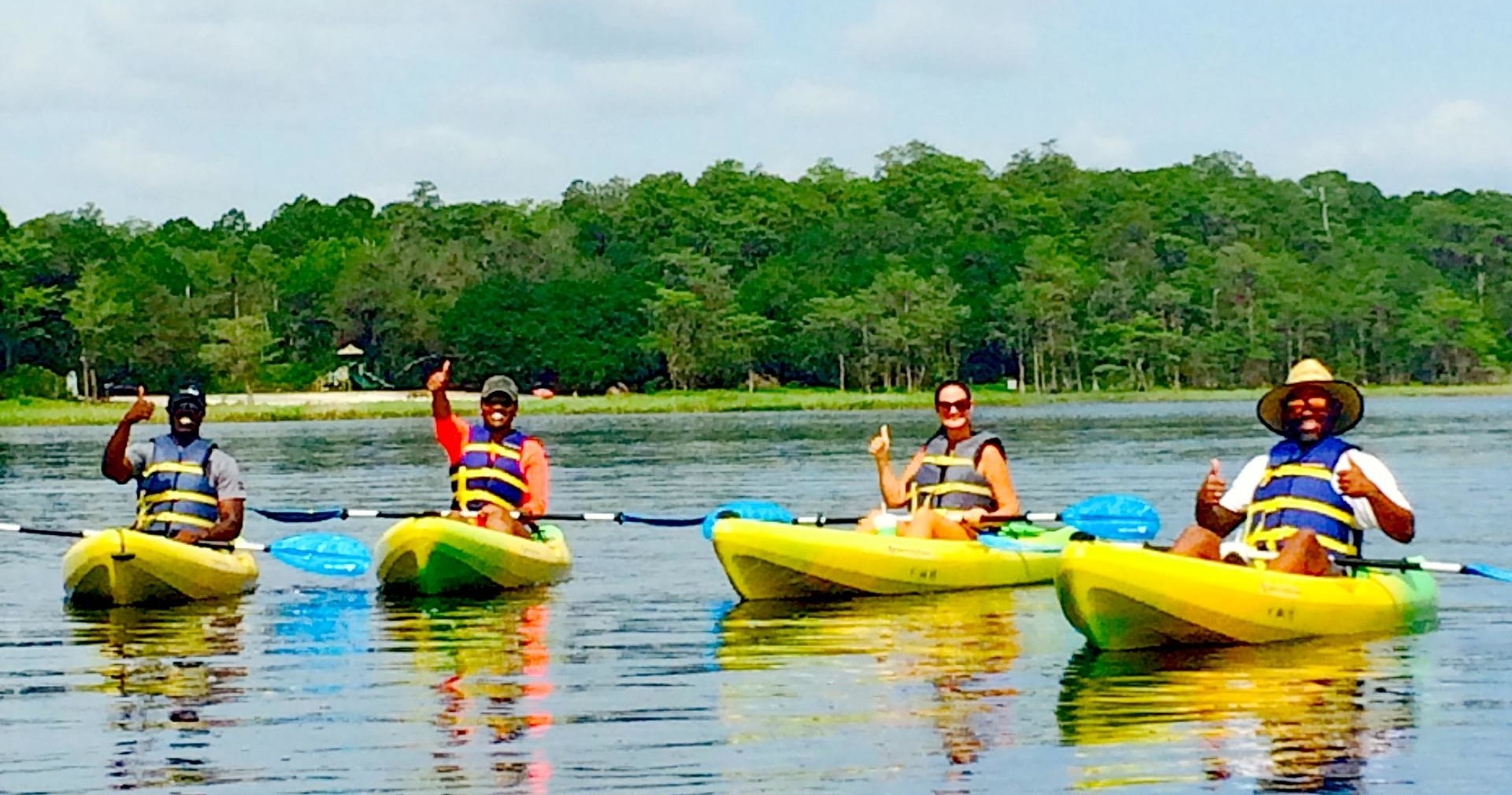
There’s a particular hush to paddling in and around Kathleen that reveals itself only when you slow down enough to notice the details. The waterways here are not about dramatic rapids or towering coastal surf; they are about intimacy—narrow creek channels that fold under low-hung cypress, shallow lakes whose edges brim with reeds and dragonflies, and sunsets that flatten the world into long rails of gold over tannin-dark water. For paddlers who love wildlife and quiet observation, Kathleen’s lakes and feeder creeks offer a type of immersion that feels almost secretive. You’ll find herons and egrets stalking along margins, kingfishers stuttering from branch to branch, and turtles sunning on half-submerged logs. During migration windows the skies add an extra layer of motion, and morning mist can turn a routine paddle into a cinematic scene.
Beyond the sensory draw, Kathleen’s paddling scenes are practical and layered. Routes tend to be short to moderate in distance, making them ideal for day trips or for staging a multi-stop outing that pairs paddling with shore-side exploration: a short hike at a preserve, a picnic under oaks, or an evening meal at a small local restaurant. The terrain is welcoming to newcomers—flatwater, minimal current, and predictable launch points—but it also rewards more experienced paddlers who want to refine skills like shallow-water navigation, wildlife photography from a kayak, or low-angle light observation. The surrounding landscape—agricultural fields, small woodlots, and sporadic suburban edges—reminds you that this is a human-shaped landscape where nature and community blend. That juxtaposition is part of the appeal: you can slip into a quiet cove and feel totally removed from everyday life while remaining a short drive from groceries or a fuel stop.
Seasonality in Kathleen moderates the choice of when to go but rarely closes the door. Winters are mild and attract paddlers seeking comfortable daytime temperatures and clearer skies; summers are hot and humid, with afternoon thunderstorms that shape when and how trips should be planned. Ecology matters here—water clarity, local plant growth, and wildlife behavior shift across the year—so timing a paddle with bird migration or reduced aquatic growth can transform your experience. And because the waterways are often narrow and lined with sensitive vegetation, responsible paddling—keeping to established launch areas, avoiding shallow-rooted plant beds, and giving wildlife a wide berth—helps preserve the quiet qualities that make Kathleen special.
The paddling is primarily flatwater: think lakes, slow creeks, and marsh edges rather than tidal or whitewater challenges.
Routes are accessible for beginners but can be extended for longer outings; many launch points have easy roadside access.
The harbor is the gateway, and the Pacific becomes the classroom.
Wildlife viewing is a top draw—expect birds, turtles, and the occasional alligator; maintain respectful distance and avoid feeding wildlife.
Combine kayaking with complementary activities such as birdwatching, shore fishing, cycling rural roads, or visiting nearby natural preserves.
Choose by purpose
Whale watching, snorkeling, sunset sailing, cultural canoeing, harbor sightseeing, or private chartering.
Start near the city
Waikiki and Honolulu Harbor are primary hubs, with some trips launching near Hanauma Bay.
Confirm the vessel
Gangways, shaded seating, and boarding requirements vary according to vessel size and operator.