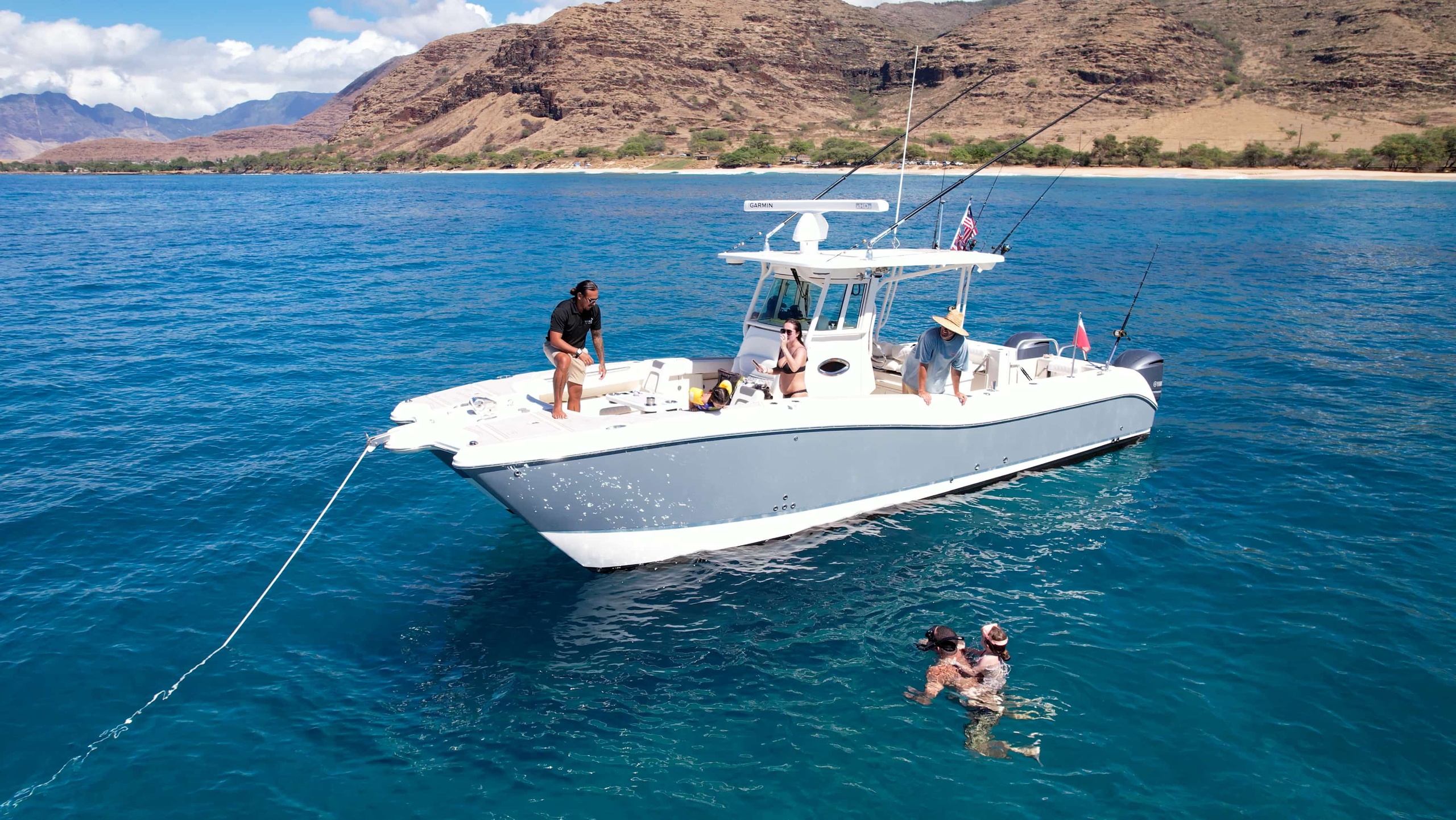
There’s an immediate contrast the moment you step into Ko Olina Marina: the Pacific feels both vast and hospitably contained. The marina sits on Oʻahu’s leeward side, where trade winds are gentler and the shoreline is stitched with four man-made lagoons that create glassy, warm pockets of water ideal for launching all kinds of small-boat excursions. For travelers who want the thrill of open ocean without the uncompromising conditions of the North Shore, Ko Olina offers the best of both worlds—easy access to rich nearshore reefs, quick runs to deeper water where spinner dolphins and turtles congregate, and short-hop departures to whale country when the season comes.
Boat tours here play to that geography. Half-day snorkeling charters run out in the morning when the water is clearest; sunset sails glide slowly along the coastline with cocktails and low light; sport-fishing skippers work nearby reefs and drop-offs for ahi and mahi-mahi; and during winter months, whale-watching trips become the marquee draw as humpbacks migrate through Hawaiian waters. The variety is not accidental—Ko Olina’s infrastructure, combined with Oʻahu’s central location in the Hawaiian archipelago, makes it a practical base for operators who can run frequent, varied itineraries with short transit times.
What elevates many Ko Olina boat tours beyond postcard-perfect visuals is the cultural framing and accessible interpretation. Captains and guides often weave natural history and Hawaiian cultural context into their narratives: how the leeward waters were once pathways for voyaging canoes, the traditional relationships between people and reef life, and modern conservation efforts to protect coral and coastal ecosystems. That balance—between spectacle and stewardship—makes a trip out of Ko Olina feel like more than a photo stop; it becomes an embodied lesson in place.
Practicality factors heavily into the experience as well. Because tours often depart from a small, sheltered marina, transfers are short for guests staying at resort properties nearby; families and less sea-familiar travelers find it easier to board and disembark. For more adventurous types, Ko Olina serves as a springboard to longer undertakings—private charters that cross to neighboring bays, custom fishing trips that chase seasonal runs, or combined land-and-sea days that pair a morning boat excursion with an afternoon hike along the Waianae range. The key draw is accessibility: you get rapid access to marine life and open water without committing to long drives or lengthy ocean crossings.
Environmental awareness is part of the modern charter conversation here. Responsible operators limit anchor damage to reefs, follow the guidelines for whale and dolphin viewing, and encourage low-impact snorkeling practices. For travelers, that means choosing companies that prioritize reef-safe sunscreen, brief and respectful wildlife encounters, and small-group formats that minimize disturbance. In Ko Olina, a boat tour can be at once effortless and conscientious—an invitation to witness the Pacific’s intensity while honoring the place that sustains it.
Short transit times from Ko Olina Marina mean more time on the water. Many popular snorkeling and dolphin-watching sites are within an hour, which is ideal for families and half-day schedules.
Seasonal highlights shape trip choices: winter months spotlight whale watching, while summer and spring are prime for calm-water snorkeling and reef encounters.
The harbor is the gateway, and the Pacific becomes the classroom.
A range of vessel styles—from glass-bottom catamarans to nimble zodiacs and traditional Hawaiian outrigger rides—keeps options flexible: relaxed sails, active snorkeling, and private charters are all common.
Local guides often combine natural-history narration with cultural stories, adding depth to the sensory experience and helping visitors understand conservation needs.
Choose by purpose
Whale watching, snorkeling, sunset sailing, cultural canoeing, harbor sightseeing, or private chartering.
Start near the city
Waikiki and Honolulu Harbor are primary hubs, with some trips launching near Hanauma Bay.
Confirm the vessel
Gangways, shaded seating, and boarding requirements vary according to vessel size and operator.