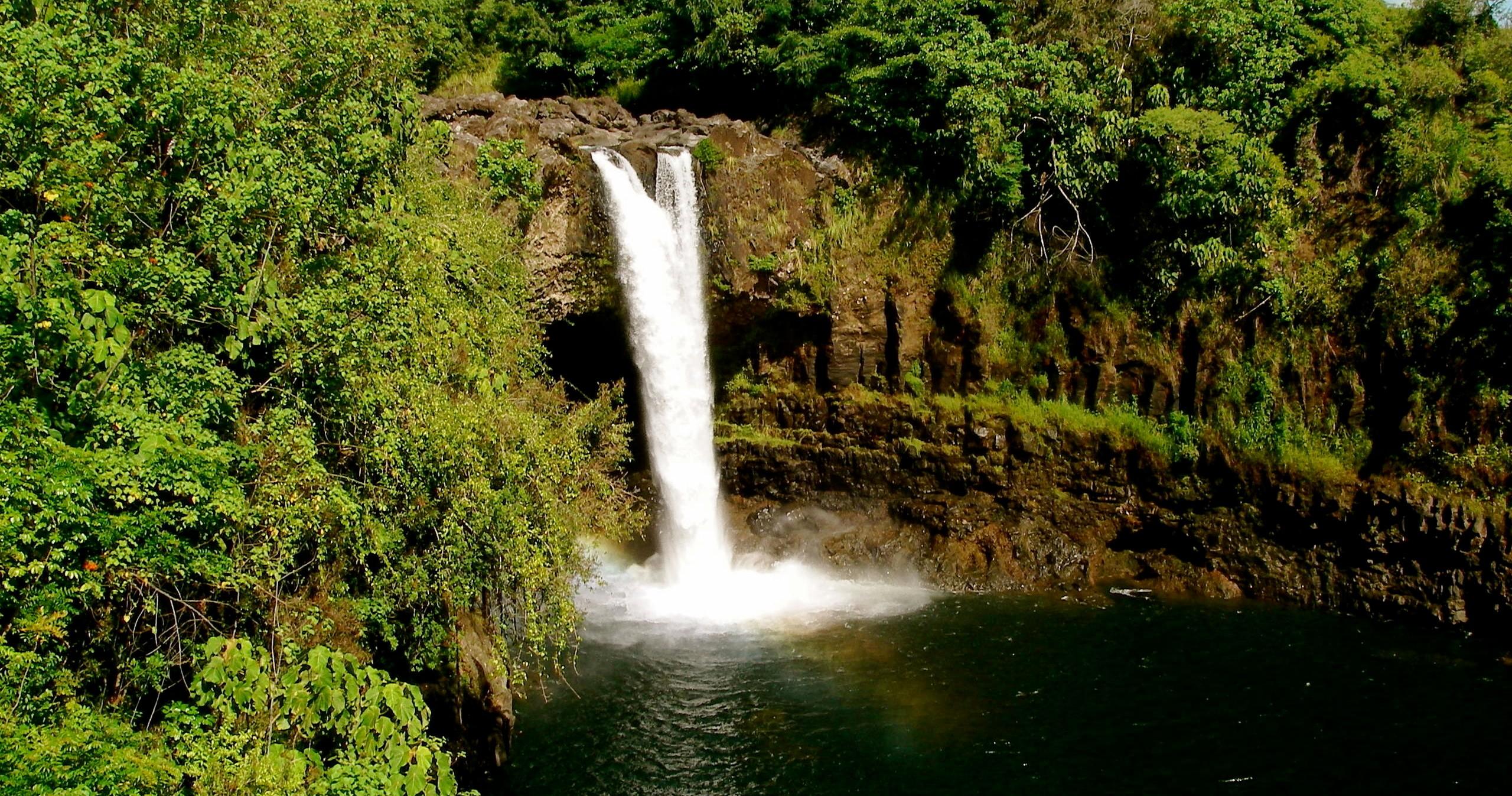
Why Waiākea Is a Standout Place for Ziplines
Waiākea sits at the moist, green edge of Hilo's rain‑belt, where frequent showers have coaxed a thick canopy of native and introduced trees over steep, volcanic terrain. That same lushness—moss-draped trunks, fern-thick understory, and sudden vertical drops carved by streams—creates ideal conditions for immersive zipline experiences. Lines here are not just thrill rides; they are deliberate ways to move through the forest with minimal footprint, often following ridgelines or spanning gulches to preserve the understory beneath. On a typical run you move from intimate canopy corridors, where the air smells of damp earth and ʻōhiʻa blossoms, into open spans with broad views over Hilo Bay and the distant silhouette of Mauna Kea or Mauna Loa. The contrast—quiet tunnel to sudden exposure—defines Waiākea ziplines and gives them a distinct Hawaiian character.
Culturally, many local operators weave stewardship and context into the experience. Small teams will pause on platforms to speak about native plants, watershed importance, and the living relationship between land and community. This is not window-dressing: for islands where water flows and forest health are inseparable, a zipline often doubles as an interpretive corridor. Expect commentary on stream restoration efforts, invasive species management, and the role of traditional Hawaiian place names and stories tied to the slopes you glide above. Those short interpretive moments can transform a rapid descent into a layered, place-based memory.
Practically, Waiākea's weather patterns shape the running season more than hard dates on a calendar. Afternoon showers are common year-round; many operators favor morning windows for the most reliable, dry conditions and the clearest views. In wet spells, courses will close for safety—lines, platforms, and braking systems are all sensitive to high winds and saturated ground. That seasonal variability keeps groups smaller and often more intimate: weekday slots in shoulder months can feel like private airtime above a rainforest. While some courses skew family-friendly with low heights and gentle lines, others in the region emphasize longer spans and higher speeds for experienced riders; the seven local offerings create a tight spectrum of choices from accessible canopy tours to adrenalized long-course circuits.
Complementary activities are close at hand. A zipline morning can be paired with a waterfall hike to Akaka Falls or other nearby cascades, a visit to the Hawaii Tropical Botanical Garden, or a slow cultural afternoon in downtown Hilo at the farmers market and local galleries. For visitors who want to extend the natural narrative, a drive to Hawaiʻi Volcanoes National Park reframes the landscape at geological scale—lava fields and crater rims augment the immediate canopy story and explain why Waiākea’s ridgelines behave as they do. In short, ziplines in Waiākea connect tactile forest experience with broader island geography and community care—an efficient, exhilarating way to learn both the shape and the soul of this wet, volcanic place.
Varied course designs: family-focused canopy tours sit beside long, high-span runs that emphasize speed and exposure.
Local operators often include cultural and environmental interpretation, so expect learning alongside thrills.
The harbor is the gateway, and the Pacific becomes the classroom.
Weather-driven scheduling means mornings and shoulder seasons frequently offer the most consistent conditions and clearer views.
Choose by purpose
Whale watching, snorkeling, sunset sailing, cultural canoeing, harbor sightseeing, or private chartering.
Start near the city
Waikiki and Honolulu Harbor are primary hubs, with some trips launching near Hanauma Bay.
Confirm the vessel
Gangways, shaded seating, and boarding requirements vary according to vessel size and operator.