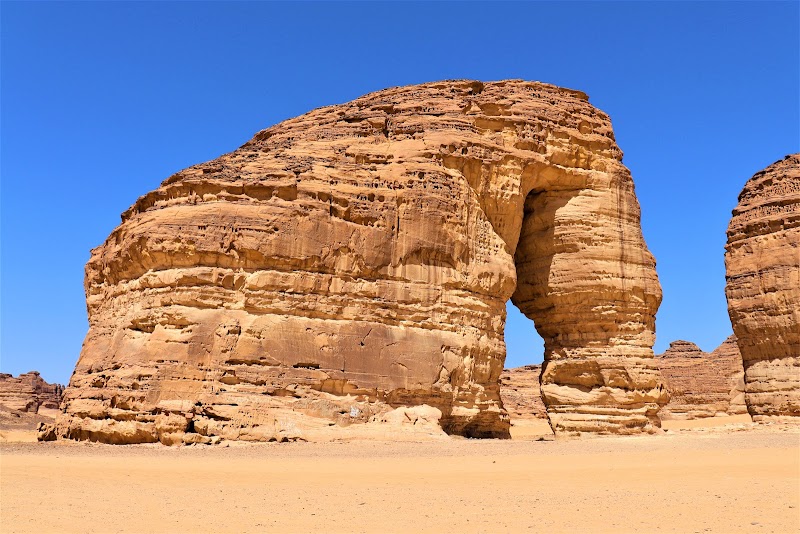
Wilderness Landscape & Natural Heritage
The Al Ula Protected Area, located in the northwest of Saudi Arabia's Madinah Region, spans expansive desert landscapes rich with geological and archaeological significance. It covers rugged sandstone mountains, deep canyons, and vast desert plains, offering visitors a striking contrast of natural beauty and ancient human history. The region is home to the UNESCO World Heritage Site of Al-Hijr (Madain Salih), an ancient Nabataean city featuring well-preserved rock-cut tombs and monumental facades dating back to the 1st century BCE. Al Ula's ecology includes desert flora uniquely adapted to harsh conditions, including acacia trees, desert grasses, and various shrubs, along with fauna such as desert gazelles, foxes, and migratory birds. Outdoor enthusiasts can explore hiking trails winding through rock formations like Elephant Rock and the Al Ula Old Town ruins, while cultural seekers can visit archaeological sites, rock art petroglyphs, and ancient irrigation systems that demonstrate early desert agriculture. The protected area also offers opportunities for stargazing, photography, and guided cultural tours that highlight pre-Islamic and Islamic history. The combination of natural desert beauty with human history makes Al Ula a compelling destination for visitors seeking an immersive outdoor and educational experience. Recent development efforts have balanced tourism with preservation, emphasizing sustainable access and enhanced visitor facilities. Al Ula’s remote desert environment provides a peaceful atmosphere perfect for exploration while respecting the conservation of its rare heritage.