Wilderness Landscape & Natural Heritage
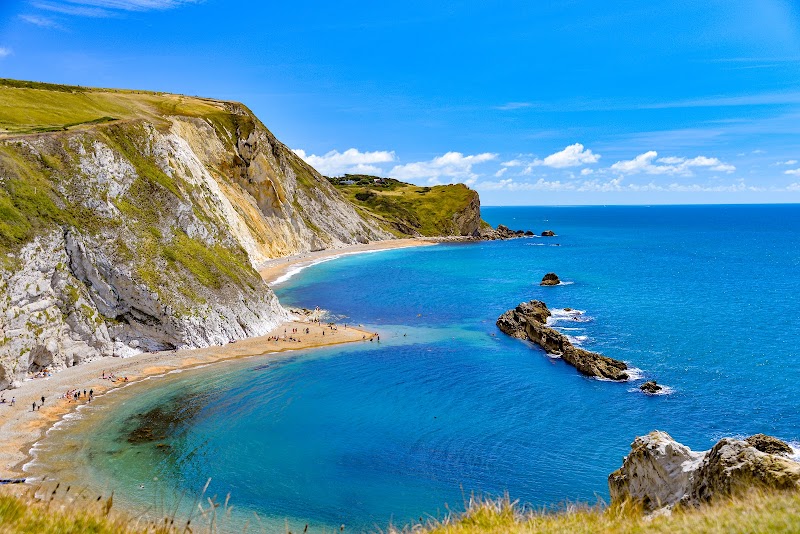
The Jurassic Coast spans approximately 95 miles (153 km) from Exmouth in East Devon to Studland Bay in Dorset, England. This UNESCO World Heritage Site reveals 185 million years of geological history through its cliffs, beaches, and rock formations, representing the Triassic, Jurassic, and Cretaceous periods. The coastline features spectacular natural landmarks such as Durdle Door, a natural limestone arch, and Old Harry Rocks, chalk formations that are iconic to the region. The area is well known for fossil hunting, particularly near Lyme Regis and Charmouth, where visitors may find ammonites, belemnites, and even dinosaur remains. The combination of geological significance and scenic beauty makes the Jurassic Coast a popular destination for hiking, fossil collecting, boating, and photography. Walking the South West Coast Path along this shoreline offers unparalleled views of sea stacks, caves, and rolling cliffs. Nature habitats along the coast support seabirds, rare plants, and marine life, contributing to the area's ecological importance. Historic towns such as Lyme Regis offer charming cultural experiences, along with museums and visitor centers that provide insights into the coastal geology and paleontology. The Jurassic Coast appeals to outdoor enthusiasts, families, scientists, and photographers alike, offering a diverse array of outdoor recreation and educational opportunities amid stunning natural surroundings.