Wilderness Landscape & Natural Heritage
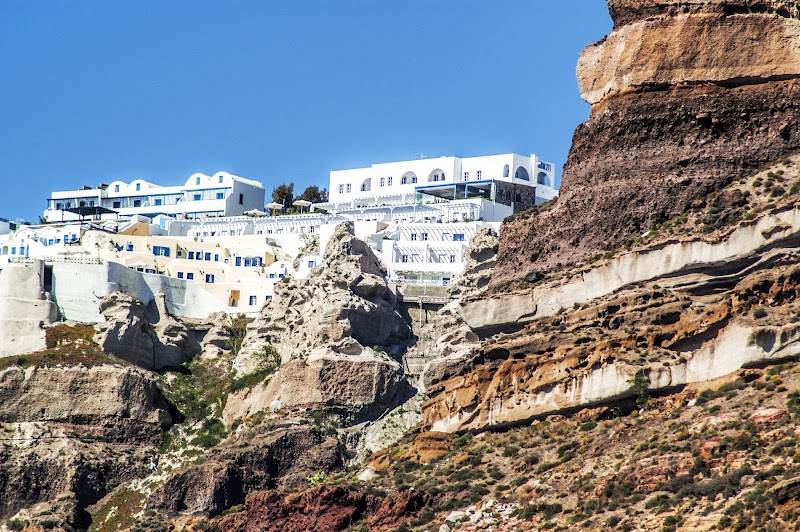
The Santorini Volcanic Complex Natural Monument comprises a series of volcanic islands located in the southern Aegean Sea, part of the Cyclades group in Greece. The main island, Santorini (Thira), along with smaller islets such as Nea Kameni and Palea Kameni, showcases one of the most famous volcanic calderas in the world, formed after a massive Minoan eruption around 1600 BCE. This eruption was among the largest in recorded history, shaping the present landscape and influencing human civilization in the region. The terrain is characterized by sheer cliffs towering over the caldera waters, rugged lava fields, and vibrant volcanic rock formations in black, red, and white hues.
Ecologically, the islands support a variety of Mediterranean scrub vegetation and marine biodiversity in the surrounding Aegean waters, with habitats shaped by ongoing geological activity. Visitors to the monument can explore several hiking trails around the rim of the caldera, offering panoramic views of steep cliffs, the volcanic islands of Nea Kameni and Palea Kameni, and crystal-clear sea. The active volcanic islets allow for guided walks over lava domes and fumaroles, providing insight into volcanic processes. Cultural and historical sites abound, including ancient Akrotiri, a Minoan Bronze Age settlement preserved by volcanic ash, and charming villages perched on the caldera edge with iconic whitewashed architecture and blue-domed churches. The Santorini Volcanic Complex is a magnetic destination for geology enthusiasts, hikers, photographers, and travelers eager for dramatic landscapes fused with deep history and vibrant local culture.