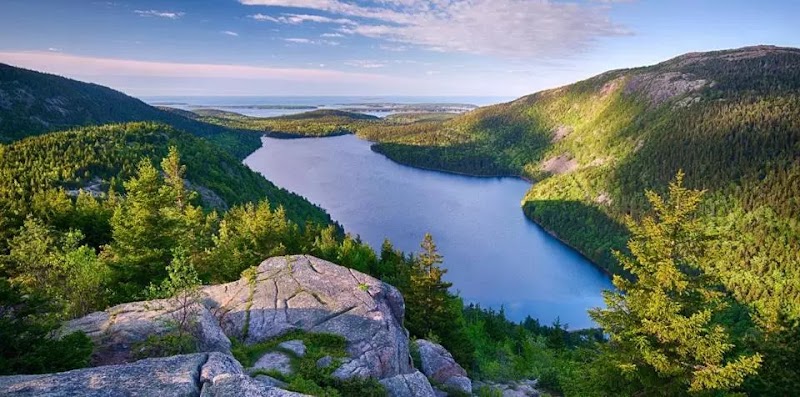
Wilderness Landscape & Natural Heritage
Located on the mainland portion of Acadia National Park in eastern Maine, the Schoodic Peninsula encompasses roughly 3,500 acres of protected land characterized by granite outcrops, spruce-fir forests, and dramatic Atlantic Ocean vistas. The peninsula juts out into Frenchman Bay and is separated from the main part of Acadia by the Somes Sound fjord. Geologically, Schoodic is known for its distinctive granitic bedrock shaped by glacial activity, creating rugged cliffs, tidal coves, and smooth rock surfaces. Ecologically, the area supports a mixed forest ecosystem including balsam fir, black spruce, red spruce, and northern hardwoods, and serves as habitat for species such as white-tailed deer, peregrine falcons, and several seabird colonies.
Historically, the Schoodic Peninsula was less developed than the Mount Desert Island portion of Acadia, retaining a more remote wilderness feel. It was added to Acadia National Park in 1929 and expanded substantially in 2002 to include parcels formerly used by the U.S. Navy, which now serve as visitor facilities and research areas. Recreational opportunities here include multi-use paved and dirt trails for hiking and biking, tidepool exploration, picnicking, and scenic driving along the 7-mile Schoodic Loop Road. The peninsula’s accessibility by car and ferry makes it an appealing alternative for visitors seeking a more tranquil experience with equally impressive coastal scenery. Notable landmarks within the peninsula include the Schoodic Head summit, the Schoodic Point overlook, and rich intertidal zones that provide excellent naturalist outings. The area is also a favored destination for photographers capturing sunrise and sunset views over the Atlantic. Visitors appreciate its combination of wilderness charm, cultural history, and spectacular vistas away from Acadia’s busier hubs.