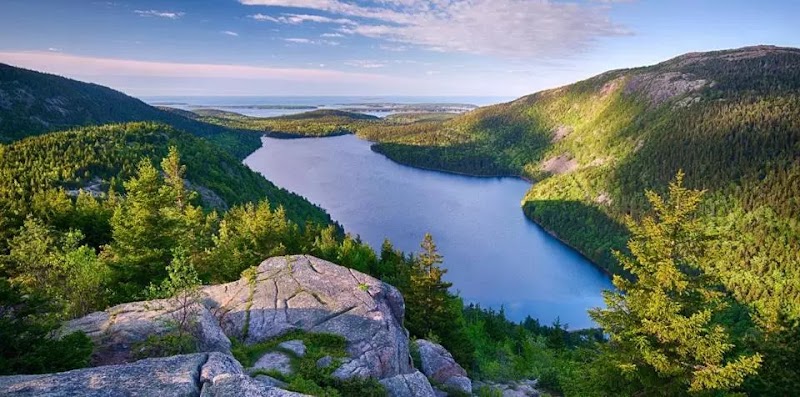
Wilderness Landscape & Natural Heritage
Located on the mainland side of Acadia National Park in Maine, the Schoodic Peninsula encompasses about 7,000 acres of protected land characterized by granite headlands, quiet coves, and dense forests. Unlike the more heavily visited Mount Desert Island portion of Acadia, Schoodic provides a more serene and less crowded setting for visitors who appreciate solitude and a closer connection to nature. The geology here showcases dramatic volcanic and granite outcrops formed over hundreds of millions of years, with rugged coastline providing habitat for a multitude of seabirds and marine life. The ecological composition includes mixed hardwood and coniferous forests, salt marshes, and intertidal zones supporting diverse plant and animal species. Historically, the peninsula was inhabited and utilized by the Wabanaki peoples and later became a site for logging, fishing, and small-scale farming before being incorporated into Acadia National Park. Recreational opportunities include hiking on well-maintained trails, scenic biking on the loop road, kayaking along calm bays and rocky shores, bird watching, and photography of stunning sunsets over the Atlantic. Key landmarks include the Schoodic Head summit, offering panoramic views, and the historic Schoodic Point, where granite formations meet the sea in dramatic ways. The Schoodic Education and Research Center hosts environmental studies and provides a gateway for visitors seeking information and ranger-led programs. Its relative remoteness compared to Mount Desert Island encourages visitors to experience a more tranquil landscape while enjoying Acadia’s coastal beauty.


