Wilderness Landscape & Natural Heritage
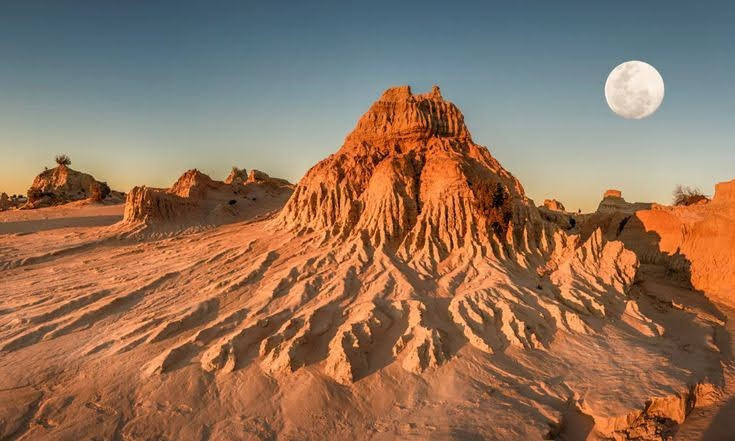
Situated in southwestern New South Wales, Mungo National Park is a World Heritage-listed site known for its dramatic lunette sand dunes and one of the oldest and most significant archaeological sites in Australia. The park is part of the Willandra Lakes Region, which contains the remains of a series of large Pleistocene lakes that have since dried up. The park’s landscape features the prominent Walls of China — crescent-shaped sand dune formations that rise sharply above the flat plains. The area reflects a semi-arid environment with diverse desert flora and fauna, including kangaroos, emus, wedge-tailed eagles, and a variety of reptiles. It holds immense cultural and historical value as the site where some of the world's oldest human remains, such as Mungo Man and Mungo Lady, were discovered, dating back over 40,000 years. These findings provide essential insight into Aboriginal history and early human life on the continent. Visitors to Mungo National Park can engage in self-guided walking trails, 4WD excursions, and ranger-led tours that highlight both natural and cultural heritage. Star gazing is popular here due to minimal light pollution, and camping facilities allow immersive overnight stays. The park’s combination of sweeping desert vistas, ancient history, and unique geological features make it a fascinating destination for outdoor enthusiasts and history buffs alike.