Wilderness Landscape & Natural Heritage
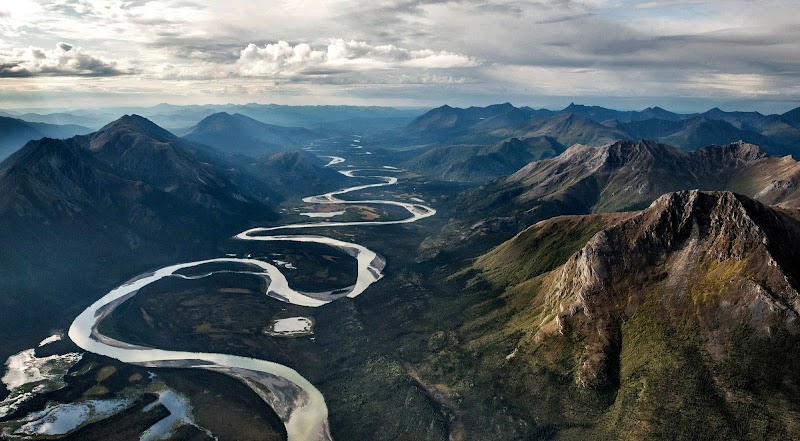
The National Petroleum Reserve-Alaska (NPR-A) spans approximately 22.8 million acres on the North Slope of Alaska, making it the largest tract of undisturbed public land in the United States. Established initially in 1923 as a potential oil reserve for the U.S. Navy, NPR-A collectively represents a region of ecological, geological, and cultural significance. The landscape is dominated by Arctic tundra, wetlands, braided rivers, and coastal plains along the Chukchi Sea. It supports a diverse range of wildlife, including migratory birds, caribou herds, muskoxen, polar bears, and wolves. The area also serves as an essential breeding ground for many species and hosts subsistence hunting and fishing for indigenous communities whose connection to the land spans thousands of years. Visitors to the NPR-A experience extreme remoteness and require careful planning, as development and infrastructure are limited. Recreational opportunities primarily revolve around wildlife viewing, photography, backcountry camping, and river rafting. The Colville River is a notable landmark, featuring dramatic river corridors and archaeological sites. Despite its designation for petroleum exploration, large parts remain undeveloped wilderness, and ongoing management efforts ensure a balance between energy development, subsistence rights, and conservation. Access is predominantly by aircraft or via ice roads in winter, making NPR-A a challenging destination for adventure seekers interested in Arctic landscapes, ecological research, or cultural history. The NPR-A embodies the ruggedness of Alaska’s North Slope, presenting a stark and vast environment where the interplay of natural systems and human activity offers a rare glimpse into a northern frontier.