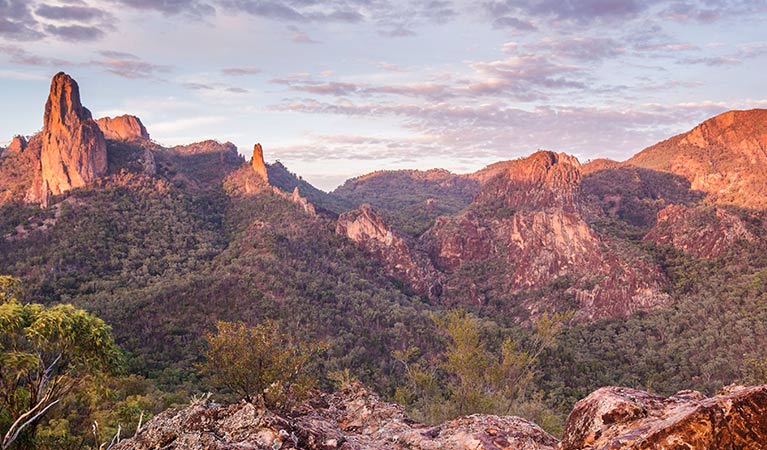
Wilderness Landscape & Natural Heritage
Warrumbungle National Park, located in central New South Wales, Australia, protects the remnants of an ancient volcanic mountain range that erupted about 13 to 17 million years ago. The park's geography is characterized by dramatic jagged peaks, spires, and domes of volcanic origins, including the famous Breadknife, a narrow, blade-like rock formation for which the park is widely recognized. This rugged terrain provides diverse habitats for native flora and fauna, supporting eucalyptus woodlands, wattles, and a range of marsupials and bird species. The area was significant to the indigenous Gamilaroi people prior to European settlement, and their presence is reflected in cultural sites within the park.
Visitors to Warrumbungle National Park can enjoy a variety of outdoor activities such as hiking on well-maintained trails, rock climbing, camping, and stargazing, as the park boasts some of the darkest skies in Australia and is designated as an International Dark Sky Park. The park’s network of trails ranges from short walks to overnight hikes, attracting nature lovers and adventure seekers alike. The landscape offers spectacular views, including panoramic scenes from Dunns Swamp and the pinnacle of Mount Exmouth. Wildlife spotting is another highlight, with encounters possible with wallabies, echidnas, and numerous bird species. The park is also home to the historic Siding Spring Observatory on its eastern boundary, one of Australia's leading astronomical research facilities. Warrumbungle National Park offers a combination of geological wonder, ecological diversity, and recreational opportunities, drawing visitors seeking both natural beauty and solitude.
