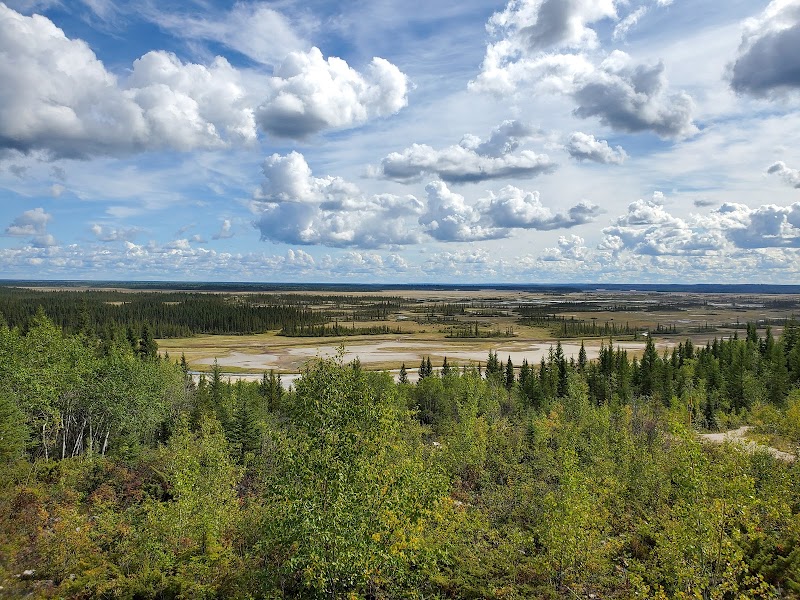
Wilderness Landscape & Natural Heritage
Wood Buffalo National Park spans the border between northeastern Alberta and the southern Northwest Territories. Covering over 17,000 square kilometers, it is Canada’s largest national park and among the largest in the world. The park protects one of the last remaining natural habitats for the endangered whooping crane and is renowned for the largest free-roaming herd of wood bison. It encompasses a diverse range of ecosystems including boreal forests, expansive wetlands, and the Peace-Athabasca Delta, one of the world’s largest freshwater deltas, providing critical habitat for countless bird species, fish, and mammals. Established in 1922 to protect declining bison populations, Wood Buffalo also holds the distinction of being a UNESCO World Heritage Site due to its outstanding biodiversity and ecosystem values. Outdoor enthusiasts have ample opportunities for hiking, wildlife viewing, canoeing, and fishing. The park’s remote and rugged nature allows visitors to experience northern wilderness in a pristine setting, with stunning landscapes including sand dunes, river valleys, and dense forests. Notable landmarks include the Salt Plains, Peace River, and various important Indigenous cultural sites. Visitors appreciate the park’s quiet atmosphere and the chance to witness rare wildlife, including wolves, bears, and migratory birds. Due to its vast size and remoteness, exploring Wood Buffalo requires careful planning and respect for the natural environment.