Wilderness Landscape & Natural Heritage
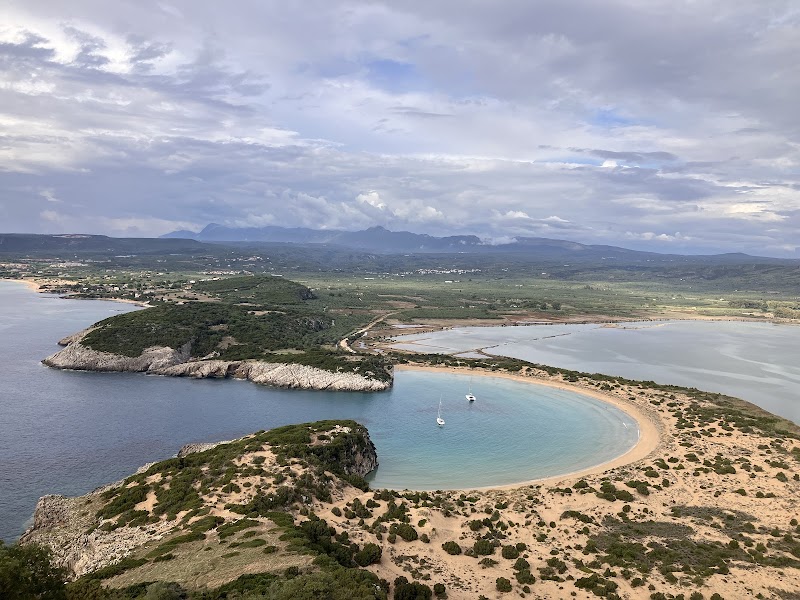
Gialova Lagoon, located near the village of Gialova in the Messenia regional unit of southwestern Peloponnese, Greece, is a significant Natura 2000 protected wetland site. It comprises a coastal lagoon system that includes brackish and freshwater habitats, supporting diverse flora and fauna. Geographically, the area consists of a lagoon separated from the Ionian Sea by a narrow stretch of sand dunes, creating a unique interface between marine and terrestrial ecosystems. The lagoon's waters fluctuate seasonally, influenced by freshwater inflows and tidal variations, which foster a dynamic environment supportive of various species. Ecologically, Gialova Lagoon supports numerous wetland birds, including rare and endangered migratory species such as the slender-billed gull and the Balearic shearwater. It is also an important stopover for migratory birds traveling along the East Mediterranean flyway. Aside from birds, the lagoon hosts fish, amphibians, and invertebrate communities that contribute to its biological importance. Historically, the area has been recognized as a natural habitat for both local communities and conservationists. Today, it is designated under the EU Natura 2000 network, emphasizing its European conservation value. For visitors, the lagoon offers excellent wildlife viewing, particularly birdwatching along its shores and observation points. The adjacent sandy beaches and the nearby Voidokilia Bay attract outdoor enthusiasts for hiking, photography, and coastal exploration. Gialova Lagoon's accessibility from the coastal village of Gialova allows for educational activities and eco-tourism, promoting awareness and appreciation of wetland conservation. Its environmental significance and serene landscape provide a valuable natural retreat for both researchers and visitors interested in Mediterranean wetland ecosystems.