Wilderness Landscape & Natural Heritage
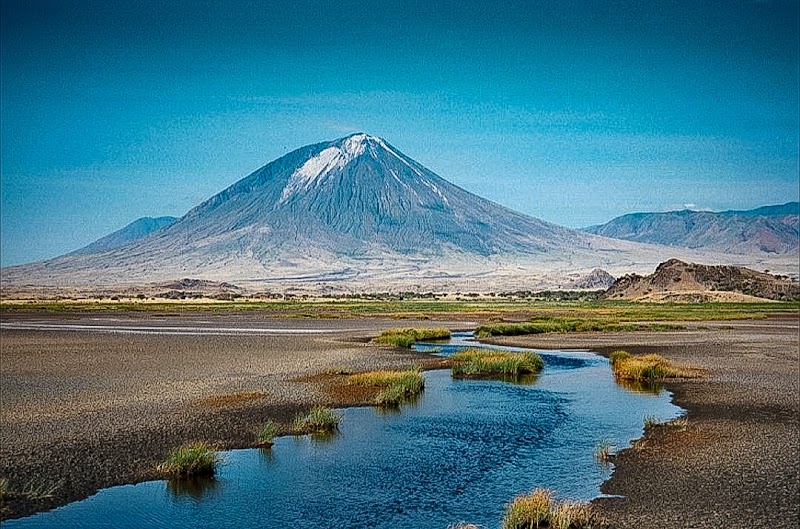
Lake Natron Ramsar Site, located in the Rift Valley of northern Tanzania near the border with Kenya, spans approximately 1,040 square kilometers. This shallow and highly alkaline lake is fed primarily by the Southern Ewaso Ng'iro River and is characterized by its reddish to orange waters, resulting from salt-loving microorganisms and cyanobacteria thriving in its caustic environment. The lake is a vital breeding ground for the Lesser Flamingo, hosting the largest single breeding colony of this species globally. The extreme conditions of high alkalinity and temperature restrict many species, but specialized fauna and birds have adapted accordingly. Surrounding the lake are volcanic hills and extensive flamingo breeding islands formed from volcanic ash deposits. The site is also valuable for its unique soda lake ecosystem, supporting migratory birds and endemic species. Visitors come for bird watching — especially flamingo viewing — photography, and experiencing a rare and otherworldly landscape. The lake’s location near the Serengeti and Maasai Mara ecosystems adds to its ecological importance. Access is mostly via rough roads from the nearby town of Arusha, with limited facilities, encouraging low-impact, observational tourism. Indigenous Maasai communities live near the site, coexisting with the wetland's delicate ecology. Lake Natron's fragile ecosystem and cultural significance led to its designation under the Ramsar Convention in 2003 to promote conservation and sustainable use of this internationally important wetland.