About This Adventure Destination
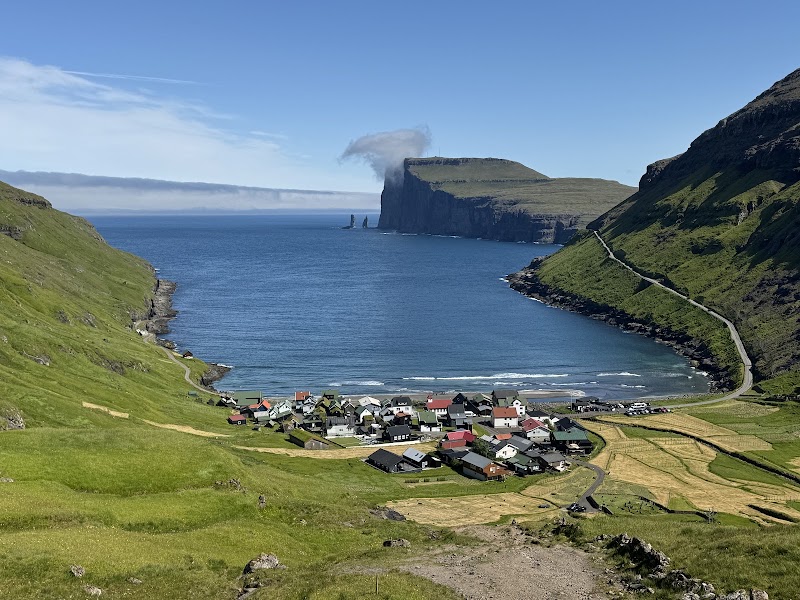
Tjørnuvik Beach is located in the charming village of Tjørnuvík on Streymoy, the largest island in the Faroe Islands archipelago. This location is especially notable for its dramatic geological features, including black sand shores and towering sea stacks known locally as the Giant (Risin) and the Witch (Kellingin). These basalt rock formations rise majestically from the North Atlantic Ocean, creating a striking visual contrast against the deep blue waters and green cliffs surrounding the bay.
The beach offers a rare combination of rugged natural beauty and a tranquil village atmosphere. The sand is volcanic in origin, giving it the unique dark coloration, which is uncommon in northern Europe. This rugged coastline provides a glimpse into the powerful geological forces that shaped the Faroe Islands over millennia. The village of Tjørnuvík itself provides historical context as one of the few remaining old fishing settlements, reflecting the traditional Faroese lifestyle.
Visitors often appreciate the serene environment here, with gentle waves suitable for beginner surfers and many choosing to sit on the scattered boulders to take in the peaceful scenery. The surrounding hills and cliffs offer excellent vantage points for photography and bird watching. It is also the starting point for hikes to nearby destinations like Saksun, a quaint village with a natural amphitheater-like bay.
The combination of unique rock formations, black sand beach, and traditional Faroese village life make Tjørnuvik Beach a distinct and memorable destination for nature lovers.
Tjørnuvik Beach is highly valued for its unique black sand coastline and the striking basalt sea stacks, which are rare geological features in this region. While it offers stunning natural scenery and excellent opportunities for hiking and beginner surfing, it lacks the widespread international recognition and dramatic scale of a top 90-rated landmark. Its charm is more regional, making it a must-visit for enthusiasts of Nordic coastal landscapes rather than a global natural icon.