DUBLIN ATTRACTION FIELD GUIDE
Solstice Stones and Celtic Crosses: A Day Through the Boyne Valley to Newgrange
A full-day outing from central Dublin that visits Newgrange, Knowth and Monasterboice within Ireland’s UNESCO-listed Boyne Valley—this guide lays out the route, highlights, and practical facts you need for the trip.
Solstice Stones and Celtic Crosses: A Day Through the Boyne Valley to Newgrange.
The Day Tour of the Boyne Valley • Newgrange escorts travelers north from Dublin into a landscape where Ireland’s deep past is visible in monumental stone: passage tombs, megalithic art and early medieval monastic remains that together tell a story stretching back millennia.
Highlights
Outing Highlights

UNESCO World Heritage — the Boyne Valley
The Boyne Valley is designated a UNESCO World Heritage Site and contains some of Ireland’s most important prehistoric and historic monuments, tracing human presence in the region across more than five millennia.

Newgrange: Entrance Stone, megalithic art and solstice alignment
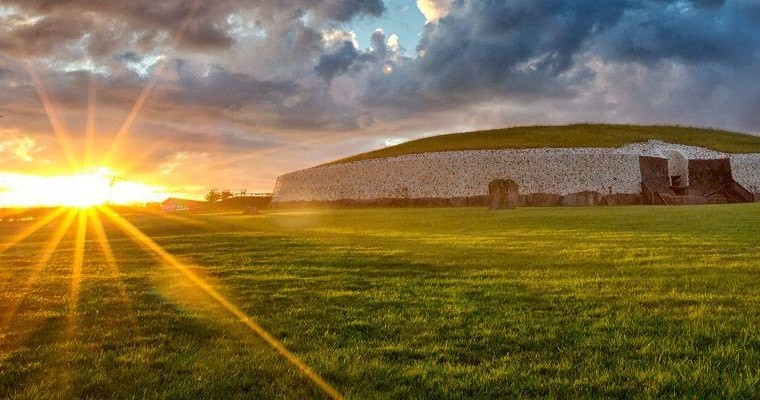
Newgrange is the best-known Irish passage tomb and dates to c.3, 200BC; visitors enter the tomb to view exceptional megalithic art — notably the decorated Entrance Stone — and the monument is astronomically aligned to the Winter solstice.

Monasterboice’s round tower and Muiredach’s High Cross
Monasterboice is a 5th‑century monastic site featuring a well-preserved round tower and three high crosses, including the 5.5‑metre Muiredach’s High Cross, celebrated for its biblical carvings.
What the day feels like
What the day feels like
The tour unfolds as a linear day out from Dublin into the Boyne Valley: a morning pickup in town, a guided visit to Newgrange (with time inside the passage tomb and close viewing of its carved stones), exploration of the surrounding Bru na Boinne complex including Knowth, a lunch stop at the visitor centre, then a later visit to the evocative ruins and carved crosses at Monasterboice before returning to Dublin in the early evening.
THE HERITAGE
UNESCO World Heritage — the Boyne Valley
The Boyne Valley is designated a UNESCO World Heritage Site and contains some of Ireland’s most important prehistoric and historic monuments, tracing human presence in the region across more than five millennia.
THE PASSAGE TOMB
Newgrange: Entrance Stone, megalithic art and solstice alignment
Newgrange is the best-known Irish passage tomb and dates to c.3, 200BC; visitors enter the tomb to view exceptional megalithic art — notably the decorated Entrance Stone — and the monument is astronomically aligned to the Winter solstice.
THE MONASTIC SITE
Monasterboice’s round tower and Muiredach’s High Cross
Monasterboice is a 5th‑century monastic site featuring a well-preserved round tower and three high crosses, including the 5.5‑metre Muiredach’s High Cross, celebrated for its biblical carvings.
Suitability
Who it's for
Who this day tour suits
Practical planner
Details to review before reserving
The tour runs about 8 hours in total, departing Dublin in the morning and returning in the early evening.
Meet at the Molly Malone statue on Suffolk Street (D02 KX03) for a 09:00 departure; please arrive roughly 10 minutes early.
The Newgrange portion of the guided visit can take approximately 3.5 hours; the day also includes stops at Knowth, a lunch stop at Bru na Boinne Visitor Centre, and Monasterboice.
No operator-specified gear list is provided in the trip details.
Review cancellation policies before reserving.
Frequently asked questions
Planning Your Outing
Where and when do we meet?
Pickup is at the Molly Malone statue on Suffolk Street at 09:00; guests should arrive about 10 minutes early.
How long is the tour?
The full tour is an 8-hour day trip from Dublin.
Can we enter Newgrange?
Yes — the tour includes entry to the Newgrange passage tomb so visitors can see the megalithic art and the Entrance Stone from inside the monument.
Is there a lunch break?
The itinerary includes a lunch stop at the Bru na Boinne Visitor Centre.
When do we get back to Dublin?
The tour returns to Dublin at approximately 17:00.
Is the Boyne Valley a World Heritage Site?
Yes — the megalithic sites of the Boyne Valley were designated a UNESCO World Heritage Site in 1993.