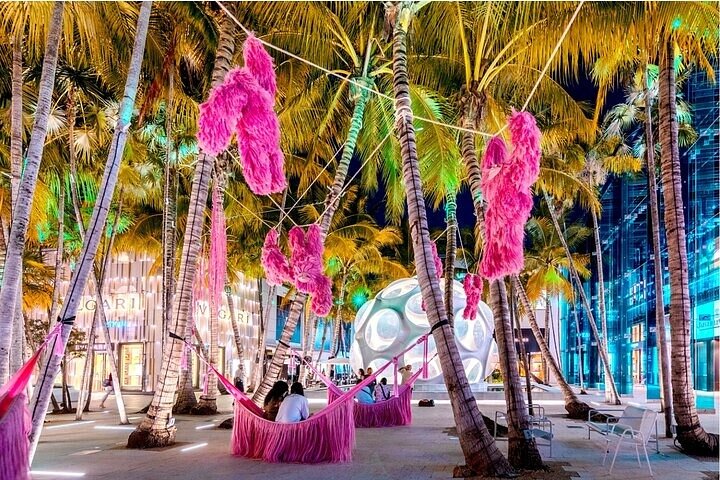
A walking tour in Bal Harbour is less an endurance test than a rehearsal for attention. This village—no more than a few blocks wide in places—asks you to slow down, to pay heed to transitions: the soft hush where the Atlantic meets the shore; the sudden geometry of glass-fronted boutiques and shaded arcades; the quieter, salt-mottled edges where mangroves thread into Biscayne Bay. Walk here at first light and the promenade is a study in textures—the grain of sand underfoot, the citrus tang of salt on the breeze, the muffled thrum of early deliveries at the shops. By midmorning the town proves its metropolitan hang, as designer storefronts and café terraces settle into a refined hum. An afternoon loop along the bay returns a different catalogue of sights—fishing skiffs and luxury yachts, herons along the shoreline, and glimpses across the water to Miami’s skyline.
Walking here feels architectural and ecological at once. The Bal Harbour Shops are a case study in curated movement: a tapestry of pathways that invite window-shopping as a paced route. A neighborhood walk toward Bay Harbor Islands shifts the script; here sidewalks thread residential canals, front yards planted with flowering native shrubs, and low bridges that tilt you into a quieter rhythm. The environmental edges—the small parks that bookend the village—are compact classrooms of coastal ecology where tidelines and mangrove roots reveal the dynamics of the bay. For travelers who like to combine walking with other low-impact adventures, Bal Harbour is a pivot point: short walking tours link easily to paddleboard launches, snorkeling pockets off nearby reefs, and guided architecture or art walks in neighboring Miami Beach and Surfside.
Practicality shapes the experience. Routes are typically short (30–90 minutes), making Bal Harbour especially well-suited to travelers who prefer mixed days: an hour of walking, then time for a beach nap, a gallery visit, or a seaside meal. The town’s flat terrain and paved promenades make most loops accessible to a wide range of walkers, though humidity and sun can turn even short itineraries sweltering in summer—timing is everything. Culture and commerce intersect on every corner: sculptures and public art appear beside luxury retail, and small parks dot the waterfront, offering places to sit and reframe the walk. A successful Bal Harbour walking tour is equal parts sensory curiosity and short-form planning—pick a theme (nature, architecture, shopping, or culinary) and build a measured loop around it.
Compact, walkable loops: most curated tours are under two miles and designed for strolling rather than hiking.
A hybrid urban-coastal experience that pairs optics—shops, galleries, architecture—with mangrove and bay viewpoints.
The harbor is the gateway, and the Pacific becomes the classroom.
Accessible terrain: mostly flat, paved promenades and sidewalks; some routes include boardwalk sections and short sandy transitions.
Easily combined with complementary activities: beach time, stand-up paddleboarding, boat tours to nearby reefs, and nearby Miami cultural walks.
Choose by purpose
Whale watching, snorkeling, sunset sailing, cultural canoeing, harbor sightseeing, or private chartering.
Start near the city
Waikiki and Honolulu Harbor are primary hubs, with some trips launching near Hanauma Bay.
Confirm the vessel
Gangways, shaded seating, and boarding requirements vary according to vessel size and operator.