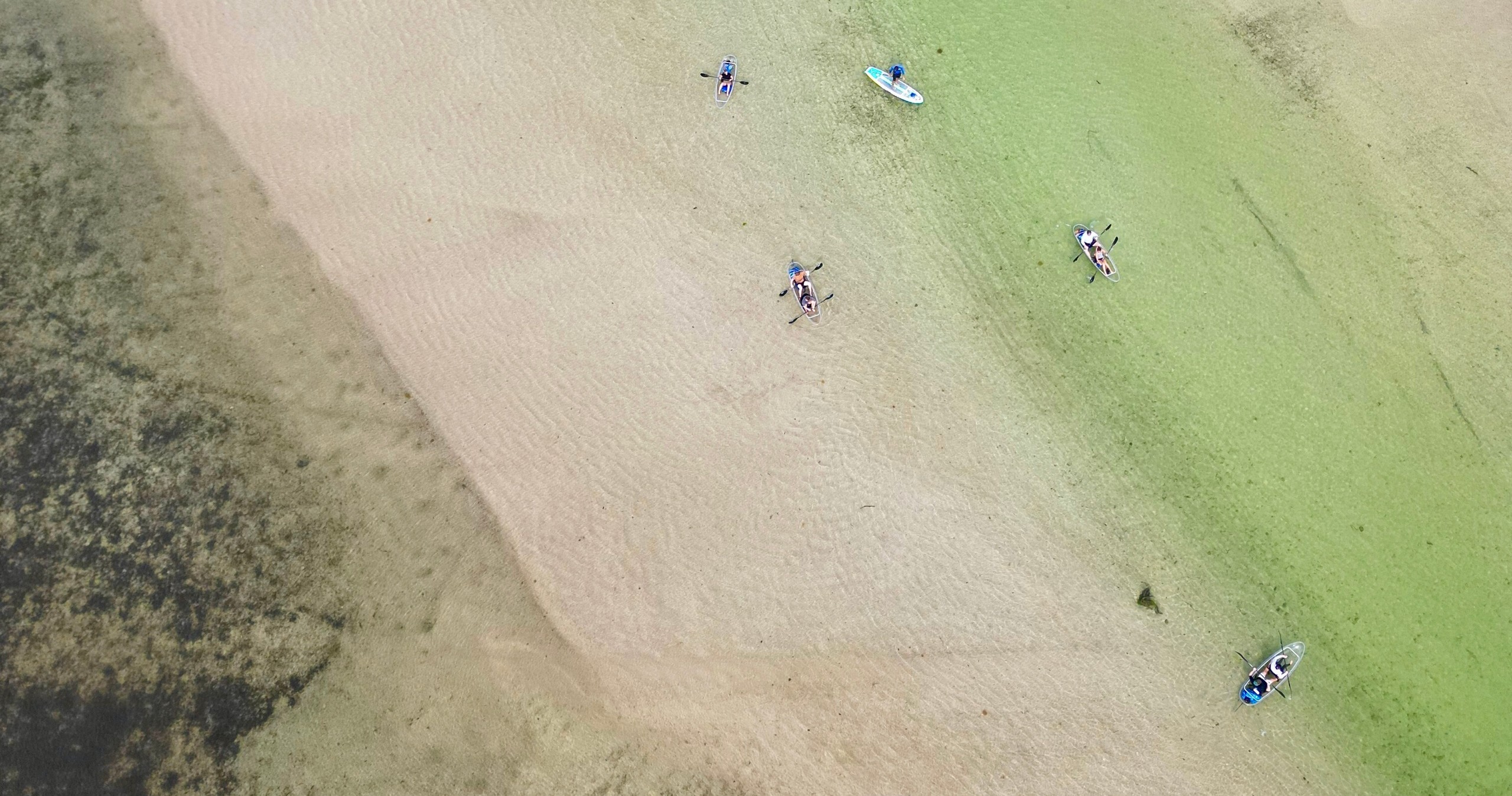
Bradenton sits where freshwater rivers meet the Gulf's shallow shelf, and that ecological edge is what makes kayaking here endlessly interesting. Paddling through Sarasota Bay and the Manatee River feels more like traveling through a living map—channels and sandbars shift with the tides, mangrove corridors frame long, reflective horizons, and the water is often clear enough to watch snook and rays search the shallows. For wildlife lovers, the promise of close but respectful encounters is a major draw: winter aggregates of manatees drift slowly in warmer springs and inlets, herons and egrets line the shoreline like sentries, and migratory shorebirds pepper exposed flats in fall and spring. It's not a single iconic run that defines Bradenton; it's the variety. You can launch at a public ramp and spend hours weaving mangrove-lined creeks, or cross to a barrier island for wide, wind-swept beaches and Gulf swells.
Beyond the natural inventory, the paddling experience here is approachable. Many put-ins are a short drive from town, making half-day launches practical for families and day-trippers. Local preserves—Robinson Preserve and Terra Ceia among them—provide curated access to trails and docks that shorten logistics and expand options for multi-sport days: paddle in the morning, bike or hike a preserve loop in the afternoon, and finish with a beachfront sunset. The cultural rhythm of Bradenton enhances the outing. Small coastal communities and island villages keep the pace relaxed; seafood markets and waterfront cafes make for easy post-paddle rewards. There’s also a strong community of outfitters and guides who run guided wildlife tours, night paddles, and instruction clinics—useful for newcomers or for paddlers chasing season-specific experiences like guided manatee viewing or coastal navigation workshops.
Environmental stewardship is woven into the local paddling ethic. Seagrass beds and mangroves are fragile habitats—shallow routes are often sensitive to prop scarring and trampling. Responsible paddling here means staying off exposed beds at low tide, keeping distance from resting wildlife, and rinsing gear between launches to avoid spreading invasive species. Tide and current matter: many of the best routes use tidal windows to move with the water rather than fight it, and wind can quickly convert a calm bay into a choppy crossing. That combination—accessible water, high wildlife density, and varied terrain from narrow creeks to open Gulf approaches—makes Bradenton an ideal place to learn kayak craft while still offering daily novelty for seasoned paddlers.
Paddlers prize Bradenton for its diversity of routes: sheltered estuaries for beginners, mangrove tunnels and tide-dependent flats for intermediate paddlers, and longer coastal crossings to islands for those seeking more commitment.
The region’s wildlife calendar—manatees in winter, migratory shorebirds in spring and fall, and nesting shorebirds in summer—changes the character of paddling trips and influences where and when you should go.
The harbor is the gateway, and the Pacific becomes the classroom.
Logistics are simple: public boat launches, park facilities, and a healthy crop of rental and guiding businesses mean you don’t need to own a kayak to experience the best routes.
Choose by purpose
Whale watching, snorkeling, sunset sailing, cultural canoeing, harbor sightseeing, or private chartering.
Start near the city
Waikiki and Honolulu Harbor are primary hubs, with some trips launching near Hanauma Bay.
Confirm the vessel
Gangways, shaded seating, and boarding requirements vary according to vessel size and operator.