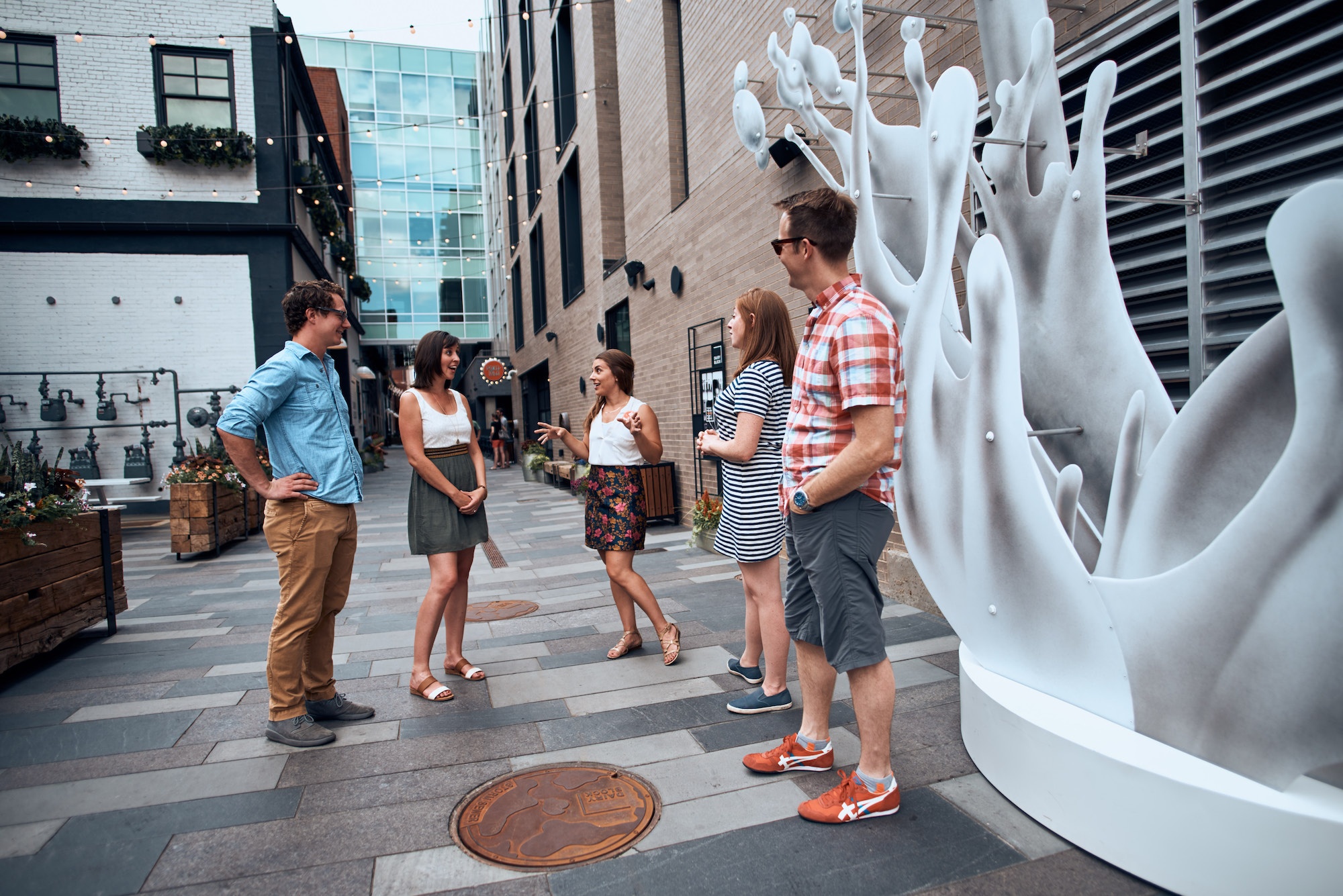
Why Brighton Is a Great Place for Walking Tours
Walking through Brighton is an exercise in quiet contrasts: open prairie hues meet a compact downtown where historic facades and modern civic spaces sit within a few blocks. The town’s scale makes it especially suited to foot exploration — nothing is far, and the transitions are telling. On one block you can pass former railroad-era warehouses now hosting cafés and breweries; on another, rolling fields and irrigation canals hint at the agricultural backbone that shaped Brighton’s rhythms. That proximity between town center and countryside creates walking routes that feel both intimate and spacious.
Because Brighton occupies the eastern edge of the Denver metro area, it captures a different side of Colorado: the Great Plains before the foothills begin. That setting brings particular walking pleasures. Wide horizons and open skies turn an ordinary afternoon stroll into an elemental experience; light changes dramatically through the day, and the plains wind becomes an unmistakable character. Greenways along Sand Creek and the South Platte provide shaded corridors and riparian habitat, making them reliable spots for birdwatching and seasonal wildflowers. These waterways also connect neighborhoods, parks, and historical points of interest, letting walkers build loops that are as much about discovery as they are about exercise.
Culturally, Brighton’s walking tours are accessible and low-friction. Self-guided history loops require little more than a map and curiosity: plaques, signage, and preserved buildings tell stories of settlement, rail expansion, and the agricultural economy. Public art and community murals add a contemporary layer, while local cafés and farm-to-table spots offer refreshment and a chance to linger. For travelers who like to combine walking with complementary activities, Brighton fits neatly: short hikes and trails are close enough to pair with cycling on multiuse paths, paddling on calmer river stretches, or a relaxed brewery crawl after a morning walk.
Practically, Brighton is walkable at many paces. Easy urban loops are flat and family-friendly; greenway stretches are low-grade and suitable for most fitness levels; longer, more exploratory walks that push into the surrounding farmland or county open space call for basic planning. Seasonality shapes the experience: spring brings migrating birds and blooming roadside grasses, summer delivers long days and potential heat, and fall has crisp air and expansive light. Winters are quieter, with fewer visitors and stark, wind-scoured landscapes. Ultimately, Brighton’s walking tours are about paying attention — to history in brickwork, to ecology along creek banks, and to the everyday rhythms of a Colorado plains town evolving at the edge of the metro area.
A short downtown loop puts local history on display: storefront architecture, municipal buildings, and interpretive signs narrate Brighton’s development from rail stop to modern small city.
Sand Creek and the South Platte corridors create ribbon-like walks where riparian trees and wetlands offer bird habitat and seasonal color, useful for soft-surface walking and easy wildlife viewing.
The surrounding agricultural landscape is still visible from many paths; farm roads and county open spaces invite longer exploratory walks and a sense of how the region produces food and sustains community traditions.
Brighton’s proximity to Denver means you can combine a rural-plain walking experience with cityside comforts — museums, specialty coffee, and a growing culinary scene within a short drive.