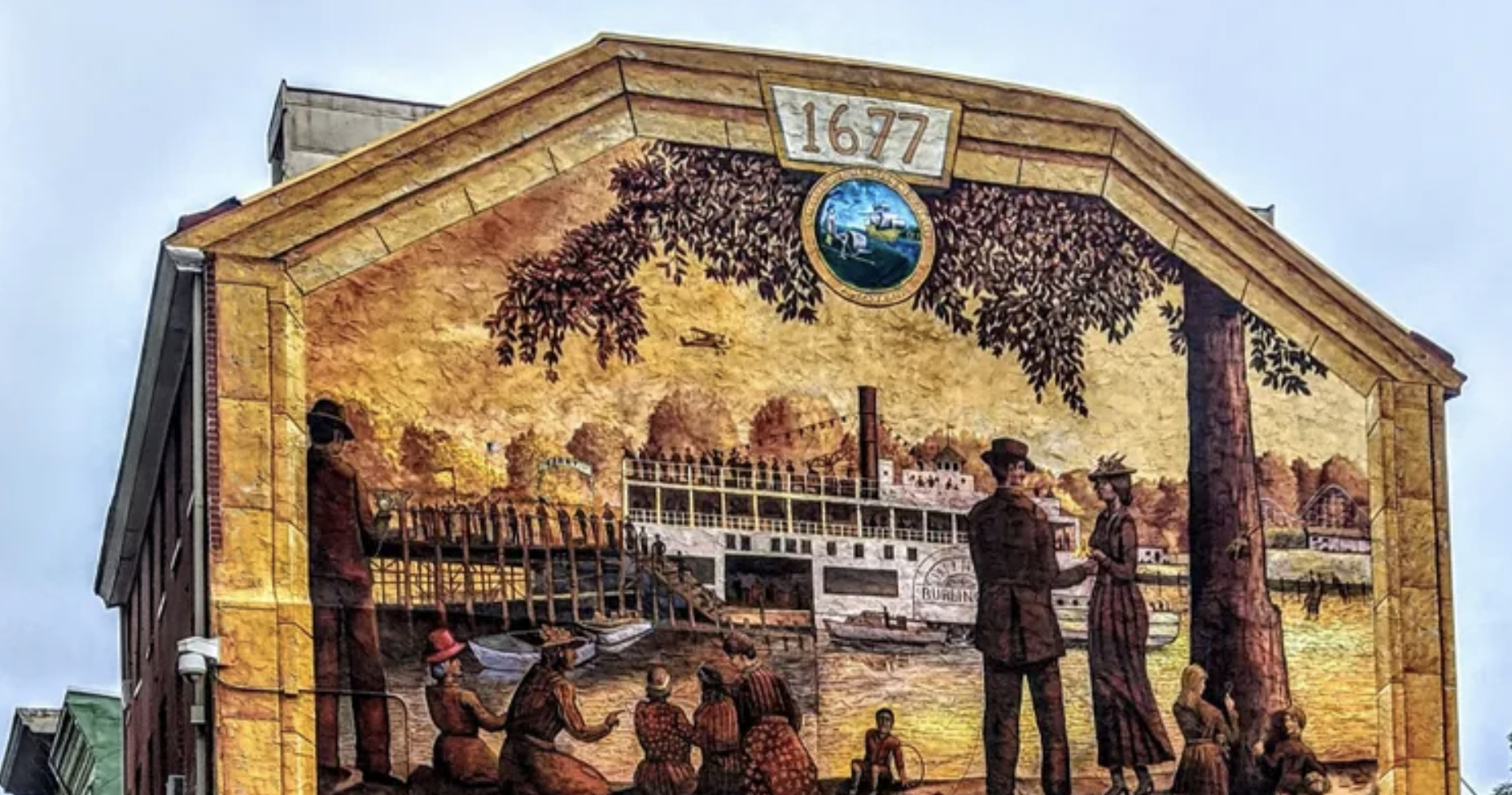
Why Burlington Is a Standout Walking Tour Destination
Walking Burlington is an exercise in layering. The city's footprint is small enough that blocks and stories fold over one another: a waterfront promenade that opens into intersections of civic buildings, a mix of 18th- and 19th-century brick architecture that shares sidewalks with contemporary public art, and green corridors that thread toward creeks and marshes. On foot you notice what a drive obscures—subtle changes in building materials, the echo of old street patterns, the pause points where the river and town exchange views. Those details are what make Burlington ideal for short, thematic itineraries. History-minded walkers can follow plaques and markers that speak to commerce on the Delaware, to early industrial and mercantile life, and to the long human relationship with the river that shapes the local landscape. Architecture enthusiasts will find a palette of Federal, Victorian, and later 19th-century civic buildings, many concentrated in walkable historic districts that reward a slower pace and a camera. For quieter, nature-focused outings, the river edge and nearby greenways provide birdwatching, winter migration views, and accessible landscapes that shift dramatically between seasons.
Walking here is as much about the intervals between points as the points themselves. A curated walking tour might be a 60- to 90-minute neighborhood loop that stops at a bakery, a historic courthouse, and a pocket park overlooking the river. A longer route stretches to riverside trails and wetlands where urban life gives way to seasonal reeds and marsh birds. Because the city is compact, you can layer experiences—start with a heritage tour, detour for a riverside picnic, finish with a culinary crawl through local cafés and taverns. The urban fabric is accommodating: streets are generally walkable with short, manageable blocks and places to sit. Climate and seasonality shape the character of each tour—spring and fall are especially agreeable for easy walking, while summer brings humidity and afternoon storms that favor morning starts. Winter opens up crisp light and quieter sidewalks; at that time, wearable layers and traction on icy surfaces matter more than in mild months.
Beyond the immediate urban routes, Burlington functions as a gateway to complementary day activities: easy paddling on the river during warm months, regional cycling routes that connect to greenways, and guided nature walks led by local organizations during migration seasons. Local operators and community groups often run themed walks—food tours, public-art excursions, and history talks—that deepen context without demanding strenuous effort. In short, Burlington rewards curiosity. Walking is the currency that buys the best perspective here—every corner turned recalibrates the city's story, and each short stroll can feel like a small, complete expedition.
The diversity of tour types is the main draw: short historical loops, waterfront ecology rambles, architecture-focused strolls, and food-and-drink crawls are all achievable within a morning or afternoon.
Because the city is compact, walking tours are easily combined with complementary outings—paddling on the Delaware, biking nearby greenways, or sampling local cafés and galleries after a route.
Seasons change the experience: spring and fall offer comfortable temperatures and vivid colors; summer requires early starts to avoid humidity and storms; winter provides quiet streets and crisp light but needs extra layers.