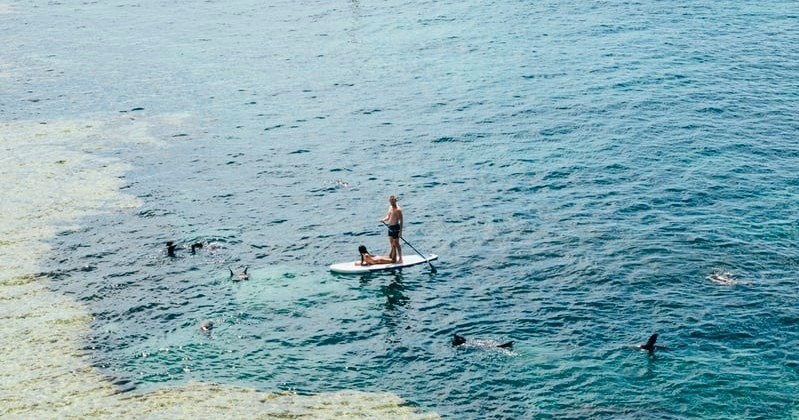
Why Cedar Key Is a Standout SUP Destination
Cedar Key feels like a place designed for a paddle: low horizons, slow tides, and a scattering of tiny islands that suggest endless micro-adventures. Here, SUP is less about brute athleticism and more about reading subtle water, tuning into birdlife, and tracing the coastline where sand, shell, and seagrass meet. The town itself is a string of wooden docks, weathered clapboard, and fishing boats, but the real draw is the fragile, flat landscape of flats and channels that stretches in all directions. On any calm morning you can launch from a public ramp, skirt oyster reefs, ghost past mangrove fingers, and find yourself on a sandbar so quiet you can hear the wind washing shells. That intimacy is the “why” of SUP at Cedar Key: it’s a place that rewards slow, focused movement, where wildlife encounters feel immediate—herons and egrets stalking the shallows, roseate spoonbills in season, and the occasional manatee cruising over seagrass meadows.
Practically, Cedar Key’s geography makes it beginner-friendly but endlessly varied. There are protected backwater routes that act as natural classrooms for balance and steering, and there are exposed points along the Gulf where wind and current become manageable training grounds for edging, trim, and downwind runs. The tidal flats mean you’ll often be paddling in ankle- to waist-deep water that glows turquoise in sunlit afternoons; that shallow profile is forgiving but also demands attention to tides and route choice. The cultural side of Cedar Key—the fishing docks, small seafood clam shacks, and slow-town vibe—adds to the experience. Paddlers can pair a morning on the board with local clam chowder, an afternoon of fly-fishing, or an island picnic on a sandbar. For photographers and naturalists, the light is mercilessly beautiful: low-angled sun, long reflections across flats, and wide skies full of migrating birds. Whether you come to refine technique, seek wildlife, or simply drift with the current, SUP in Cedar Key is about small, resonant moments and the practical knowledge that lets you find them safely.
Cedar Key’s sheltered backcountry is ideal for early learners and paddlers who prefer flat-water tours; local outfitters can link you to guided loops that emphasize safety, bird ID, and route-reading.
Wind and the open Gulf create playgrounds for more advanced paddlers—downwind runs and exposed point-to-point routes test board control and surf skills on the right days.
The harbor is the gateway, and the Pacific becomes the classroom.
Tides shape everything: many sandbars and launch options change dramatically between low and high, so planning with a tide chart makes the difference between a relaxed day and a long carry.
Choose by purpose
Whale watching, snorkeling, sunset sailing, cultural canoeing, harbor sightseeing, or private chartering.
Start near the city
Waikiki and Honolulu Harbor are primary hubs, with some trips launching near Hanauma Bay.
Confirm the vessel
Gangways, shaded seating, and boarding requirements vary according to vessel size and operator.